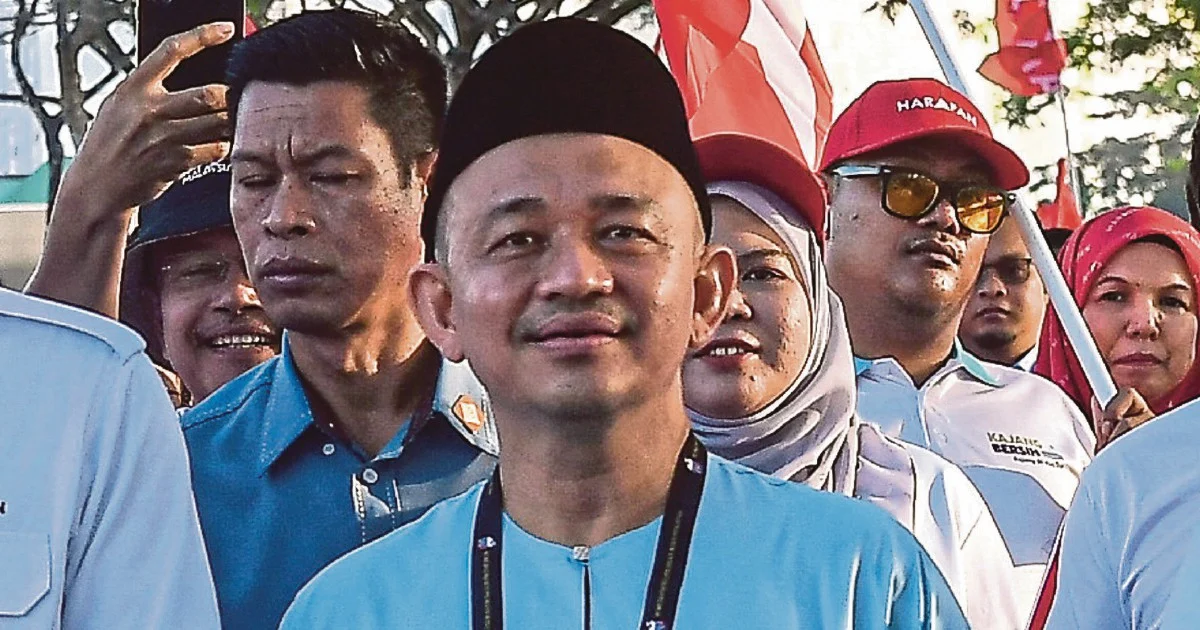
Former education minister Dr Maszlee Malik has thrown his weight behind Pakatan Harapan's push for electoral gains in Johor, arguing that victories at constituencies including Puteri Wangsa would represent a watershed moment for the southern state's trajectory. Speaking ahead of polling day, Maszlee framed the contest not merely as a routine election but as a referendum on the direction of development policy in Malaysia's second-largest state by population.
The former minister's intervention underscores deepening factional tensions within Malaysia's political landscape, where control of Johor's state assembly carries symbolic and strategic significance beyond the immediate legislative implications. Johor remains demographically and economically crucial to Malaysia's overall performance, serving as home to major industrial clusters, petrochemical facilities, and as a crucial economic corridor linking Malaysia to Singapore. For Pakatan Harapan, capturing additional seats represents an opportunity to recalibrate the coalition's influence within state government and potentially shift resource allocation toward opposition-aligned constituencies.
Maszlee's framing of a PH victory as a transformative event reflects broader arguments circulating within the coalition about governance approaches. Opposition figures contend that incumbent administrations have prioritised infrastructure and industrial development in certain areas whilst neglecting social services, education quality, and environmental safeguards in others. A change in political control, according to this reasoning, would enable more equitable distribution of development resources and reinvigorate state institutions with fresh priorities aligned to Pakatan Harapan's stated policy platform.
Johor's political landscape has undergone substantial realignment in recent years, with demographic shifts and urbanisation creating new voter segments in constituencies around the Klang Valley fringe and southern Selangor spillover areas. These constituencies increasingly mirror voting patterns in federal urban centres rather than traditional state-level dynamics, a phenomenon that has complicated electoral mathematics for both government and opposition. Puteri Wangsa, in particular, represents the type of mixed urban-suburban seat where swing voters exercise decisive influence, making it a symbolic battleground for broader appeals about governance competence and vision.
The invocation of development as an electoral theme carries particular resonance in Johor, where infrastructure spending and industrial expansion have generated both prosperity and discontent. Rapid urbanisation has created demand for affordable housing, public transport connectivity, and social amenities that existing infrastructure struggles to accommodate. Opposition messaging has sought to capitalise on grievances about insufficient investment in these areas relative to industrial and large-scale commercial projects, framing a PH victory as an opportunity to recalibrate priorities toward quality-of-life improvements for ordinary residents.
Education policy specifically looms large in Maszlee's intervention, reflecting his background in that portfolio. The former minister has previously been vocal about tertiary education affordability, vocational training accessibility, and digital infrastructure in rural areas—issues that resonate particularly strongly with middle-class urban voters and aspirational working-class families concerned about their children's prospects. A change in Johor's state government, from his perspective, would enable implementation of education initiatives potentially stalled at state level and create opportunity for Pakatan Harapan's accumulated policy proposals on schooling and skills development to gain traction.
The timing of Maszlee's statement reflects strategic campaign messaging in the final period before voting, where coalition figures emphasise transformation narratives rather than incremental improvements. Such rhetoric serves multiple functions: it energises party machinery and volunteer networks, it appeals to swing voters dissatisfied with current governance, and it frames opposition parties as agents of fundamental change rather than mere alternatives. In a state where incumbent governments have maintained considerable institutional advantages and resource controls, such messaging attempts to overcome structural disadvantages by appealing to voters' appetite for substantive policy shifts.
Packatan Harapan's electoral performance in Johor carries implications extending far beyond state boundaries. As a major economic hub and bellwether for Malay-Muslim voter sentiment in peninsular Malaysia's southern region, Johor results influence perceptions of opposition viability and shape calculations about federal politics. Gains in constituencies like Puteri Wangsa would suggest that opposition appeals on development and governance grounds resonate effectively even in traditionally more conservative electoral terrain, potentially validating coalition strategies for future federal campaigns.
The broader context encompasses ongoing negotiations within Pakatan Harapan about coalition dynamics, resource distribution, and policy direction. Opposition victories in state elections feed internal discussions about portfolio allocation, strategic focus areas, and the distribution of campaign resources. For component parties within the coalition, success in Johor elections translates into enhanced leverage in coalition councils and greater influence over policy implementation, making these contests significant beyond their immediate electoral mathematics.
Maszlee's characterisation of political change as heralding a new development paradigm reflects a fundamental tension in Malaysian electoral politics between continuity and transformation. Voters often express simultaneous desires for stability and change—they want reliable public services and sound financial management but also crave policy innovation and responsiveness to emerging challenges. Opposition campaigns in Johor, by emphasising Maszlee's theme of a transformative new chapter, attempt to demonstrate they can deliver both responsive change and competent administration, a combination that would substantially alter state-level politics if achieved.

