Dr Maszlee Malik, the Pakatan Harapan candidate contesting the Puteri Wangsa state seat in the forthcoming Johor election, has taken a decidedly unconventional approach to understanding voter grievances by accepting a public challenge to navigate the poorly maintained roads between Tebrau and Ulu Tiram in a Perodua Myvi. The stunt, which unfolded during his campaign activities ahead of the July 11 polling day, aimed to give the former education minister tangible insight into the daily frustrations faced by commuters in this constituency, where infrastructure woes have long featured prominently in residents' complaints aired across social media platforms.
The route selected for this impromptu road trial—beginning at Petron Kampung Melayu, passing through Pandan and Kangkar Tebrau before terminating at Ulu Tiram—represents one of Johor Bahru's most problematic transport corridors. By choosing a compact sedan like the Myvi, often colloquially referred to as the 'King of the Road,' Maszlee ensured that even minor surface irregularities would be transmitted directly to occupants, amplifying the sensory experience of traversing roads that residents have long complained about. This choice of vehicle proved instrumental in conveying the cumulative impact of neglected maintenance on everyday users, transcending the abstract language of municipal reports and planning documents.
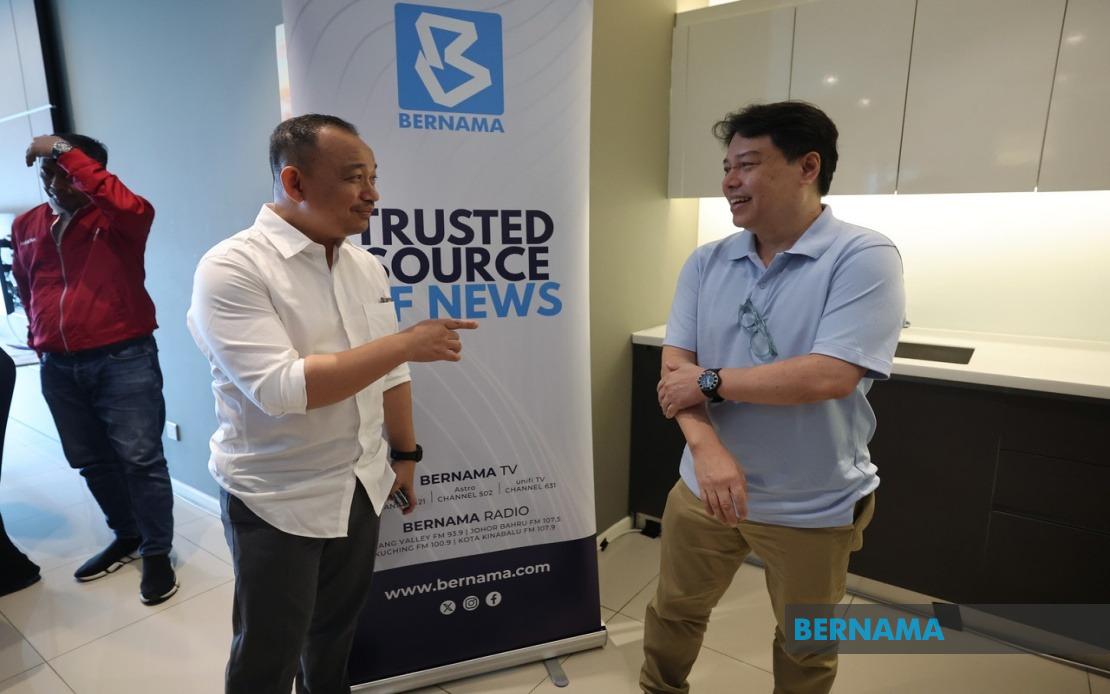
During his subsequent visit to the Bernama Operations Room, Maszlee provided vivid descriptions of the journey, comparing the bumpy, undulating road surface to the rocking motion of a traditional wooden boat navigating the waters near Tanjung Surat. The analogy proved more than mere colourful oratory; it encapsulated the reality that drivers regularly encounter sudden jolts and unpredictable movements as their vehicles strike potholes and uneven patches. Beyond surface degradation, the former Simpang Renggam Member of Parliament also contended with the severe traffic congestion that routinely chokes these corridors during peak commuting periods, compounding the discomfort of navigating substandard infrastructure.
Maszlee attributed these infrastructural deficits to a pattern of rapid, uncoordinated urban expansion that has outpaced the capacity of existing road networks to handle mounting traffic volumes. Specific hotspots including Taman Daya, Taman Pelangi Indah, and surrounding Tebrau areas exemplify how developers have capitalized on available land without corresponding investments in connecting arterial roads or capacity expansion. This mismatch between development velocity and infrastructure readiness represents a systemic planning failure affecting multiple Malaysian cities, though its impact in the Puteri Wangsa constituency has become particularly acute in recent years.
Crucially, Maszlee positioned infrastructure renewal not as a problem amenable to quick fixes or short-term band-aid solutions, but as requiring sustained, multi-stakeholder collaboration. His invocation of the Public Works Department (JKR), urban planners, and other relevant agencies acknowledged the institutional complexity underlying infrastructure governance in Malaysia. Such coordination challenges frequently emerge because road maintenance, traffic management, and urban planning responsibilities are distributed across multiple levels of government and specialized departments, each operating within distinct budgetary constraints and administrative jurisdictions. Effective resolution demands bridging these organizational silos—a task that proves politically and administratively formidable.
Leveraging his ministerial experience at federal level, Maszlee projected confidence in his capacity to navigate these bureaucratic complexities, arguing that institutional knowledge and high-level credibility facilitate progress on intractable infrastructure issues. His emphasis on listening to residents before identifying priorities and crafting solutions represents a counterweight to top-down planning approaches that have historically neglected ground-level realities. For Malaysian voters increasingly frustrated with delayed infrastructure repairs and unresponsive government agencies, such assurances of constituent-led governance carry particular resonance, particularly in urban constituencies experiencing rapid demographic and economic transformation.
The Puteri Wangsa state seat has attracted a five-way contest that reflects the increasingly fragmented electoral landscape in Malaysian politics. Maszlee faces competition from Rashifa Aljunied of MUDA, Teow Chia Ling representing Barisan Nasional, Nicholas Paul Vincent of Parti Bersama Malaysia, and Wang Wee Siong, an independent candidate. This five-cornered fight means that victory may be secured with substantially fewer votes than would be required in a traditional two- or three-way contest, introducing heightened unpredictability into the outcome. The constituency encompasses 128,723 registered voters, including 128,525 ordinary voters and 198 police personnel and their spouses, providing a substantial electorate across which campaign messaging must resonate.
The Myvi challenge, whether viewed as genuine constituent engagement or calculated publicity, illustrates how Malaysian candidates attempt to bridge the perennial gap between political rhetoric and lived experience. By voluntarily subjecting himself to the road conditions that voters navigate daily, Maszlee signals willingness to inhabit the perspective of ordinary constituents rather than insulating himself within the comfort of political offices and official motorcades. This performative dimension of contemporary campaigning carries particular weight in an era where social media amplifies grievances and voters increasingly demand visible accountability from their representatives.
The underlying infrastructure crisis that prompted the challenge reflects broader challenges facing Malaysian urban governance. Rapid population growth, expanding suburbs, and increased vehicle ownership have overwhelmed road networks designed for earlier traffic volumes and development patterns. Without systematic upgrading of transport corridors and coordinated approaches to managing urban density, constituencies throughout Malaysia will continue facing similar congestion and maintenance crises. The Puteri Wangsa experience thus serves as a cautionary tale for other expanding urban areas, while simultaneously representing an opportunity for whichever candidate wins to demonstrate whether campaign promises regarding infrastructure revival translate into concrete improvements after election day.
As polling approaches on July 11, with early voting commencing on July 7, the Puteri Wangsa constituency exemplifies the localized infrastructure concerns that increasingly dominate Malaysian state and federal campaigns. Voters in rapidly urbanizing constituencies prioritize practical improvements—functioning roads, reduced congestion, responsive municipal services—over abstract policy platforms or partisan ideological positioning. Candidates who effectively communicate understanding of these ground-level realities while projecting credible plans for addressing them tend to resonate most effectively with contemporary electorates. Maszlee's Myvi journey, whatever its ultimate electoral implications, represents acknowledgment of this shift toward pragmatic, constituent-focused campaign messaging.

