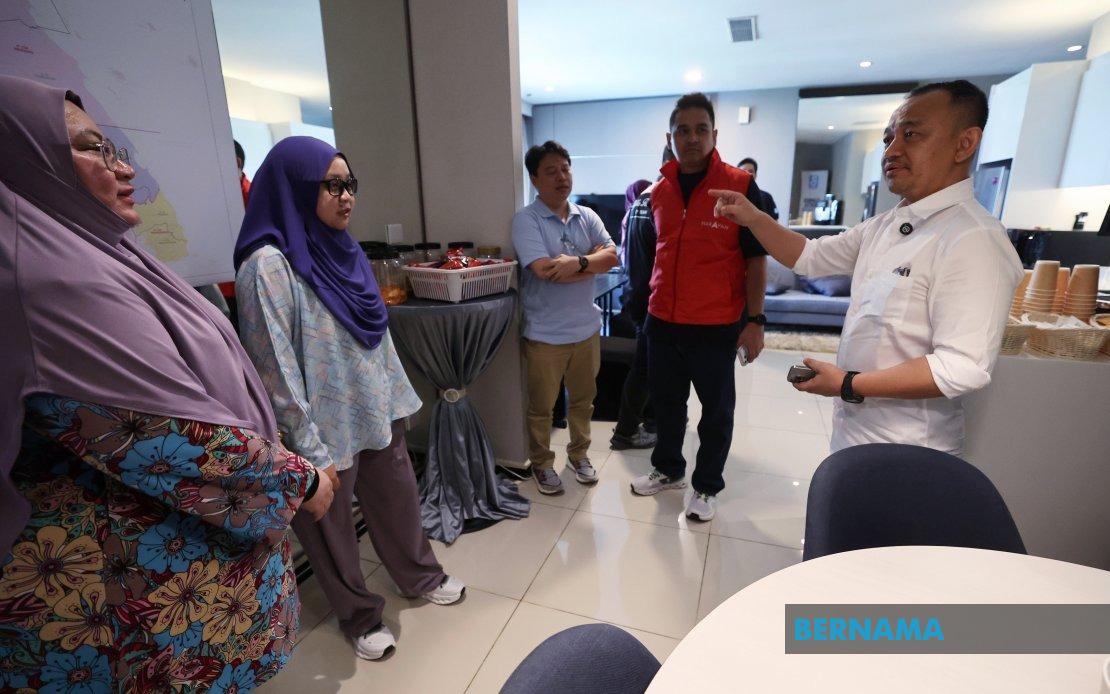
Pakatan Harapan candidate Dr Maszlee Malik is positioning technology as central to his constituency management strategy for Puteri Wangsa, unveiling plans for a bespoke mobile application designed to simplify how residents lodge complaints and report neighbourhood problems. The former education minister believes a digital-first approach is essential given the seat's expansive geography and socioeconomic diversity, which encompasses both prosperous residential enclaves like Austin Heights and rural settlements such as Felda Ulu Tebrau. In an interview ahead of the 16th Johor state election scheduled for July 11, Maszlee articulated his vision of marrying practical governance with technological sophistication to address the unique challenges of representing such a heterogeneous constituency.
Beyond simple complaint mechanisms, Maszlee envisions the application functioning as a tool for identifying marginalised groups who qualify for government assistance but remain disconnected from welfare systems. His proposal specifically targets single mothers and persons with disabilities, populations he suggests often slip through administrative cracks due to bureaucratic complexity or insufficient awareness of available programmes. This targeting reflects a recognition that technological solutions in local governance can simultaneously address inefficiencies in social safety nets while creating direct communication channels between elected representatives and vulnerable constituents. The platform would thus serve dual purposes: streamlining service delivery while acting as an early-warning system for unmet community needs.
Maszlee's approach draws inspiration from international municipal governance models, particularly citing New York City Mayor Zohran Mamdani's methodology of combining digital platforms with social media engagement to solicit direct resident feedback. This global perspective indicates Maszlee's intent to benchmark Puteri Wangsa's constituent services against leading-edge urban governance practices. The emphasis on learning from metropolitan success stories suggests an ambition to transform suburban Malaysian governance through proven international frameworks adapted to local contexts. By explicitly referencing Mamdani's integrated approach, Maszlee positions himself within a contemporary movement towards participatory digital governance rather than treating technology as merely ancillary to traditional political engagement.
The candidate's broader strategy extends beyond a single application, encompassing sustained collaboration with non-governmental organisations, resident associations, and government bodies. Town hall meetings remain integral to this plan, maintaining the human dimension of constituent relations despite heavy investment in digital infrastructure. This balanced approach acknowledges that technological solutions, while efficient, cannot entirely replace face-to-face accountability mechanisms valued in Malaysian political culture. The layering of digital and traditional engagement methods reflects pragmatic understanding that different constituencies respond to varied formats of interaction, and that genuine representation demands multiple channels of access.
Maszlee's campaign architecture explicitly targets demographic segments traditionally difficult to reach through conventional street campaigning. Young voters and Malaysians employed in Singapore represent priority audiences whose participation in local politics has historically been constrained by geographic or temporal barriers. Rather than viewing these groups as peripheral to constituency representation, Maszlee treats them as integral stakeholders deserving tailored engagement strategies. The recognition that professional workers and youth cannot easily attend daytime walkabouts demonstrates sophisticated understanding of how employment patterns and mobility shape political participation in contemporary Malaysia.
Social media emerges as the primary tool for reaching these segments, though Maszlee acknowledges significant limitations inherent in algorithm-driven content distribution. Echo chambers and algorithmic filtering create barriers to message penetration, particularly in contested digital spaces where multiple political narratives compete for attention. To navigate these constraints, his team has developed a granular content strategy differentiating messaging by locality, socioeconomic status, ethnicity, and demographic composition. This segmentation approach treats Puteri Wangsa not as a monolithic constituency but as a mosaic of communities with distinct priorities and concerns requiring customised communication.
The targeting strategy identifies Gen Z voters, Singapore-based Malaysian workers particularly from Chinese communities, peripheral residents outside urban hubs, and working professionals as distinct engagement categories. Each group receives messaging aligned with their presumed concerns and accessibility patterns. This level of demographic precision in political communication reflects broader trends in Malaysian electoral politics towards data-driven campaigns that move beyond universal platforms toward microtargeted messaging. While such approaches enhance campaign efficiency, they also raise questions about political fragmentation where different voters within the same constituency receive fundamentally different messaging about the same candidate.
The Puteri Wangsa contest shapes up as a five-way competition testing whether Maszlee's technology-centred vision gains traction against established rivals. Rashifa Aljunied represents MUDA, Teow Chia Ling contests for Barisan Nasional, Nicholas Paul Vincent carries Parti Bersama Malaysia's banner, while independent Wang Wee Siong completes the field. This crowded contest makes digital differentiation particularly valuable, as emerging candidates often depend on efficient voter targeting rather than traditional party machinery. Maszlee's emphasis on technology-driven engagement may reflect not only genuine conviction about governance innovation but also strategic calculation about competing against established parties with superior ground organisations.
With polling scheduled for July 11 and early voting commencing July 7, the electoral timeline compresses the implementation window for campaign activities. Maszlee's technology-focused promises, while substantive, require post-election execution to demonstrate tangible impact. The viability of his mobile application concept depends on follow-through beyond campaign rhetoric, technical capacity to develop functional systems, and genuine user adoption among constituents accustomed to traditional service channels. Success would position Puteri Wangsa as a testing ground for digital-first local governance in Malaysia, potentially influencing how other elected representatives conceptualise constituent services in increasingly technology-mediated environments.
The broader significance of Maszlee's platform extends beyond individual constituency politics. As Malaysian voters increasingly expect digital engagement options and younger cohorts demand technology-integrated governance, candidates promoting digital-first strategies occupy increasingly competitive terrain. Maszlee's articulation of specific technological solutions rather than vague promises of modernisation distinguishes his approach within crowded electoral markets. However, implementation challenges remain substantial: securing development resources, ensuring cybersecurity and data protection, achieving meaningful user adoption, and demonstrating measurable service improvements all present hurdles between campaign proposal and operational reality. The July 11 election will reveal whether Puteri Wangsa voters view technological innovation as sufficiently central to their representation priorities to outweigh competing campaign messages from other candidates.

