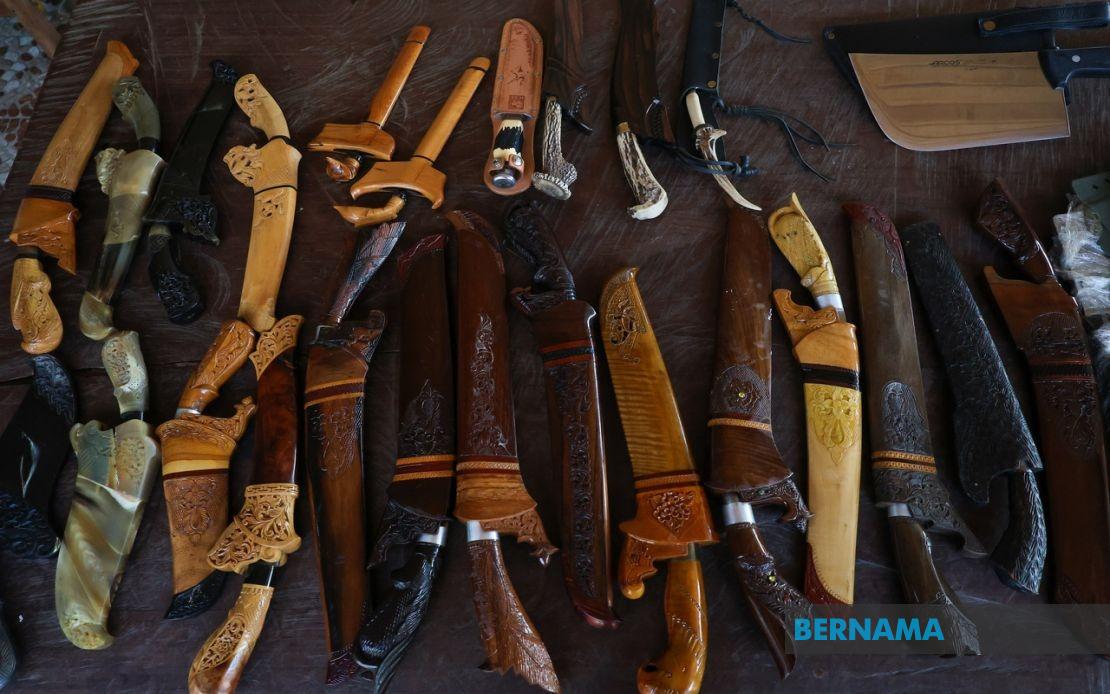
The distinctive bird-headed golok represents far more than a finely crafted blade—it embodies the rapidly diminishing legacy of Kelantan's master blacksmiths, a tradition increasingly threatened as veteran craftspeople pass away and the next generation turns away from the demanding trade. Ahmad, a dedicated 71-year-old collector, has become an unlikely custodian of this vanishing heritage, amassing over 100 traditional and modern weapons worth approximately RM20,000 as a bulwark against cultural erosion.
Ahmad's stewardship of these handcrafted pieces underscores a troubling reality facing Malaysia's artisanal industries: the unique character embedded in each blade by its creator cannot be replicated once that maker is gone. He emphasises that the intrinsic value of such works lies not merely in their material composition or utility, but in the irreplaceable knowledge and artistic identity that each master blacksmith poured into their craft. When a blacksmith passes, Ahmad observes, an entire reservoir of accumulated techniques, design philosophy and cultural understanding vanishes unless carefully transmitted to an apprentice or devoted collector willing to preserve the memory.
The bird motif adorning the golok's hilt carries profound historical resonance rooted in Kelantan's maritime past. Ahmad traces the symbolism to the Petalawali bird figure that once graced the prows of ancient vessels belonging to the Kelantan Sultanate, linking contemporary blade design to centuries of regional identity and seafaring tradition. This connection between functional weapon and historical symbolism demonstrates how traditional craftsmanship operates simultaneously as art form, practical tool, and cultural archive—a convergence increasingly rare in mass-produced modernity.
Beyond its aesthetic and historical dimensions, the bird-shaped hilt serves an ergonomic purpose, providing craftspeople with an ingenious solution to grip design that balances comfort with control. The integration of form and function reflects the sophisticated understanding of weapon-making that distinguished Kelantan's blacksmiths, whose reputation drew collectors from across continents. Ahmad's collection itself testifies to this global recognition, spanning acquisitions from Germany, Sweden, Denmark, England, the United States, Japan, China, Spain and Portugal—evidence that traditional Malaysian craftsmanship commanded respect among serious weapon enthusiasts worldwide.
Ahmad's journey into weapon collecting began two decades ago through collaborative work with a blacksmith friend, initially assisting with the production of hilts and scabbards. This hands-on engagement with the craft provided insight into its technical demands and artistic subtleties, nurturing a passion that has since matured into systematic curation. His collection encompasses machetes, knives, swords and keris, with particularly treasured pieces including a knife fashioned with a Sarawak deer-antler hilt and a keris constructed from black kemuning wood fitted with golden kemuning wood decoration—rare specimens whose provenance and craftsmanship place them beyond monetary valuation.
The preservation of antique weapons demands vigilance and expertise that casual collectors often underestimate. Ahmad maintains a rigorous conservation protocol, storing pieces in a dedicated cabinet and conducting meticulous inspections every three months, applying protective oils to prevent rust and deterioration. This systematic approach reflects understanding that heritage preservation is not a passive accumulation but an active, ongoing commitment requiring knowledge of materials, environmental conditions and restoration techniques. Each inspection ritual represents a quiet affirmation of responsibility to craftspeople whose work deserves protection from the ravages of time and climate.
Despite receiving repeated approaches from collectors willing to pay substantial sums, Ahmad has remained steadfast in his refusal to sell. His reasoning reveals the philosophical stance underpinning genuine preservation work: many pieces in his collection originated from blacksmiths now deceased, their distinctive techniques and creative vision permanently extinguished. Sale would represent not merely commercial transaction but betrayal of trust—a severing of connection between current stewardship and the vanished makers whose names and stories are often lost to history. By maintaining these works intact, Ahmad serves as custodian for creative voices that can no longer speak for themselves.
The broader context of Malaysia's traditional crafts reveals widespread vulnerability similar to that afflicting Kelantan's blacksmithing tradition. As younger Malaysians pursue urban professions and formal education, apprenticeship-based knowledge transmission has become increasingly fragile. The economics of handcrafted production struggle against industrial competition, making mastery of labour-intensive techniques an economically precarious choice for aspiring artisans. This structural challenge transcends individual effort or passion, requiring systemic support through education, market development and cultural valuation to reverse.
Ahmad's vision for the future attempts to navigate between preservation and dynamism—maintaining the identity, artistry and cultural values inherent in traditional blacksmithing while embracing innovation as mechanism for contemporary relevance. This balanced approach recognises that heritage need not be frozen in amber but can evolve while retaining its essential character. The challenge lies in identifying which innovations enhance craft rather than diminish it, which adaptations serve function rather than dilute authenticity. For Kelantan's blacksmithing tradition to survive beyond Ahmad's stewardship, such questions require engagement from policymakers, educational institutions, and the broader Malaysian public willing to value handmade excellence over mass-produced convenience.

