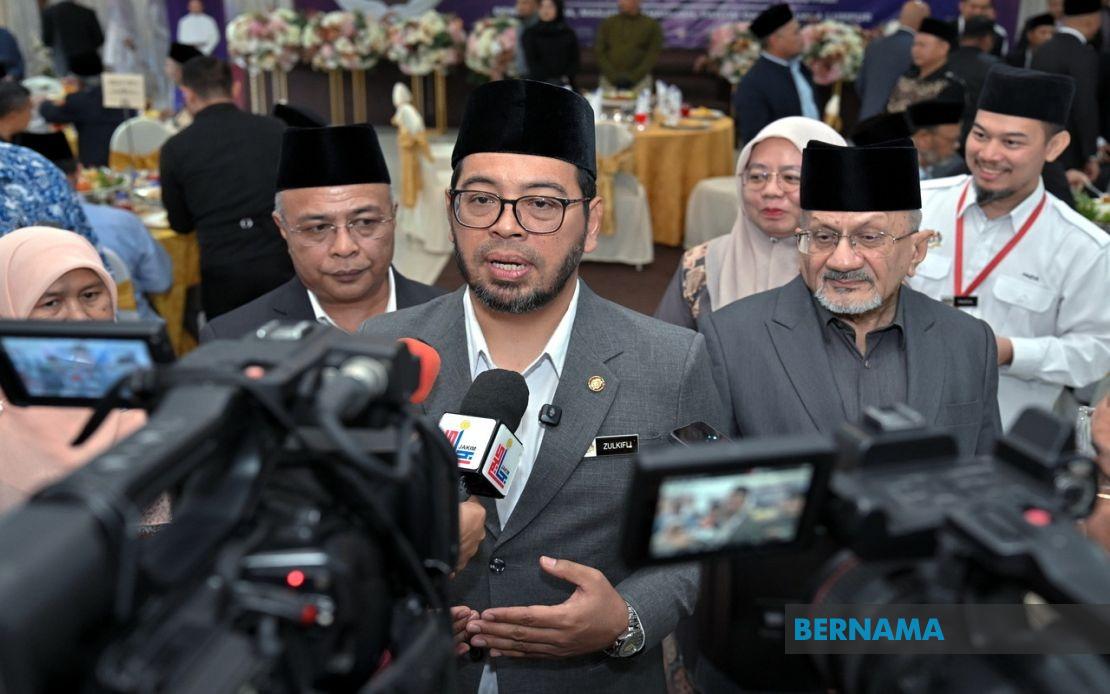
The construction of Masjid Warisan, strategically positioned in front of the Tun Razak Exchange (TRX) tower in Kuala Lumpur, will move forward as planned, according to Minister in the Prime Minister's Department (Religious Affairs) Dr Zulkifli Hasan. Speaking to reporters on June 23, the minister expressed determination to advance the long-established initiative, framing it as part of a broader vision to strengthen mosques' function as community anchors and spaces for social harmony.
Dr Zulkifli's statement comes against the backdrop of public controversy surrounding the project. Several quarters have questioned the necessity and feasibility of the mosque, with detractors claiming its development could generate social friction and trigger widespread public dissatisfaction. These concerns, while largely undocumented in mainstream discourse, appear to reflect deeper anxieties about urban planning, religious infrastructure development, and community integration in Malaysia's bustling capital city.
The minister's response to these objections has been measured and institutional. Rather than dismissing critiques outright, he has invited those harbouring reservations to engage directly with the Federal Territories Islamic Religious Council (MAIWP) for technical clarification and substantive dialogue. This approach underscores the government's intent to balance development objectives with community consultation, though it remains unclear what specific concerns MAIWP might address or how their responses would alter the project's trajectory.
Dr Zulkifli's defence of the project extends beyond Malaysia's borders. He drew attention to the global prevalence of mosques in major metropolitan centres worldwide, noting that the Islamic call to prayer functions as a source of spiritual peace and communal tranquillity rather than discord. This comparative framing attempts to reposition the Masjid Warisan initiative within an international context of religious pluralism and urban coexistence, suggesting that concerns about the mosque are parochial rather than substantive.
The TRX area, one of Kuala Lumpur's most significant recent developments, represents a convergence of finance, commerce, and urban renewal. The introduction of Masjid Warisan within this commercial and leisure hub carries symbolic weight—it positions Islamic institutional presence within Malaysia's most cosmopolitan spaces, signalling that religious infrastructure is integral to the nation's modern identity rather than peripheral to it. For regional observers watching Malaysia's approach to religious pluralism and urban development, the project offers insights into how Southeast Asian cities navigate these intersecting dimensions.
Beyond the Masjid Warisan announcement, Dr Zulkifli's activities reflect the ministry's broader engagement with mosque governance and leadership development. On the same day, he formally presented appointment letters to members of the Federal Territories Mosque and Friday prayer surau committee for the 2026-2029 term during a ceremony at Masjid Al-Khadijah, Kampung Pantai Dalam. This institutional transition underscores the systematic approach the ministry employs in refreshing mosque management structures across the federal territories.
The scale of this committee renewal is substantial. A total of 3,010 nominations were received for the 2026-2029 session, representing a significant expression of interest and civic engagement across a network of 91 mosques and 124 Friday prayer surau throughout the federal territories. This high nomination rate suggests active communities and institutional vitality within Malaysia's mosque sector, though it also indicates the competitive nature of these volunteer leadership positions.
The selection process for these committee positions incorporated rigorous integrity vetting protocols. Of the 3,010 nominees, 2,914 candidates ultimately qualified following a comprehensive screening process involving three major national institutions: the Royal Malaysia Police, the Malaysian Anti-Corruption Commission, and the Insolvency Department. This multi-agency approach reflects growing emphasis on governance standards and institutional transparency within Malaysia's religious sector, mirroring broader trends toward accountability in civic and community organisations.
The integrity vetting framework carries implications beyond the immediate selection process. By subjecting mosque committee candidates to police checks, corruption audits, and insolvency screening, the government signals that religious institutional leadership must meet the same ethical standards applied to secular civil service roles. For Malaysian observers concerned about governance quality across all sectors, this development might be read as encouraging; for others, it might prompt questions about the relationship between religious authority and state oversight.
The Masjid Warisan project, viewed alongside these governance initiatives, forms part of a coherent portfolio of religious institution-building under the current administration. Rather than treating mosques as static historical artifacts or purely devotional spaces, the ministry appears to be reconceiving them as dynamic social infrastructure requiring continuous investment in physical plant, leadership development, and institutional modernisation. This vision aligns with Dr Zulkifli's explanation that the project is designed to reinforce mosques' emerging role as centres of social harmony—a formulation that extends beyond purely religious functions into civic and communal domains.
For Southeast Asian stakeholders tracking Malaysia's religious policy evolution, the Masjid Warisan initiative presents a case study in balancing development ambitions with community sensitivities. The project's location within the high-profile TRX development zone, coupled with leadership's willingness to defend it publicly while offering consultation channels, suggests a government confident in its vision but responsive to stakeholder concerns. Whether this approach successfully mitigates public anxiety or merely delays resolution of underlying tensions will become clearer as construction commences and the mosque becomes operational within Kuala Lumpur's urban fabric.