The traditional summer slowdown in financial markets is taking a backseat this August as policymakers and investors grapple with a constellation of pressing issues spanning currency stability, price pressures, and geopolitical risks. Far from enjoying a leisurely break, market participants are bracing for a week packed with economic releases and potentially significant policy moves that could reshape trading strategies across multiple asset classes and time zones.
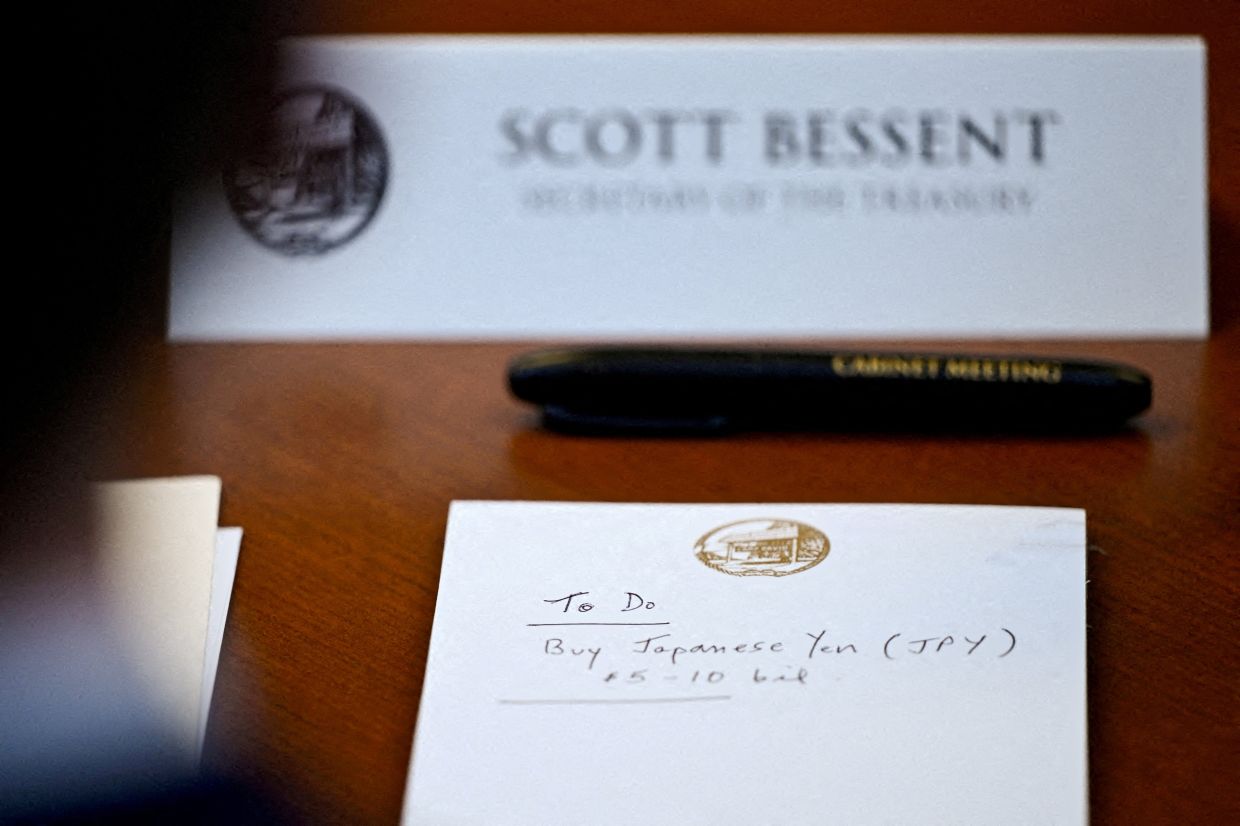
Japanese currency weakness has emerged as a particularly vexing challenge for Tokyo's policymakers, with the yen languishing at four-decade lows that threaten to inflate the already-burdensome costs of imported energy and raw materials. This predicament has thrust the country into an unfamiliar position of requiring coordinated international intervention. U.S. Treasury Secretary Scott Bessent's visibility in discussions—including a photo opportunity featuring yen purchases on his agenda—combined with a rare joint U.S.-Japanese currency support operation, has provided some relief to concerned officials in Tokyo. Yet the underlying fragility of the yen suggests that these measures may prove temporary without complementary policy actions from the Bank of Japan itself.
Foreign exchange traders are watching two critical developments that could determine whether the yen's bounce proves sustainable. The foremost question concerns whether Japan's central bank will telegraph its intention to raise interest rates in September, a move that would reinforce market confidence in the currency's recovery. Minutes released Monday from the bank's July deliberations have strengthened the intellectual case for such a step. Beyond this tactical consideration lies a more profound strategic puzzle: the decision to employ euros rather than dollars in the U.S. intervention operation. Market analysts interpret this choice as a signal that Washington is reluctant to exacerbate strains on Treasury markets—strains that might otherwise materialise if foreign central banks sold American government bonds to fund their currency defence operations. This episode underscores an enduring debate about whether the dollar can indefinitely maintain its pre-eminent position as the world's reserve currency amid changing geopolitical alignments and capital flows.
Meanwhile, the protracted conflict in the Middle East continues to weigh on oil markets and investor sentiment. Fresh diplomatic overtures between Iran and Oman—notably absent any formal U.S. involvement or endorsement—aim to restore safe passage through the Strait of Hormuz, a chokepoint through which vast quantities of global energy supplies transit daily. With the conflict now stretching into its 24th week, however, veteran observers remain sceptical that any agreement will prove durable. Iran-backed Houthi militias operating from Yemen have mounted repeated attacks on shipping in the Red Sea and launched strikes against Saudi Arabia, demonstrating their capacity to disrupt commerce regardless of high-level diplomatic negotiations. For the Biden administration facing midterm electoral pressures, the stubborn persistence of petrol prices above $4 per gallon represents a political vulnerability that any near-term accord could temporarily ease, regardless of its ultimate staying power.
On the inflation front, American economic data arriving mid-week carries particular significance given recent crosscurrents in labour and price dynamics. The consumer price index for July, expected to show a year-on-year increase of 3.4 percent, arrives at a moment when the Federal Reserve faces genuine uncertainty about its policy direction. Core inflation, which strips away volatile food and energy components, is forecast to have risen 2.5 percent annually—still meaningfully above the Fed's 2 percent target. Last week's surprise announcement of job losses in July has injected confusion into an otherwise gradually firming labour picture, creating a dilemma for policymakers. Until recently, the Fed faced mounting pressure to resume raising rates, but deteriorating employment data has muddied this consensus. Markets are currently pricing in roughly a 40 percent probability of a rate increase when the Fed next meets in September, but this probability remains highly sensitive to incoming data. Producer price figures arriving Thursday will provide crucial supplementary information about inflationary pressures across supply chains.
Britain's new Prime Minister will be scrutinising Thursday's GDP release with particular intensity. The figures, covering both the second quarter and June specifically, arrive at a sensitive moment for a government only recently installed. June retail sales data had shown unexpected strength, buoyed by consumer spending linked to sporting events and unusually warm weather, potentially setting up a positive surprise for the monthly GDP reading. However, the broader quarterly picture appears less encouraging, as the momentum evident in the first three months of the year faltered noticeably during April and May. Prime Minister Andy Burnham will naturally be hoping for the kind of upside surprise that the eurozone delivered when preliminary data showed the bloc expanding faster than initially estimated in the second quarter—a revised estimate for which is also due Thursday.
Australia's central bank is expected to maintain its current policy stance when it convenes Tuesday, a holding pattern that reflects policymakers' intention to assess whether the three rate increases implemented so far this year have sufficiently dampened inflationary pressures. Recent consumer price data suggested inflation is moderating, a welcome development that provides some comfort to the Reserve Bank's leadership. Governor Michele Bullock has nonetheless signalled the bank's readiness to tighten further if conditions warrant, maintaining the credibility of its inflation-fighting credentials. Over in Scandinavia, Norway's Norges Bank similarly faces a decision Tuesday with similar expectations of steady policy, having already seen core inflation decelerate in June from previous months.
The cumulative effect of these simultaneous data releases and policy meetings across major economies underscores how interconnected contemporary financial markets have become. A hotter-than-expected inflation reading in the United States could reverberate through currency markets, potentially affecting the yen-dollar dynamics that have preoccupied traders all week. Disappointing growth figures from Britain or the eurozone might reinforce perceptions that developed economies are facing synchronised slowdowns, shifting capital allocation patterns globally. Even the Reserve Bank of Australia's deliberations carry implications beyond antipodean shores, as investors reassess the divergence in monetary policy tightening across different regions. For market participants in Malaysia and throughout Southeast Asia, these developments matter enormously, as they influence capital flows, currency valuations, and the export prospects for regionally-produced goods destined for advanced economies.

