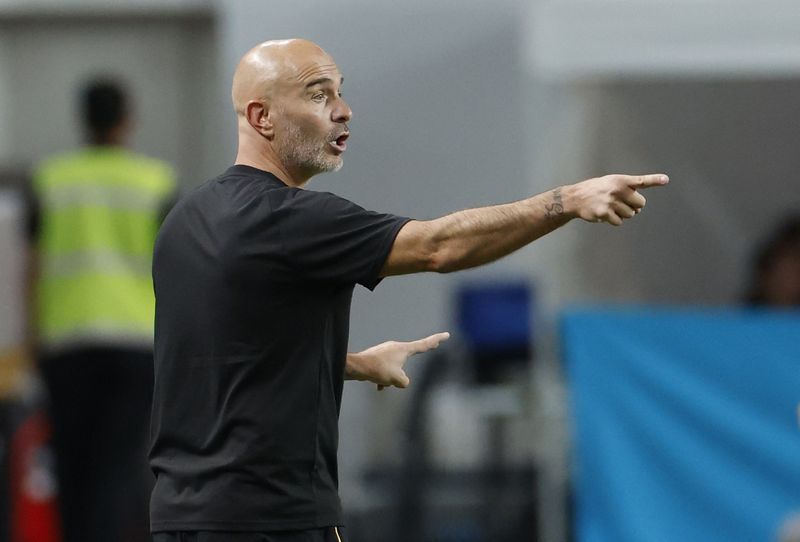
Manchester City enters uncharted territory this season with Enzo Maresca replacing Pep Guardiola as manager, ending a transformative decade that reshaped English football. The Spaniard's departure marks a watershed moment for the Premier League's most successful recent franchise, leaving behind a legacy of six domestic titles, a Champions League triumph, and the tactical template that continues to influence modern football. Maresca inherits not merely a squad of players but an institution built on principles of possession-based football, tactical sophistication, and relentless excellence—a standard that will shape every judgment made about his tenure from day one.
The 46-year-old Italian is no outsider to City's ecosystem, having served as part of Guardiola's coaching apparatus during the club's historic treble-winning season. This distinction separates him from a typical managerial appointment; he understands the philosophical underpinnings of City's football, the daily operational rhythms, and the exacting demands embedded within the organizational culture. Beyond his familiarity with the Etihad, Maresca has demonstrated managerial credentials that convinced City's hierarchy of his readiness. He successfully guided Leicester City back to Premier League status and claimed trophies at Chelsea, suggesting capability in both building projects and winning immediately—attributes City requires in its leadership transition.
The club's recruitment strategy signals an intention toward evolutionary rather than revolutionary change. Rather than dismantling Guardiola's tactical framework, City has sought continuity through Maresca's appointment and reinforcement of the midfield with the £116 million acquisition of Elliot Anderson from Nottingham Forest. The English midfielder brings ball-winning intensity and energy to the centre of the pitch, addressing depth concerns whilst maintaining the technical standards City demands. Emerging talents including Rayan Cherki and Nico O'Reilly provide additional midfield options with creative potential, suggesting the club has invested in both experience and youthful dynamism.
Yet the composition challenge is complex. The departures of Bernardo Silva and John Stones represent not merely the loss of players but erosion of institutional experience and dressing-room leadership. These departures, particularly Silva's exit after years of distinguished service, create a cultural vacuum that transcends tactical adjustments. Maresca must therefore navigate dual imperatives: maintaining the technical and strategic approach that built City's dominance whilst simultaneously establishing sufficient differentiation to project his own managerial identity and command the squad's allegiance.
The attacking dimension remains formidable. Erling Haaland, the striker who has led the Premier League's scoring charts in three of the past four seasons, provides an almost unfair advantage in goal output. The Norwegian's efficiency and positioning sense represent a guaranteed offensive foundation upon which Maresca can construct tactical variations. Complementing Haaland is Rodri, the midfielder whose passing accuracy, spatial intelligence, and defensive positioning have become central to City's midfield control. Rodri's recent contributions to Spain's World Cup triumph, including the tournament's Golden Ball, underscore his status as one of European football's finest midfielders—though Barcelona's interest introduces uncertainty regarding his future availability.
The question of squad adaptation extends beyond individual capabilities to collective adjustment. Guardiola's influence transcended tactical instruction, encompassing the broader cultural framework through which City operated. His ability to extract marginal improvements, his standards for training intensity, and his methods for managing player ego created an institutional environment distinct from most professional environments. Maresca's challenge involves replicating this atmospheric intensity whilst avoiding the appearance of slavish imitation, a balance that requires genuine leadership confidence and creativity.
Last season's conclusion provided ambiguous signals for City's trajectory. Whilst winning the domestic cup double satisfies most organizations, finishing second to Arsenal in the Premier League represented underperformance relative to the standards Guardiola established. This reality calibrates expectations for Maresca's arrival. City's ownership and supporter base will tolerate neither stylistic compromises nor results that deviate from title contention. The adjustment period traditionally granted to new managers may be considerably compressed at an institution accustomed to consistent excellence and immediate trophy delivery.
For Southeast Asian and Malaysian observers following English football, City's managerial transition offers instructive lessons about institutional continuity and organizational resilience. The club's approach—appointing an internal continuity figure rather than a marquee external name—reflects sophisticated understanding that managerial change need not entail wholesale transformation. This philosophy contrasts with more reactive approaches that replace departing figures with prestigious alternatives, potentially creating cultural disruption. City's methodology suggests that deep institutional knowledge and alignment with established philosophies can outweigh headline appeal.
The technical challenge facing Maresca involves refinement rather than reconstruction. City's positional play, pressing triggers, and ball circulation patterns represent evolved systems that require subtle adjustment rather than fundamental overhaul. However, genuine managerial identity demands some tactical innovation—whether through adjusted defensive approaches, altered attacking sequences, or modified transition play. The finest managers succeed through respectful evolution rather than reverent repetition, and Maresca must navigate this distinction whilst maintaining the squad's confidence during the critical early weeks of competition.
Maresca's first examination arrives on August 23 when City hosts Bournemouth in their season opener, a fixture that will provide preliminary assessment of tactical adjustments and player integration. Beyond this immediate engagement stretches a campaign in which City must simultaneously manage the departure of their defining managerial figure and mount another convincing title challenge. The Italian's success will ultimately depend on demonstrating sufficient continuity to preserve institutional momentum whilst injecting sufficient innovation to justify his appointment as an independent leader rather than merely Guardiola's understudy continuing established patterns.
The broader narrative extending across English football concerns whether dominant institutions remain capable of maintaining excellence through managerial transition. Manchester City possesses the structural advantages—elite players, financial resources, and a sophisticated organizational infrastructure—that theoretically enable successful succession. Whether Maresca proves capable of translating these advantages into sustained dominance will determine not merely City's immediate competitive trajectory but establish broader precedent regarding managerial transitions at elite European institutions.

