President Ferdinand Marcos Jr has reiterated his unwavering trust in the Armed Forces of the Philippines, even as allegations emerged that serving uniformed personnel may be connected to a purported scheme to assassinate the nation's chief executive. The statement from the Presidential Palace underscores the delicate balancing act required when institutional confidence must be preserved against mounting security concerns rooted within the defence establishment itself.
During testimony at the ongoing impeachment proceedings of Vice President Sara Duterte on Wednesday, National Bureau of Investigation Director Melvin Matibag disclosed that individuals currently serving in active military roles feature prominently among those being investigated as persons of interest in connection with the alleged plot. The revelation carries significant weight given the constitutional role that the armed forces play in ensuring presidential security and maintaining the nation's stability.
Beyond military personnel, the investigation has expanded to encompass another person of interest identified as a member of the Vice President's own security detail, suggesting the alleged conspiracy may have tentacles reaching into multiple branches of the state security apparatus. This development raises troubling questions about the integrity of protective services and the potential for institutional mechanisms designed to safeguard leadership to become compromised from within.
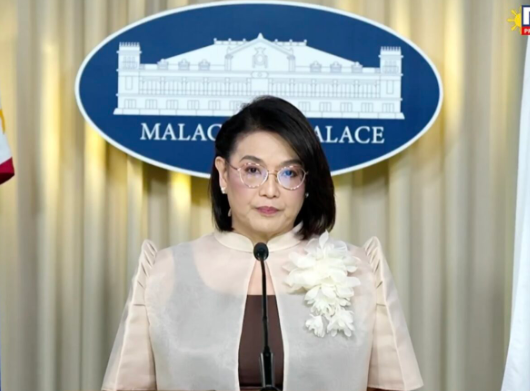
Speaking at a media briefing, Presidential Press Officer Claire Castro articulated the administration's official position with careful calibration. She emphasized that Marcos Jr maintains complete confidence in the armed forces as an institution while simultaneously acknowledging that any personnel who deviate from their constitutional duties must be identified and held accountable. This rhetorical approach attempts to distinguish between faith in the institution and recognition that individual bad actors may exist within its ranks.
Castro further elaborated that the Palace views the situation not merely as a security matter but as a broader question of institutional integrity and the rule of law. She stressed that individuals who might seek to breach legal boundaries in pursuit of narrow factional interests or to advance the agenda of particular political figures warrant investigation and appropriate action. The statement carries implicit criticism of those who might weaponize state apparatus for personal or political advantage.
The Palace emphasized that no loyalty audits or purges are currently being conducted within the military hierarchy, suggesting confidence that existing command structures and leadership can be trusted to police their own ranks. However, this restraint also reflects the political sensitivity surrounding any suggestion of mass questioning of military personnel, which could trigger institutional morale problems or wider concerns about civil-military relations.
The developing situation gained additional dramatic dimensions through statements attributed to Vice President Duterte during the impeachment trial. According to reports in Filipino, Duterte claimed to have given explicit instructions regarding succession in the event of her own assassination, naming President Marcos Jr, businesswoman Liza Araneta, and congressman Martin Romualdez as targets of concern. These remarks, while cryptic in their specifics, underscore the climate of heightened tension surrounding the current political situation.
The Vice President's subsequent non-compliance with an NBI subpoena requesting her formal appearance has further complicated the investigative process and deepened questions about the willingness of high government officials to cooperate fully with law enforcement inquiries. Her refusal to submit to questioning, framed against the backdrop of allegations swirling around her supporters and associates, has intensified political temperatures and raised concerns about the limits of accountability even for those occupying the highest offices.
For Malaysian observers monitoring developments in the Philippines, this situation illustrates the persistent vulnerabilities that plague presidential security systems across the region. The notion that assassination plots could involve active military and security personnel points to deeper institutional challenges regarding meritocratic advancement, loyalty incentives, and the cultivation of professional military cultures insulated from factional political pressures. Similar concerns about the politicization of security forces periodically surface across Southeast Asia, making the Philippine experience instructive for regional security analysts.
The Palace's measured response reflects the difficult position facing any sitting president confronted with allegations of conspiracy originating from within state institutions. Maintaining institutional confidence while pursuing legitimate security investigations requires careful messaging and demonstrated commitment to accountability without appearing to wage political warfare against the military establishment. How the Marcos administration navigates this challenge in coming weeks will likely establish important precedents for civil-military relations and institutional integrity in the Philippines.
The broader implications extend beyond immediate security concerns to questions about governance stability and public confidence in constitutional institutions. When those entrusted with presidential protection become objects of suspicion themselves, the foundations of institutional trust face erosion that takes considerable time and demonstrated reform to restore. The impeachment proceedings against Vice President Duterte, the assassination allegations, and the coordination of factional interests across security and political spheres create a complex landscape of institutional vulnerability that administration officials must address through transparency and rigorous accountability measures while preserving the morale and operational effectiveness of essential security institutions.

