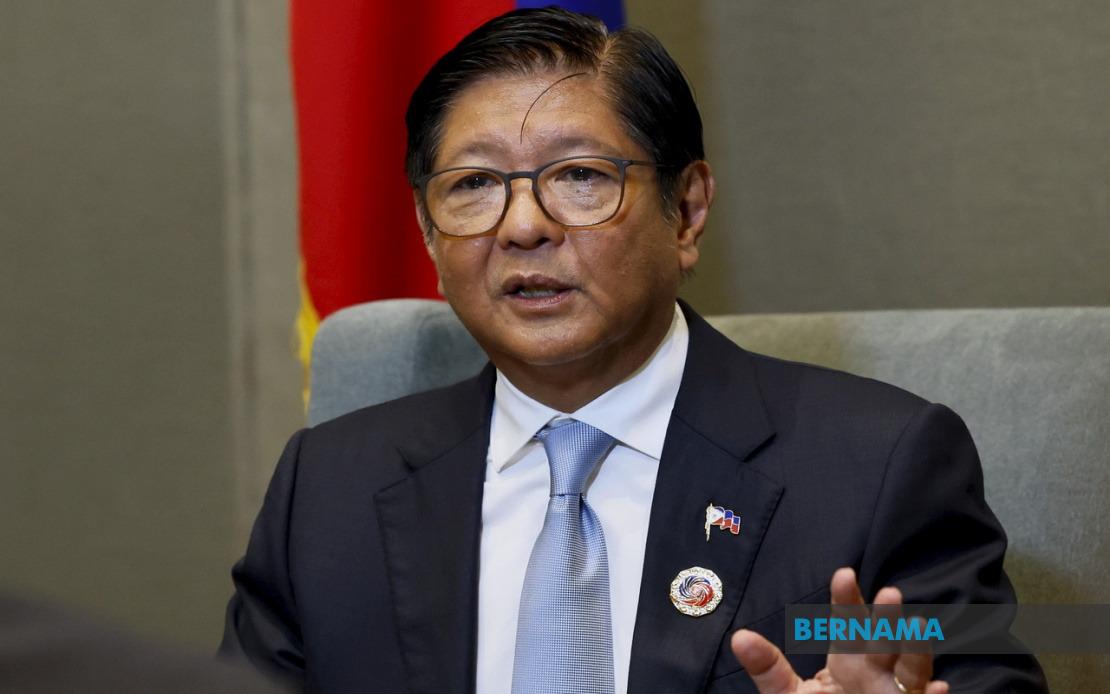
President Ferdinand R. Marcos Jr. has cast the Association of Southeast Asian Nations as the Philippines' most reliable bulwark against an increasingly turbulent global landscape, emphasising the bloc's capacity to safeguard regional interests in matters spanning security, food systems, and energy infrastructure. Speaking during his fifth State of the Nation Address delivered on Monday, the Philippine leader articulated a vision of ASEAN as both a geographic proximity and a deeper community of shared values, positioning Southeast Asia as a zone of mutual protection amid deepening geopolitical complexities and economic headwinds that extend across the world.
The President's framing of ASEAN as a "safe harbour" reflects Manila's strategic recalibration toward regional multilateralism at a moment when traditional alliances face unprecedented strain and external powers compete for influence across Southeast Asia. Rather than rely exclusively on distant partnerships, Marcos argued that the Philippines and its ASEAN neighbours possess within their immediate environment the institutional and collective mechanisms necessary to weather external shocks and navigate territorial sensitivities. This rhetorical pivot underscores a recognition that regional cohesion offers tangible advantages—from coordinated responses to supply chain disruptions to unified diplomatic positioning on matters affecting all member states.
Under the Philippines' chairmanship of ASEAN summits this year, Manila has promoted deeper solidarity among the ten member states while simultaneously addressing transnational challenges demanding collective action. The administration successfully championed the establishment of the ASEAN Plus Three Emergency Rice Reserve, a mechanism designed to mitigate food security vulnerabilities across the region. By creating a pooled stockpile accessible during domestic production failures or acute shortages, the arrangement acknowledges that agricultural shocks in one country can cascade across borders, affecting prices, availability, and social stability throughout Southeast Asia. For Malaysia and other nations dependent on rice imports or facing agricultural volatility, such an initiative carries obvious relevance to food security planning.
Beyond agricultural resilience, the Philippines has driven the operationalisation of the ASEAN Digital Economy Framework, an initiative aimed at harmonizing regulatory approaches to digital commerce, fintech services, and financial technology across the bloc. By reducing friction in cross-border digital transactions and standardizing frameworks for digital banking and financial services, the framework promises to unlock economic opportunities for small enterprises and underbanked populations throughout the region. This harmonization effort represents a practical acknowledgment that Southeast Asia's digital future depends on interoperable standards rather than fragmented national approaches that would hinder innovation and market integration.
Energy security forms another pillar of the Philippines' ASEAN agenda. Marcos highlighted the ratification of the Framework Agreement on Petroleum Security, which establishes mechanisms for joint stockpiling of petroleum reserves among member states. This arrangement directly addresses vulnerabilities exposed by supply disruptions, geopolitical tensions affecting shipping lanes, and the Middle East conflict's spillover effects on regional energy markets. By coordinating petroleum reserves, ASEAN nations reduce individual exposure to price volatility and supply interruptions while demonstrating the collective capacity to buffer external economic shocks—a lesson increasingly relevant as energy transition pressures intensify across the region.
The President also underscored the Philippines' infrastructure readiness to participate in the long-contemplated ASEAN Power Grid initiative. With Luzon, Visayas, and Mindanao now fully interconnected, the Philippines possesses the domestic grid integration necessary to export surplus electricity to neighbouring nations and participate in regional energy sharing arrangements. Such interconnection holds profound implications for Southeast Asia's energy future, enabling renewable energy generation in one country to serve demand across borders and facilitating more efficient dispatch of power resources. For Malaysia and other nations pursuing renewable energy targets, regional grid integration could accelerate decarbonisation while enhancing reliability.
Marcos characterised ASEAN's collective approach through the Filipino concept of "bayanihan"—communal cooperation rooted in shared responsibility and mutual aid. Invoking this cultural frame strategically positions regional cooperation not as transactional alliance-building but as an extension of deeply held Filipino values applied to international relations. The rhetoric resonates with broader Southeast Asian cultures emphasizing community and collective welfare, thereby legitimizing ASEAN integration as culturally consonant rather than externally imposed.
The President seized the occasion to renew the Philippines' appeal for global peace, noting that ASEAN members and the Filipino people fundamentally oppose violent conflict. He called on warring parties worldwide to return to diplomatic engagement, emphasising that genuine diplomacy constructs whereas armed conflict destroys. This stance reflects ASEAN's traditional commitment to non-interference and peaceful settlement, though Marcos' invocation of universal peace principles also positions Southeast Asia as a moral voice capable of contributing to global stability conversations, particularly relevant given Middle East tensions affecting regional energy and maritime commerce.
Marcos concluded his ASEAN segment by reasserting that peace and order form irreducible foundations for security at national, regional, and global scales. Development, prosperity, and resilience cannot flourish amid conflict or instability. This logical progression—from internal order to regional cooperation to global peace—frames ASEAN integration as simultaneously serving Philippine national interests and advancing broader international stability. For Malaysian policymakers and regional observers, Marcos' articulation provides insight into how the Philippines intends to exercise its leadership role within ASEAN while maintaining diplomatic balance among competing external pressures and internal development imperatives.

