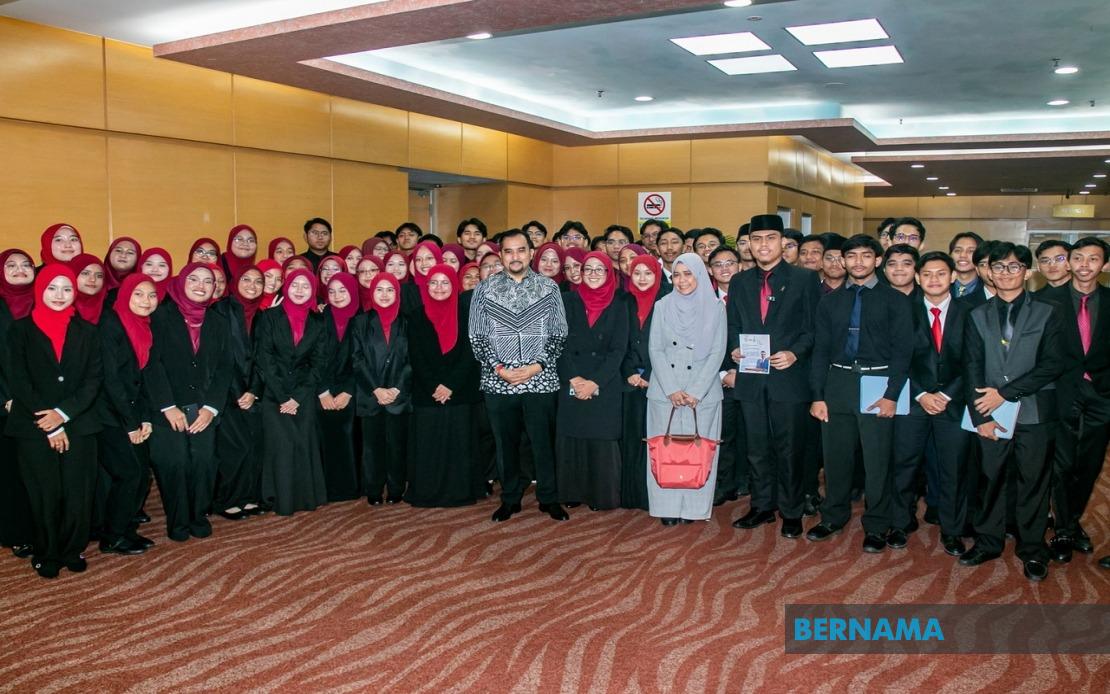
Majlis Amanah Rakyat (MARA) has rekindled its partnership with Al-Azhar University in Egypt by dispatching 78 medical students as the inaugural intake under a resurrected scholarship programme that had lain dormant since 2019. The decision, which received Cabinet endorsement, marks a strategic return to educational collaboration with one of the Arab world's most prestigious institutions, signalling Malaysia's continued investment in overseas medical training despite domestic capacity constraints.
Chairman Datuk Dr Asyraf Wajdi Dusuki confirmed the initiative during the 2026 Premier MARA-Sponsored Overseas Students Pre-Departure Programme ceremony, emphasizing the financial prudence of the arrangement. The total expenditure per student across the five-year medical course, encompassing tuition and residential costs, stands at RM350,000—a figure rendered substantially more attractive by Al-Azhar University's provision of a 50 per cent discount to Malaysian applicants. This translates to considerable savings when juxtaposed against domestic medical education, where institutional fees and living expenses typically aggregate between RM700,000 and RM800,000 per candidate.
The resumption reflects broader policy considerations within Malaysia's higher education ecosystem. Domestic medical schools operate under considerable capacity constraints, with limited intake quotas creating fierce competition among prospective students. By reactivating partnerships with foreign institutions offering competitive terms, MARA effectively expands the talent pipeline for future physicians while managing public expenditure more efficiently. The Al-Azhar arrangement appears particularly advantageous given the university's historical standing in Islamic and medical scholarship across the Muslim world.
Datuk Seri Anwar Ibrahim's government approval of the scheme underscores a pragmatic approach to skills development and workforce planning. Rather than viewing overseas education as a secondary option, the administration recognises strategic advantages in accessing world-class instruction whilst maintaining cost discipline. For students from lower and middle-income backgrounds whom MARA traditionally supports, the accessibility of quality medical training through subsidised overseas programmes represents transformative opportunity that might otherwise remain beyond reach.
Beyond the Al-Azhar initiative, MARA's broader scholarship apparatus demonstrates considerable momentum. Approximately 600 students completing preparatory studies at MARA institutions across Seremban, Banting, and Kuala Nerang are commencing overseas placements in phased departures beginning the following week. These cohorts target geographically and academically diverse destinations—New Zealand, Canada, Australia, South Korea, the United Kingdom, and Egypt—reflecting a portfolio approach to tertiary education that avoids concentration risk whilst exposing scholars to varied pedagogical and professional environments.
The calibre of institutional placements achieved by MARA-sponsored candidates further validates the scheme's effectiveness. Eleven scholars have secured admission to Imperial College London, consistently ranked among global education's elite institutions. More broadly, the agency has facilitated entry for 40 students into universities occupying the world's top ten rankings, whilst 107 recipients have gained acceptance to top-20 ranked establishments. These outcomes suggest MARA's selection mechanisms and preparatory infrastructure successfully identify and develop high-potential candidates capable of competing within intensely competitive international admissions processes.
The geographic distribution of MARA scholars reflects calculated diversification. Australia and New Zealand increasingly attract Malaysian medical graduates through English-medium instruction and recognition pathways that simplify subsequent professional registration. Canadian and United Kingdom placements continue appealing to those prioritising North Atlantic educational credentials and eventual immigration prospects. South Korean institutions represent an emerging dimension, reflecting growing Malaysian interest in Asian academic hubs beyond traditional East Asian centres. Egypt itself, through Al-Azhar, maintains particular resonance for Malaysian students seeking Islamic institutional contexts alongside rigorous scientific training.
For Malaysia's healthcare workforce development strategy, these overseas pathways address immediate and medium-term challenges. Domestic medical school expansion occurs gradually given capital intensity and faculty recruitment constraints. International scholarships allow acceleration of physician supply whilst simultaneously internationalising the medical profession—graduates returning with exposure to divergent healthcare systems, research methodologies, and clinical practices. This cross-pollination enriches domestic medicine and positions Malaysia as increasingly integrated within global professional networks.
The Al-Azhar partnership specifically carries additional significance within Malaysian-Arab relations. Educational cooperation strengthens bilateral ties and demonstrates Malaysia's serious engagement with Islamic institutional excellence. Al-Azhar's standing across the Arab and Muslim worlds means Malaysian graduates emerging from its programmes acquire both technical qualifications and enhanced regional integration. This proves particularly valuable for physicians considering Middle Eastern career opportunities or those committed to advancing Islamic approaches to contemporary medical ethics and practice.
Financially, MARA's capacity to negotiate substantial discounts reflects both its institutional standing and the genuine mutual interest Al-Azhar possesses in attracting Southeast Asian scholars. The 50 per cent reduction significantly alters cost-benefit calculations for sponsor and student alike. Where unsubsidised international medical education often exceeds RM600,000 across five years, MARA-negotiated terms approach domestic pricing whilst offering alternative pedagogical contexts and credential recognition advantages.
Looking forward, the scheme's sustainability depends on consistent Cabinet support, continued Al-Azhar engagement, and demonstrated employment outcomes for returning graduates. Malaysian employers—both governmental and private sector—must actively recruit Al-Azhar graduates to validate the investment and encourage future cohorts' commitment. Professional registration pathways require ongoing clarity to ensure international qualifications translate efficiently into domestic licensure and practice rights.
The programme's resurrection ultimately reflects confidence that Malaysian medical education is neither zero-sum nor insular. Strategic overseas partnerships, carefully structured and fiscally managed, augment rather than cannibalize domestic capacity. For aspiring physicians from MARA's target demographic, the restored Al-Azhar pathway represents genuine expanded opportunity—access to internationally recognised medical credentials at costs making such achievement feasible without imposing crippling financial burdens on families or the national purse.

