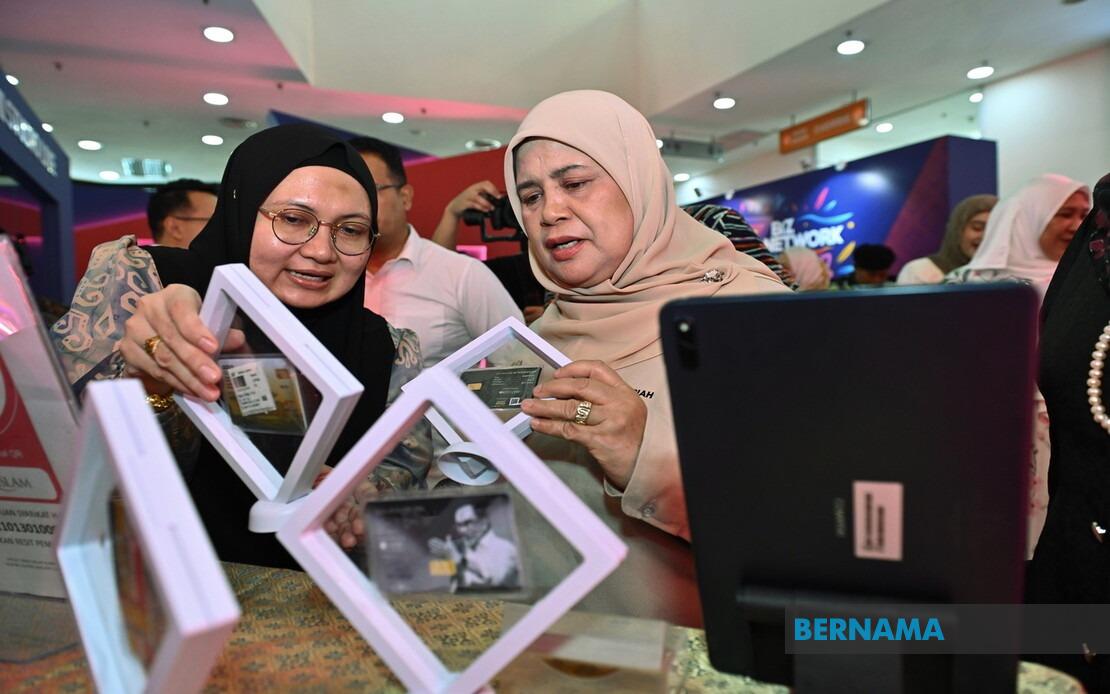
The Majlis Amanah Rakyat (MARA) has set an ambitious RM1 million sales target through its BizNetwork Sarawak programme, a strategic initiative designed to digitally empower local business owners and foster cross-market connections that could reshape how small enterprises operate in East Malaysia. The programme, which kicked off its three-day showcase in Kuching on July 25, represents MARA's effort to transpose successful entrepreneurial models from the peninsula to Sarawak's distinct business landscape.
Deputy Minister of Rural and Regional Development Datuk Rubiah Wang unveiled the initiative, emphasising that the sales goal was calibrated on proven outcomes from BizNetwork's application across Peninsular Malaysia. Those earlier implementations combined digital coaching with structured business matching sessions—forums where participating entrepreneurs could directly engage potential partners and corporate buyers. The methodology extends beyond transactional sales; it creates ecosystems where smaller operators gain access to distribution channels and collaborative opportunities that would otherwise remain inaccessible.
Thirty-two Sarawak-based entrepreneurs have enrolled in this cohort, receiving specialised training in digital marketing fundamentals and contemporary e-commerce techniques. Critically, the curriculum emphasises live-stream selling—a rapidly expanding sales channel in Southeast Asia where real-time product demonstrations drive consumer engagement and impulse purchasing. The partnership with TikTok, the globally dominant short-form video platform, provides these participants with both technical instruction and direct exposure to one of the region's most consequential retail mediums.
Early performance signals suggest momentum. On the programme's opening day alone, participating businesses generated RM228,190 in sales. By the event's second day, several entrepreneurs reported near-complete sell-out of their product inventory—a remarkable turnover rate that validates the effectiveness of digital visibility and live-selling methodologies. These figures underscore a broader truth about Malaysia's micro and small enterprise sector: many business owners possess quality products but lack the marketing sophistication and platform access to reach scale.
Beyond the immediate sales component, BizNetwork Sarawak incorporates the MARA In Fashion stream, a parallel showcase highlighting local textile designers and apparel entrepreneurs. This vertical promotes Borneo-inspired aesthetics and heritage designs to broader markets, positioning Sarawakian creativity as a distinct brand proposition within the national and regional creative economy. The inclusion reflects MARA's recognition that Sarawak's entrepreneurial identity cannot simply replicate peninsular models—instead, authentic regional differentiation offers competitive advantage.
The textile and apparel sector receives particular attention because of its potential within Malaysia's Technical and Vocational Education and Training (TVET) framework. MARA is embedding artificial intelligence and advanced design technology into textile training curricula, departing from traditional craft approaches. This modernisation effort addresses a critical capacity gap: developing designers and producers who can harness computational tools alongside traditional aesthetics. For Sarawak, where traditional textiles carry cultural significance, the integration of AI-assisted production could unlock export-quality manufacturing at lower labour costs.
The government has reinforced financial commitments to participating entrepreneurs. At the Sarawak BizNetwork Fiesta, four selected business owners received combined MARA financing and development grants totalling RM333,000. These disbursements aim to accelerate business expansion among high-potential participants, converting programme momentum into sustained growth. Such targeted capital allocation reflects strategic thinking: identify entrepreneurs showing early traction, then capitalise their scaling ambitions.
For Malaysian policymakers and regional observers, the BizNetwork model offers lessons about East Malaysia's entrepreneurial development. Sarawak's geographic distance from Kuala Lumpur and relatively smaller urban consumer base have traditionally constrained small business growth. Digital marketing and e-commerce platforms collapse these geographic barriers—entrepreneurs in Sarawak can now reach consumers across Malaysia, Singapore, and beyond without establishing physical retail presence. MARA's embrace of TikTok and live-streaming reflects pragmatic acknowledgment that traditional distribution infrastructure no longer defines market access.
The broader context is Southeast Asia's accelerating digital commercialisation. Countries across the region are witnessing rapid e-commerce expansion, particularly among consumers aged under 35. Entrepreneurs equipped with digital marketing competency can tap this growth curve; those without such capabilities risk obsolescence. MARA's investment in skilling Sarawakian business owners positions them to capture expanding regional demand, particularly among diaspora communities and younger urban consumers seeking authentic, heritage-informed products.
However, translating training and early sales into sustainable business transformation requires attention beyond programme completion. Entrepreneurs will need ongoing access to digital marketing support, supply chain logistics for nationwide shipping, and customer service infrastructure. Whether MARA provides post-programme mentorship and infrastructure support will ultimately determine whether BizNetwork achieves lasting impact or remains a temporary sales spike. The RM1 million target is ambitious, but the underlying challenge—building systematic digital competency across Sarawak's entrepreneurial base—extends far beyond a three-day fiesta.

