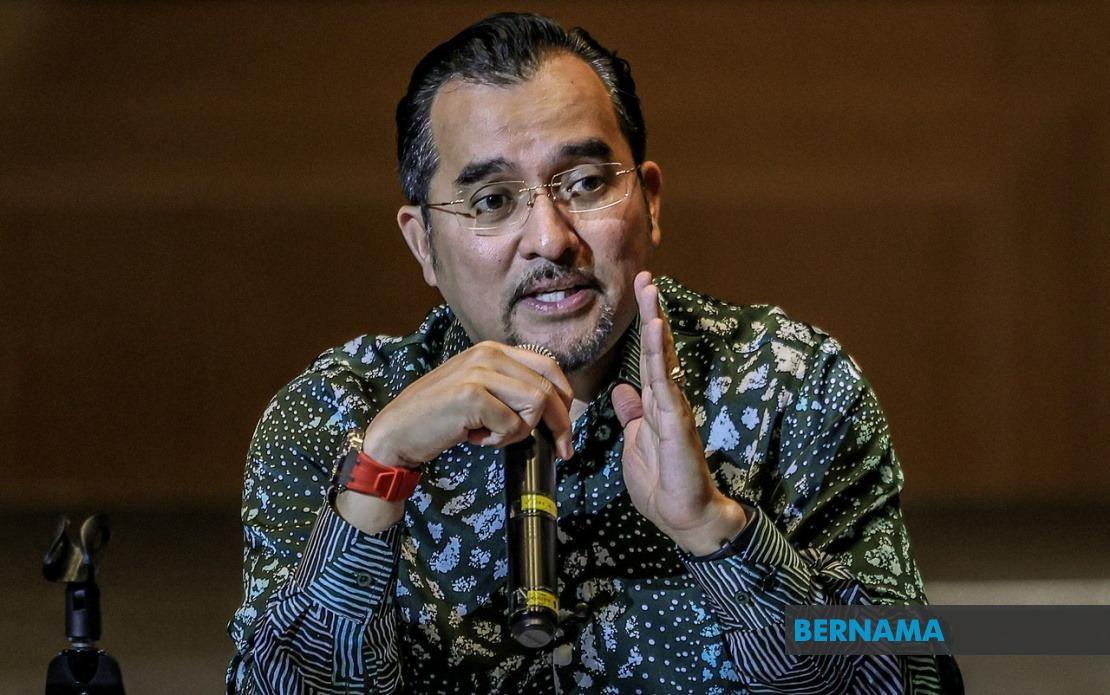
Malaysia's proposed MARA Bill 2026 represents a significant recalibration of the Majlis Amanah Rakyat's operational and institutional framework, with corporate governance reforms comprising roughly four-fifths of the legislation's substantive provisions. MARA chairman Datuk Dr Asyraf Wajdi Dusuki unveiled the Bill's architecture recently, emphasizing that the comprehensive overhaul has received in-principle Cabinet approval and will be presented to Parliament before the year concludes. The legislative package reflects a deliberate shift towards institutionalizing checks and balances within an organisation that has historically wielded considerable influence over Bumiputera economic development and affirmative action programmes.
The governance reforms address long-standing vulnerabilities that have periodically exposed MARA to criticism regarding financial management and accountability. Asyraf Wajdi framed the Bill as a protective measure designed to forestall recurring patterns of governance failure—specifically the misuse of authority, structural weaknesses in decision-making processes, asset misappropriation, operational irregularities, resource leakage, and wastage. These categories of institutional risk have accumulated across MARA's substantial portfolio of business interests and development programmes, which collectively serve as instruments for advancing Malay and Bumiputera interests within Malaysia's broader economic framework. The proposed legislation thus operates as a corrective instrument targeting systemic vulnerabilities that threaten the credibility and effectiveness of an institution entrusted with substantial public resources and strategic developmental responsibilities.
A cornerstone provision involves materially reducing the MARA chairman's executive scope, transferring the role toward stewardship and policy orientation whilst stripping away operational control mechanisms embedded in the current MARA Act 1966. Under the revised structure, the chairman's authority becomes circumscribed to chairing Board proceedings and determining high-level policy direction, a marked departure from the consolidated authority historically vested in the position. This redistribution of power establishes a clearer bifurcation between governance oversight and management execution, reducing the concentration of decision-making authority that has occasionally facilitated governance lapses. The structural recalibration reflects international best-practice principles increasingly adopted by government-linked entities and state-owned enterprises across Southeast Asia, where institutional legitimacy increasingly depends upon demonstrable separation of governance and operational functions.
The Bill institutes mandatory Board committees addressing critical institutional functions, including dedicated bodies for audit oversight, investment governance, financial management, risk assessment, and Syariah compliance. The establishment of a dedicated Syariah Committee represents a novel institutional addition, embedding religious and ethical principles directly into MARA's operational governance framework. This committee structure ensures that major institutional decisions undergo scrutiny across multiple specialised domains, rather than flowing through centralised approval channels. These committees will operate with clearly demarcated authority and reporting obligations, introducing transparency mechanisms that constrain discretionary decision-making and distribute accountability across institutional leadership.
Financial governance represents another primary focus area, with the Bill introducing heightened standards for procurement practices and budgetary controls aligned with both national and international regulatory benchmarks. The proposed legislation mandates that MARA's purchasing and contracting procedures conform to recognised international standards, addressing historical concerns regarding procurement inefficiencies and preferential awarding of contracts. Financial discipline mechanisms will extend throughout MARA's sprawling operational structure, including its corporate subsidiaries, through centralised oversight mechanisms that consolidate audit functionality under unified supervision. Monthly financial performance reporting to the MARA Council establishes regular disclosure rhythms that facilitate more granular management oversight and earlier detection of operational anomalies or financial irregularities.
The legislative blueprint emerges from systematic governance audits conducted since Asyraf Wajdi assumed the chairmanship in March 2023. His appointment triggered establishment of a special task force chaired by former Bank Negara Malaysia governor Tan Sri Muhammad Ibrahim, whose assignment involved diagnosing institutional vulnerabilities and designing remedial frameworks. The task force's investigative work encompassed forensic financial audits of MARA's subsidiary network, restructuring of procurement mechanisms, centralisation of internal audit functions across MARA's corporate constellation, and implementation of enhanced reporting protocols. These interim measures represent administrative precursors to the comprehensive legislative reforms now advancing through parliamentary channels, indicating that the proposed Bill codifies operational improvements already incrementally implemented during the governance restoration phase.
The focus upon 'fit and proper' criteria for Board membership and term limits addresses the human capital dimension of institutional governance. Board composition significantly influences decision-making quality and institutional vulnerability to external pressure or political interference. By establishing transparent membership criteria and cyclical renewal provisions, the legislation constrains the perpetual reappointment of individuals whose lengthy Board tenure may erode critical distance or foster groupthink. Board members operating under defined term parameters presumably encounter stronger incentives to demonstrate value during their tenures rather than accumulating indefinite influence. These provisions reflect recognition that institutional governance ultimately depends upon the quality, independence, and accountability of the individuals occupying leadership positions.
For Malaysian observers and regional stakeholders monitoring Bumiputera institutional development, the MARA Bill 2026 signals a significant maturation in governance expectations applied to government-linked entities entrusted with affirmative action implementation. The legislation indicates that institutional credibility and effectiveness increasingly depend upon transparent governance architecture rather than concentrated personalised authority. This shift carries implications for how Malaysian policymakers conceptualise institutional design within the broader Bumiputera developmental apparatus, potentially establishing precedents influencing governance reforms across other state agencies and entities responsible for sectoral development. The Bill's emphasis upon financial transparency and accountability mechanisms reflects both domestic concerns regarding resource stewardship and regional trends toward heightened governance standards within Southeast Asian state-owned enterprises.
The legislative initiative also responds to broader questions regarding the compatibility between MARA's traditional role within Malaysia's affirmative action framework and contemporary institutional governance expectations. As MARA's portfolio has expanded to encompass increasingly complex corporate investments and financial operations, the institutional framework establishing in 1966 has become progressively inadequate for managing modern complexity. The proposed Bill essentially modernises the foundational legislation to accommodate MARA's evolved operational scope whilst introducing safeguards reflecting lessons learned from institutional governance failures occurring during intervening decades. This adaptation preserves MARA's core developmental mission—advancing Malay and Bumiputera economic interests—whilst restructuring the institutional mechanisms through which that mission is executed.
The parliamentary tabling before year-end establishes a definite timeline for legislative action, suggesting that the government views governance reform within MARA as a priority justifying parliamentary attention during the current session. Successful passage would constitute a significant institutional modernisation, transforming MARA's governance framework in ways likely to influence broader conversations regarding optimal institutional design for state-owned entities operating across multiple economic sectors. The reforms also address accountability concerns that periodically surface within Malaysian civil society and media, signalling governmental commitment to strengthening institutional stewardship within entities managing substantial public resources and wielding consequential influence over economic opportunity distribution.

