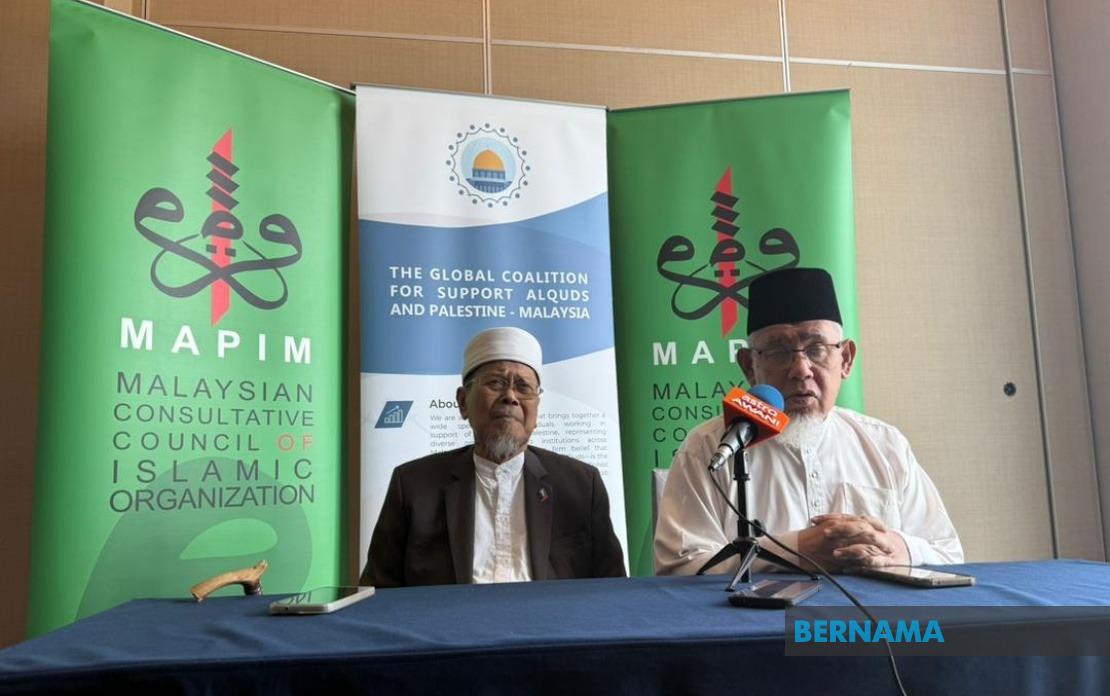
A landmark regional conference beginning tomorrow in Ipoh will assemble mosque leaders and Islamic representatives from across Southeast Asia in what organisers describe as a significant effort to reinvigorate the mosque's role as a centre for Muslim community life. The Malaysian Consultative Council of Islamic Organisations (MAPIM) and the Perak Islamic Religious Department (JAIPk) are jointly hosting the two-day Regional Mosque Conference 2026 at a major hotel in the state capital, drawing approximately 400 delegates representing mosques and Islamic organisations from Malaysia, Indonesia, Singapore, Brunei, Timor-Leste, Myanmar, Cambodia, Thailand and Vietnam. The gathering will also include special participation from Turkey, Iran and Pakistan, creating an unusually diverse international platform for discussion of Islamic institutional matters in the region.
MAPIM president Mohd Azmi Abdul Hamid outlined the strategic thinking behind the conference during a media briefing, emphasising that the event transcends ceremonial significance. The gathering coincides with World Mosque Day, an observance established on August 21 to remember the 1969 arson attack on Al-Aqsa Mosque in Jerusalem, a date of considerable symbolic weight across the Muslim world. Rather than treating this commemorative occasion as merely annual ritual, MAPIM frames the conference as a transformative opportunity to reposition mosques as dynamic institutions capable of mobilising Muslim communities across the region. This reframing reflects broader concerns within Islamic leadership circles that many mosques, particularly in urban Southeast Asia, risk becoming peripheral to community life if they fail to expand beyond traditional devotional functions.
The conference programme has identified seven core objectives that reveal the organisers' priorities for regional Islamic development. These include establishing formal cooperative networks among mosques, cultivating meaningful participation by younger Muslims, and creating economic opportunities through community enterprises. The agenda also prioritises strengthening relationships with Islamic non-governmental organisations operating throughout the region, recognising that such groups often provide social services and community engagement that complement mosque activities. By formalising these connections through a regional framework, MAPIM hopes to create institutional mechanisms for sustained collaboration beyond the conference itself.
Significantly, the gathering is designed to produce concrete outputs that extend its impact beyond the two-day event. Conference delegates will collectively develop a formal declaration alongside a sustainable action plan containing specific commitments and initiatives that participating mosques and organisations can implement in their respective countries. This emphasis on deliverable outcomes distinguishes the conference from typical international symposia, reflecting MAPIM's determination to catalyse tangible changes in how Southeast Asian mosques operate and engage with their communities. The focus on actionable results rather than aspirational statements suggests organisers recognise the scepticism surrounding large international meetings that often generate press releases but minimal follow-up implementation.
The substantive programme will feature academic presentations exploring Islamic institutional development alongside international dialogues addressing contemporary issues affecting Muslim communities. Special sessions dedicated to Palestine and Al-Aqsa Mosque will occupy prominent space in the schedule, indicating that the conference serves multiple purposes—both advancing institutional cooperation among mosques and channelling regional Muslim sentiment regarding geopolitical concerns. For many Malaysian attendees, this dual focus reflects the interconnection between domestic religious life and international solidarity with Muslim causes, a tension that regularly surfaces in Malaysian political discourse and civil society discussions.
Three major initiatives will be formally launched during the conference, each designed to extend MAPIM's influence and mobilise resources for identified priorities. The first, a regional mosque coalition focused on Palestine, will create an organisational structure enabling coordinated advocacy and support across Southeast Asia. The second involves publication of a comprehensive book examining the mosque's role in contemporary Muslim societies, potentially providing intellectual scaffolding for the institutional reinvigoration MAPIM envisions. The third initiative, the MAPIM Gold Dinar, represents an innovative fundraising mechanism intended to facilitate public contributions toward the Al-Aqsa Mosque Fund, transforming abstract solidarity into concrete financial support through accessible purchasing of gold dinars.
Mohd Azmi articulated MAPIM's vision as fundamentally concerned with positioning mosques as institutions capable of advancing humanitarian causes alongside their traditional religious functions. The emphasis on Palestine and Al-Aqsa Mosque reflects not merely symbolic gesture but rather a strategic choice to anchor mosque-centred activism within globally recognised Muslim concerns. By connecting local mosque communities to international advocacy networks focused on these issues, MAPIM seeks to energise religious institutions by demonstrating their capacity to meaningfully contribute to causes of regional and global significance. This approach acknowledges that contemporary Muslims, particularly younger generations, expect religious institutions to engage substantively with justice issues rather than remaining confined to ritual and spiritual instruction.
The conference's regional composition carries particular significance for Malaysia, which traditionally positions itself as a moderate Islamic voice in Southeast Asia whilst maintaining strong institutional ties to Islamic governance and religious affairs. Hosting the gathering in Ipoh rather than Kuala Lumpur symbolically elevates provincial religious leadership and distributes international attention beyond the capital, whilst the involvement of Perak's Islamic Religious Department emphasises the role of state-level Islamic administration in coordinating regional initiatives. This configuration suggests emerging dynamics within Malaysian Islam whereby federal institutions like MAPIM increasingly coordinate with state religious authorities on matters transcending local jurisdictions.
The attendance of delegates from Turkey, Iran and Pakistan alongside Southeast Asian representatives creates an unusual diplomatic space where Islamic institutional matters become vehicles for international engagement. These three nations represent distinct Islamic governance models and theological orientations, suggesting the conference aims for breadth of Islamic perspectives rather than ideological coherence. For Malaysian participants, such diversity could provide comparative insights into how different Muslim-majority societies structure mosque governance and institutional development, potentially enriching domestic discussions about mosque reform and community engagement. The inclusion of Pakistan and Iran particularly reflects MAPIM's aspiration to connect Southeast Asian Islamic institutions to broader global Islamic networks rather than remaining regionally insular.
From a Malaysian perspective, the conference reflects longer-term trends whereby religious institutions increasingly function as platforms for international cooperation and advocacy, expanding beyond traditionally circumscribed roles. The two-day gathering represents investment in what might be termed Islamic institutional diplomacy—using mosque-centred networks to build regional consensus on priorities ranging from community engagement to geopolitical causes. Success in generating follow-through implementation of conference outcomes could establish precedent for regular regional coordination on Islamic institutional matters, potentially creating formal structures that rival governmental mechanisms for regional Muslim cooperation.
The conference also demonstrates MAPIM's positioning as a central actor in coordinating Malaysian Islamic civil society, particularly in engaging with international counterparts. By successfully convening such a diverse gathering, MAPIM simultaneously elevates its own institutional profile whilst creating obligation networks connecting Malaysian mosques to regional counterparts. These relational ties, cultivated through formal conference structures, may prove as significant as the declared objectives, generating informal channels through which Malaysian Islamic leaders maintain contact with peers across Southeast Asia and beyond. The conference thus functions simultaneously as ceremonial event, institutional coordination mechanism, and relationship-building exercise, deploying commemorative occasion as occasion for constructing enduring regional Islamic networks.

