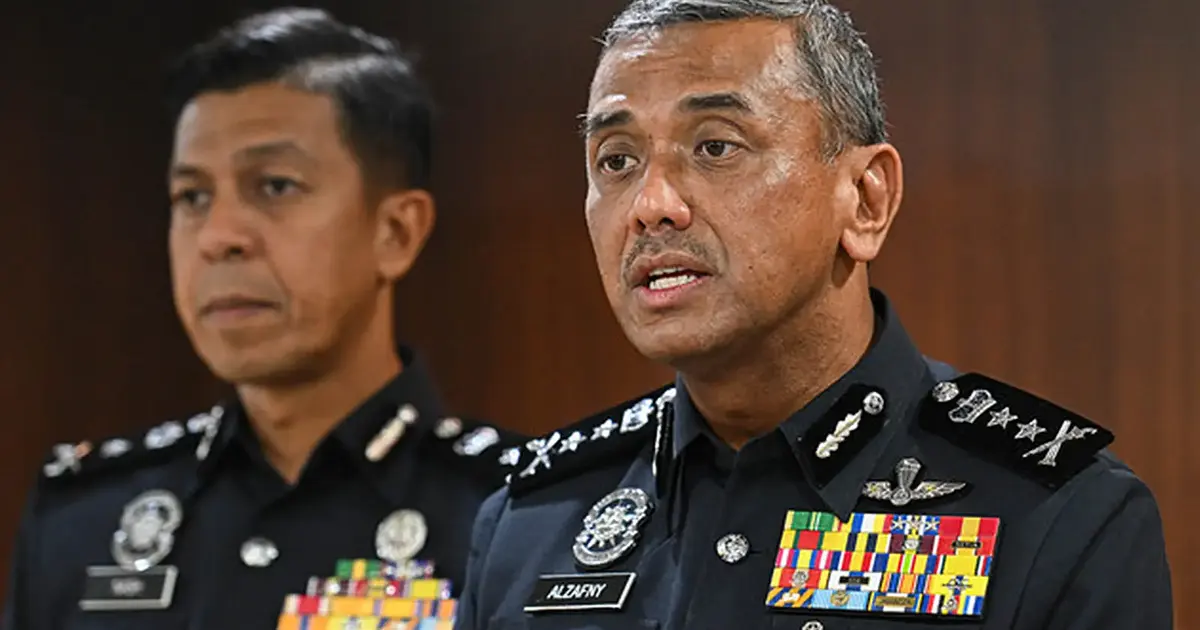
Police in Negeri Sembilan have taken a man into custody following allegations that he posted derogatory content about the state's royal institution on social media, according to state police chief Alzafny Ahmad. The arrest represents a continued law enforcement focus on online content deemed disrespectful to Malaysia's monarchy, a matter treated with considerable seriousness across the country's criminal justice system.
The seizure of the suspect's mobile telephone as evidence underscores the investigative approach adopted by authorities in these cases, where digital devices often contain crucial material relevant to determining the precise nature of the alleged offence and establishing the facts surrounding its publication. This preliminary evidence-gathering phase typically forms the foundation for subsequent prosecutorial decisions regarding charges and court proceedings.
The incident reflects ongoing tensions in Malaysia's digital landscape, where the intersection of free expression and laws protecting royal dignity continues to generate legal action. The country maintains several statutory provisions that criminalise public statements considered insulting to the institution of royalty, with Section 233 of the Communications and Multimedia Act and other legislation providing legal grounds for investigation and prosecution of such allegations.
Malaysia's approach to protecting royal prerogative through legal channels remains distinctive in the Southeast Asian context and is deeply embedded in the constitutional framework that established the constitutional monarchy. The sensitivity surrounding matters of royal dignity transcends routine legal enforcement, carrying significant cultural and political dimensions that influence public discourse and online behaviour.
Negeri Sembilan, one of Malaysia's thirteen states, maintains its own state-specific legal protections alongside federal provisions. The state's royal institution, the Yamtuan Muda of Negeri Sembilan, holds considerable ceremonial and constitutional significance within the state's governance structure and enjoys protection under both state and federal law.
The arrest highlights the practical challenge authorities face in monitoring vast volumes of social media content while attempting to distinguish between criticism, commentary, and genuinely insulting material. Digital platforms have fundamentally transformed how information and opinion spread, creating enforcement complexities for police forces across the region who must balance civil liberties with statutory obligations to investigate allegations.
Cyberspace enforcement in Malaysia has expanded substantially as digital platforms have become central to public communication. Police specialised units now routinely investigate online content across major social media platforms, though questions persist about enforcement consistency and the subjective interpretation of what constitutes insulting material versus legitimate political discourse or satire.
The mobile phone seizure follows standard investigative protocols, enabling forensic examination of the device's contents to establish chronologies, identify additional evidence, and potentially link the suspect to the alleged post. Such procedures are routine in digital crime investigations, though they also raise ongoing privacy and due process questions within Malaysian civil liberties circles.
For regional observers, Malaysia's approach to online expression and royal protection represents a distinctive position within Southeast Asia's spectrum of governance philosophies. While several neighbouring countries maintain comparable protections for their monarchies and heads of state, enforcement intensity and the breadth of protected speech varies considerably across the region, reflecting different constitutional settlements and political traditions.
The case arrives amid broader conversations in Malaysia about the scope of permissible online expression and the appropriate balance between protecting institutions of state and preserving democratic space for robust public discourse. Civil society organisations have periodically raised concerns about whether such prosecutions might function as deterrents to legitimate criticism of government policies or royal prerogatives.
Investigative outcomes in these matters typically depend on detailed forensic analysis of the contested content, assessments of intent, and judicial interpretation of statutory language defining insulting material. The quality of evidence derived from the seized device will likely prove decisive in determining whether formal charges are ultimately laid and, if so, the eventual outcome of court proceedings.
For Malaysian internet users, the arrest serves as a reminder of the legal boundaries circumscribing online expression, particularly regarding institutionally protected subjects. The incident is likely to generate renewed discussion about digital literacy, platform responsibilities, and the practical implications of Malaysia's distinctive legal framework governing online speech in areas touching royal prerogative.

