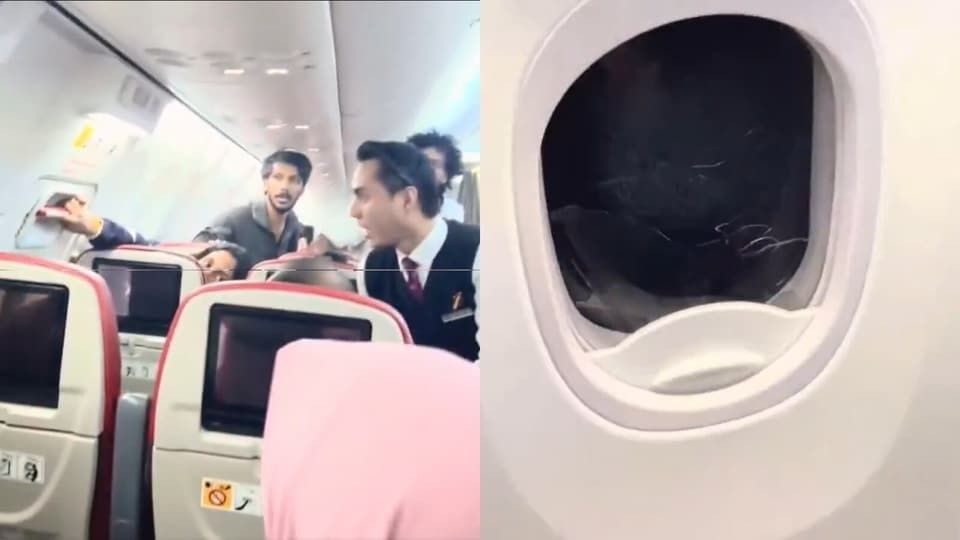
A man has been taken into custody following an alarming incident aboard a Batik Air flight that exposed potential vulnerabilities in aircraft safety protocols and triggered significant concern among travellers. The passenger, identified as Jamsheer Athanikkal, 36, from Palakkad in Kerala but currently residing in Sreemoolanagaram, allegedly attempted to force open the emergency exit of Batik Air flight OD231, a Boeing 737, as the aircraft was cruising between Kuala Lumpur and Kochi on Wednesday evening. The incident, which occurred between 9:30pm and 11:05pm while the plane was airborne, sent shockwaves through the cabin and raised uncomfortable questions about in-flight security and passenger behaviour monitoring on regional routes.
According to police documents filed in the case, Athanikkal targeted the emergency exit window panel located in the row where he was seated, kicking and damaging the inner glass in what appeared to be a deliberate attempt to breach the door mechanism. The escalating nature of his actions—which included threatening language directed at both fellow passengers and cabin crew—suggests the incident was not a momentary lapse but rather a sustained disturbance that created genuine fear throughout the aircraft. Witness accounts describe the jarring sensation of pressurised air rushing through the cabin as the window was compromised, an experience that would terrify any air traveller and underscores the psychological impact such events have beyond their immediate physical danger.
What prevented this situation from potentially catastrophic consequences was the design integrity of modern commercial aircraft and the swift action of those aboard. The cabin's pressurisation system meant that the emergency exit door remained firmly sealed despite Athanikkal's efforts to force it open—a critical safety feature that exists precisely because cabin pressure differentials make it virtually impossible to open exit doors during flight, regardless of physical force applied. The other passengers and crew members aboard responded with admirable composure and courage, physically restraining the aggressive passenger and preventing further escalation of the crisis. This collective intervention, more than any single safety system, likely prevented what could have been a tragedy affecting 200 or more individuals.
One passenger, identified as Matty Mathew, documented his account of the terrifying experience on social media, providing a firsthand perspective on how the incident unfolded and affected those aboard. Mathew noted that most passengers had been asleep on the red-eye service when the disturbance erupted, meaning they were jolted awake by both the unusual sounds and sensations as the emergency was unfolding. His description painted a vivid picture of the confusion and fear that gripped the cabin, followed by the reassuring solidarity of crew members and fellow travellers working together to neutralise the threat. Mathew's account concluded with an acknowledgement of the psychological toll such experiences take, despite the ultimately safe outcome.
Upon the aircraft's arrival in Kochi early Thursday morning, local authorities took Athanikkal into custody and initiated a formal criminal investigation. The charges lodged against him reflect the seriousness with which Indian authorities treat such incidents, encompassing multiple legal provisions designed to address different aspects of his alleged behaviour. He has been booked under Section 351(3) of the Bharatiya Nyaya Sanhita for criminal intimidation, recognising the threatening language he reportedly directed at others aboard the flight. Additionally, authorities invoked Section 11A of the Aircraft Act, which specifically addresses violations of safety and security directives while on an aircraft, a particularly relevant charge given the nature of his alleged attempt to tamper with safety equipment. A third charge under Section 118(e) of the Kerala Police Act addresses his actions as endangering public safety more broadly.
The investigation into this incident comes at a time of heightened concerns about in-flight security across the South Asian aviation sector. Just two days prior to the Batik Air incident, Air India flight AI2379 experienced its own dramatic crisis while operating from Phuket, Thailand, to Delhi. That flight, carrying 137 passengers and eight crew members aboard an Airbus aircraft, encountered a sudden and precipitous loss of altitude during cruise flight, an event that triggered emergency medical responses upon landing and hospitalisation of 13 passengers and four crew members. The proximity of these two serious incidents within a 48-hour window has raised questions about whether existing safety protocols and crew training adequately address the range of emergencies that can occur.
The Air India incident differed fundamentally from the Batik Air situation in that it appeared to involve a mechanical or technical anomaly rather than deliberate passenger misconduct, though investigations were ongoing at the time of reporting. Air India reported that the aircraft involved was a seven-year-old Airbus operated under standard maintenance protocols, and the airline stated it had immediately notified relevant aviation regulators and the aircraft manufacturer of the incident. The airline's commitment to cooperating fully with investigations and maintaining close contact with affected passengers and crew members reflects the seriousness with which major Indian carriers regard such events and their responsibility to affected parties.
These consecutive incidents highlight the multiple dimensions of aviation safety that require constant vigilance and investment. While aircraft design features like pressurised cabins and reinforced emergency equipment provide crucial layers of protection against both mechanical failures and deliberate interference, they cannot eliminate all risks. The human element—including passenger behaviour, crew response capabilities, and medical readiness—remains essential to outcomes during aviation emergencies. The bravery demonstrated by passengers and crew aboard the Batik Air flight in physically restraining an aggressive individual in the confined space of an aircraft cabin, where the stakes of failure are literally life-and-death, deserves recognition as an often-overlooked form of aviation safety.
For regional carriers like Batik Air and full-service airlines like Air India, incidents such as these create both operational and reputational challenges. Passengers travelling between major hubs in Southeast Asia and South Asia have multiple airline options, and high-profile safety concerns—whether mechanical or involving passenger behaviour—influence booking decisions and perceptions of airline safety cultures. Airlines must balance security measures that protect passengers and crew with passenger experience considerations; excessive security theatre can create negative travel experiences, while insufficient vigilance enables dangerous situations. The response of Batik Air's crew in this instance appears to have struck an appropriate balance, addressing the immediate threat through crew and passenger intervention while ensuring no further escalation occurred.
The incident also raises important questions about passenger screening and mental health awareness in aviation contexts. While airlines cannot and should not attempt comprehensive psychological screening of all passengers, crew training in recognising early warning signs of potential disturbance and intervention protocols can mitigate risks. The fact that Athanikkal's behaviour apparently escalated from isolated to threatening to physically dangerous over the course of several minutes suggests that intervention at an earlier stage might have been possible had crew members been alerted to concerning behaviour sooner. Future investigations may examine whether any such warning signs were evident before the emergency exit incident began.
Looking forward, the aviation safety community across Southeast Asia and South Asia will likely use these incidents as case studies for training and protocol development. Insurance underwriters, airline operators, and regulators will scrutinise response procedures and identify any gaps in current systems. The international nature of modern aviation means that incidents aboard flights crossing borders like the Kuala Lumpur-Kochi route involve multiple jurisdictions and regulatory frameworks, requiring coordinated investigation and follow-up. For Malaysian aviation authorities, while this particular incident occurred on a flight operated by a Malaysian carrier departing from Kuala Lumpur, the investigation and resolution will largely fall to Indian authorities under whose jurisdiction the aircraft landed and where the passenger was detained.

