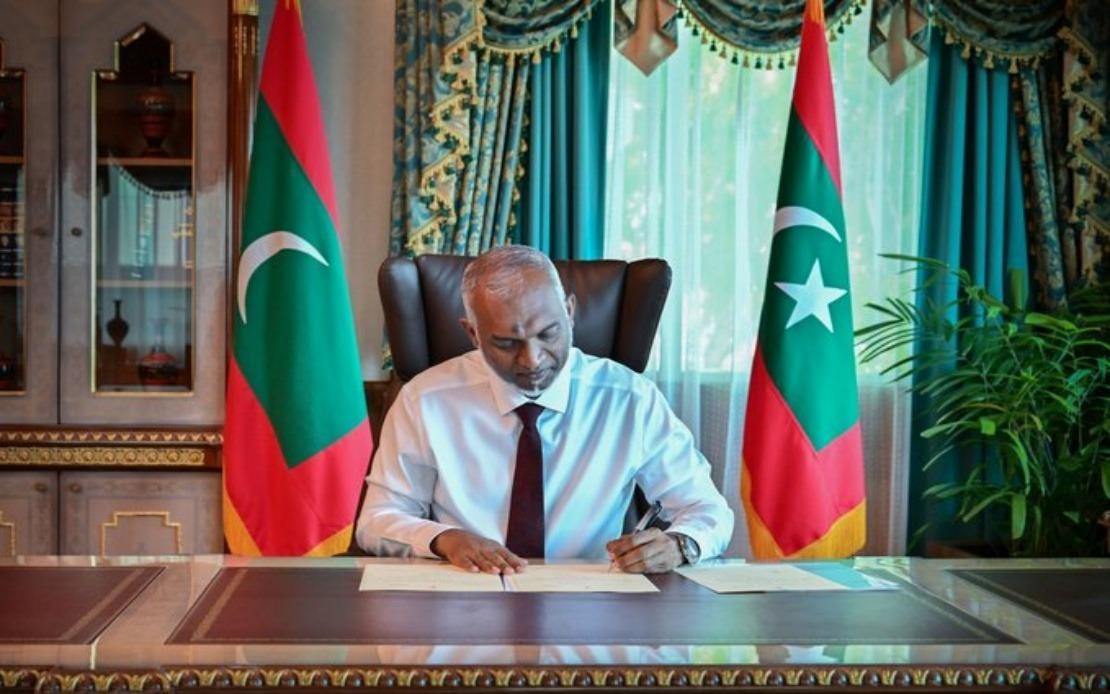
Maldives President Mohamed Muizzu has marked Malaysia's National Day by reaffirming his nation's dedication to strengthening bilateral relations with Kuala Lumpur, sending formal greetings to both the Malaysian Sovereign and Prime Minister that underscore the enduring nature of the diplomatic partnership between the two countries.
In correspondence addressed to His Majesty Sultan Ibrahim, King of Malaysia, Muizzu reflected on the deep historical bonds connecting the two nations, characterising their relationship as one built on five decades of consistent engagement. The Maldivian leader emphasised that the foundation of this partnership rests on mutual respect, genuine friendship, and a collaborative spirit that has weathered changing regional and global circumstances. By highlighting these tried foundations, Muizzu signalled that Male seeks continuity rather than recalibration in its approach to Malaysia.
The presidential statement indicated that Muizzu has pledged to advance the bilateral agenda across multiple dimensions, recognising both the diplomatic and practical dimensions of the relationship. This commitment extends beyond ceremonial expressions, touching on substantive areas of cooperation that benefit both populations. The emphasis on forward momentum suggests that the Maldivian government views Malaysia as a key regional partner worthy of sustained high-level attention and resource allocation.
In a parallel communication to Prime Minister Datuk Seri Anwar Ibrahim, Muizzu observed that the relationship between the two nations has been fortified through regular exchanges at senior governmental levels and robust engagement at the grassroots. These people-to-people connections represent a soft power dimension often overlooked in formal diplomacy—cultural exchanges, educational partnerships, and civil society interactions that create genuine affinity between populations beyond official channels. The reference to such exchanges reflects recognition that sustainable international relations require foundations deeper than governmental decisions alone.
The presidential statement conveyed Muizzu's optimistic assessment that the friendship would continue to expand, creating pathways for enhanced economic collaboration and prosperity-sharing between the two peoples. This formulation moves beyond abstract diplomatic language to emphasise tangible benefits: expanded trade opportunities, investment flows, and commercial partnerships that translate goodwill into measurable economic outcomes. For Malaysian businesses and policymakers, this signals receptiveness from the Maldivian leadership to explore new commercial arrangements and market access.
Maldives occupies a strategically significant position within South Asia and the Indian Ocean region, functioning as a bridging nation between major Asian powers. Malaysia's relationship with Male carries implications beyond bilateral commerce, as it reinforces Malaysia's positioning within Indian Ocean geopolitics and demonstrates its capacity to maintain friendly relations across regional blocs. The warm tone of Muizzu's messages reflects a convergence of interests between the two nations on regional stability and economic development.
Pakistan and India also extended National Day greetings to Malaysia through official diplomatic channels, with Pakistan's Ministry of Foreign Affairs expressing heartfelt congratulations and wishes for enduring peace and prosperity on social media platform X. This multilateral expression of goodwill reflects Malaysia's standing as a respected regional actor whose national celebrations receive acknowledgement from across the South Asian neighbourhood. The congratulatory messages demonstrate Malaysia's diplomatic reach and the importance placed on maintaining stable ties with major regional powers.
India's Minister of External Affairs Subrahmanyam Jaishankar separately conveyed birthday wishes to Malaysia's Foreign Minister Datuk Seri Mohamad Hasan, extending felicitations to the Malaysian government and population while emphasising India's interest in advancing its Comprehensive Strategic Partnership with Malaysia. The invocation of this partnership framework, a designation reserved for nations with which India maintains particularly close ties, underscores the significance New Delhi attaches to the relationship. For Malaysia, such messaging reinforces its position as a nation of considerable importance to multiple regional powers pursuing their own strategic objectives.
The convergence of these diplomatic gestures on Malaysia's National Day—extending from Maldives to Pakistan to India—illustrates the respect and goodwill the nation commands across South Asia and the broader Indian Ocean region. These expressions serve practical purposes beyond ceremonial observance: they reinforce diplomatic channels, signal continuity in foreign policy across administrations, and create public records of commitment to partnership that can anchor subsequent negotiations and cooperative initiatives.
For Malaysian policymakers and business leaders, these messages from key regional neighbours carry substantive implications. They suggest openness to deepening engagement across multiple sectors, from trade and investment to cultural and educational exchange. The particular emphasis from Maldives on economic opportunities reflects understanding that friendship in the contemporary world must be validated through concrete prosperity-generating mechanisms that benefit ordinary citizens in both countries.
The timing of these National Day messages also occurs within a broader regional context of shifting geopolitical alignments and economic repositioning across Asia. By affirming traditional friendships and pledging enhanced cooperation, nations like Maldives and Malaysia are signalling commitment to stable, predictable relationships that provide counterbalance to larger strategic competitions playing out across the region. Such affirmed ties create platforms for addressing shared challenges and pursuing mutually beneficial opportunities in areas ranging from maritime security to climate adaptation.
Moving forward, the pledges articulated by Muizzu and other regional leaders suggest that Malaysia should expect heightened engagement from these partners seeking to translate warming rhetoric into operational outcomes. Business communities, academic institutions, and cultural organisations may anticipate increased opportunities for formalised exchange programmes and commercial arrangements as governments operationalise the goodwill expressed through these National Day communications.

