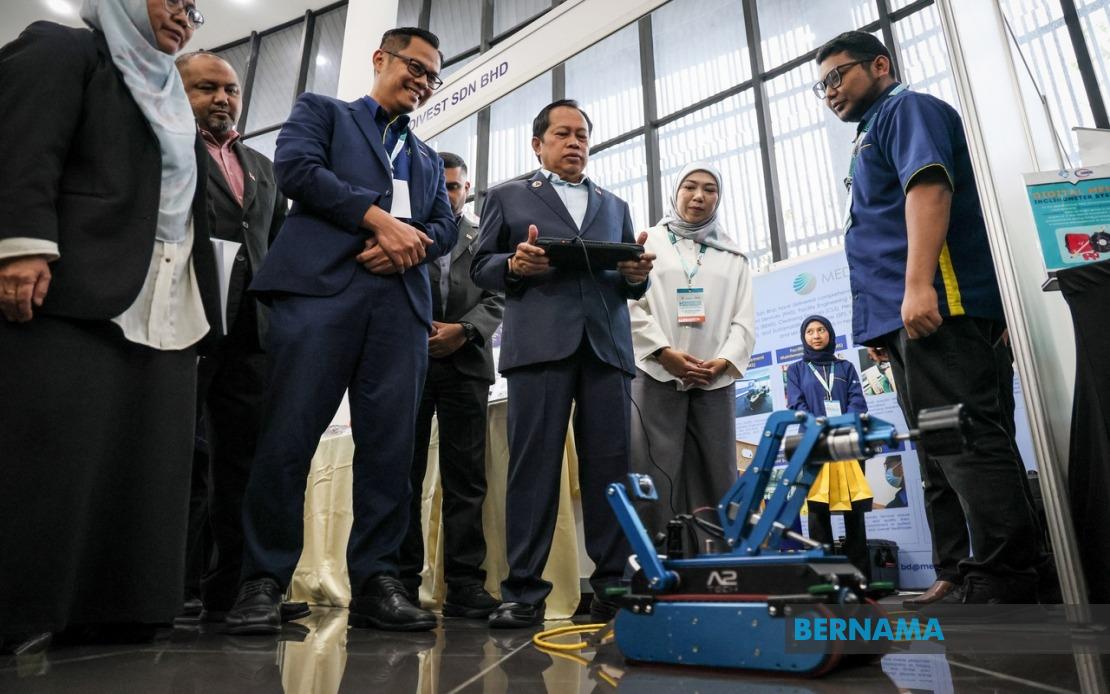
Malaysia's Works Ministry (KKR) is making a concerted push to attract more contractors into facility management (FM) and maintenance services, spotlighting what officials describe as a substantially underexploited revenue stream worth RM39.59 billion across three years. Speaking at the Contractors Convention 2026: NexGen Builders in Butterworth, Deputy Works Minister Datuk Seri Dr Ahmad Maslan outlined the case for expanded private sector participation in a subsector that has historically received less attention than new construction projects, despite its critical importance to national infrastructure longevity.
Data compiled by the Construction Industry Development Board (CIDB) reveals the scale of this opportunity. Between 2023 and 2025, the ministry recorded 1,541 FM and maintenance projects nationwide—a substantial volume of work representing ongoing economic activity well beyond the initial build phase. Yet the contractor base serving this market remains surprisingly thin, with only 468 companies currently holding registration under the F01 and F02 FM specialisations. This disparity between project volume and registered service providers signals a significant market gap, suggesting that many existing construction-focused businesses could profitably transition into or expand into maintenance and facility operations.
The implication for Malaysia's construction industry is straightforward: while new building projects capture public attention and generate headline figures, the unglamorous work of keeping existing infrastructure functional represents steady, recession-resistant business. This is particularly relevant in Southeast Asia, where rapid urbanisation over the past two decades has created an ageing stock of commercial, residential, and public buildings now entering their maintenance-intensive phases. For contractors already familiar with Malaysian standards, regulatory environments, and supply chains, pivoting toward FM offers a natural extension of existing capabilities with substantially lower barriers to entry than pursuing new construction contracts.
Ahmad Maslan emphasised that the current policy mindset has historically prioritised construction completion over asset stewardship. Once a road, building, or bridge was finished, he noted, government and private attention typically moved elsewhere, with maintenance relegated to reactive repairs rather than proactive, systematic upkeep. This approach has left billions of ringgit in infrastructure vulnerable to accelerated deterioration, reduced operational lifespan, and ultimately higher replacement costs. By contrast, a mature FM industry would apply standardised practices and continuous monitoring to maximise asset value and reliability throughout the full lifecycle—an economically rational approach that Malaysia is now attempting to formalise and incentivise.
Central to this strategic reorientation is the newly launched CIS 33:2026 – Facility Management Good Practice Guide, developed by CIDB as a voluntary framework for industry standardisation. Rather than imposing rigid mandates, the guide functions as a reference document enabling asset owners, facilities managers, contractors, and other stakeholders to align their practices around common benchmarks. Such standardisation serves multiple purposes: it reduces transaction costs when clients evaluate and contract FM providers, it allows smaller contractors to compete more effectively by demonstrating compliance with recognised standards, and it creates pathways for knowledge transfer and professional development across the sector.
The timing of this initiative reflects broader regional and global trends. Southeast Asian nations are increasingly recognising that infrastructure maintenance quality directly impacts economic competitiveness, urban livability, and public sector efficiency. In Malaysia, where Government-Linked Companies (GLCs) and large private property developers control substantial asset portfolios, systematic FM represents both a cost-control mechanism and a source of differentiation. Property owners seeking to extend asset life, reduce energy consumption, and enhance tenant satisfaction are more likely to engage professional FM contractors if a recognised standard exists to guide service delivery and pricing.
For individual contractors, the strategic logic is compelling. FM and maintenance contracts typically generate recurring revenue streams extending across multiple years, in contrast to the project-based revenue model of construction. A contractor holding a three-year FM contract for a commercial complex enjoys predictable cash flow and the ability to plan workforce deployment more efficiently. This stability also supports investment in training and technology—drone inspections, IoT sensors, predictive maintenance software—that enhance service quality and profitability but require longer payback periods than traditional construction approaches. The RM39.59 billion market opportunity thus represents not merely a volume of work available today, but an invitation to build sustainable, specialised business units capable of generating returns across economic cycles.
However, the expansion of FM capacity also reflects changing government priorities around fiscal efficiency and asset management. Public infrastructure accounts for a substantial portion of Malaysia's national wealth, yet maintenance funding often struggles for budget allocation compared to headline-grabbing construction announcements. By developing a contractor ecosystem capable of delivering cost-effective FM services, the government aims to achieve better maintenance outcomes without proportionally increasing budget outlays—a particularly relevant consideration given fiscal consolidation pressures facing many Southeast Asian governments. Outsourcing FM to professional contractors also allows public agencies to focus on core functions while leveraging private sector competition and innovation.
The regulatory and professional landscape supporting FM in Malaysia remains less mature than in developed markets. Professional bodies such as the Royal Institution of Surveyor Malaysia (RISM) and bodies like CIDB are only now working to establish recognised qualifications and competency frameworks specific to FM roles. This nascent professionalisation creates near-term challenges—contractors entering the space may struggle to find sufficiently trained personnel—but also represents an opportunity for early movers to establish brand reputation and command premium pricing by demonstrating superior capabilities and service consistency.
Geographically, FM opportunities are likely to concentrate in Malaysia's major urban centres where commercial property development, healthcare facilities, government offices, and transportation infrastructure are densest. Kuala Lumpur, Petaling Jaya, Subang Jaya, George Town, and other metropolitan areas contain concentrations of buildings and infrastructure requiring sophisticated management. Contractors with regional presence and operational networks in these hubs will be best positioned to win and execute larger, more lucrative FM contracts, though smaller operators serving single facilities or localities will find viable niches in secondary cities and industrial parks.
The ministry's push also intersects with Malaysia's sustainability and energy efficiency objectives. Modern FM practices incorporate building management systems, renewable energy integration, waste reduction, and water conservation—initiatives that support government climate commitments while reducing operational costs for building owners. Contractors capable of delivering green FM services will increasingly differentiate themselves in the market, particularly as multinational corporations and institutional investors applying Environmental, Social and Governance (ESG) criteria demand higher standards from their service providers. This convergence of business logic and environmental imperative suggests that FM specialisation will become not merely a profitable niche but a defining feature of Malaysia's evolving construction economy.
Ultimately, the ministry's campaign reflects a maturing understanding that construction is a means to productive ends, not an end in itself. Buildings, roads, and bridges generate value only if they function reliably across their intended lifespan. By encouraging contractors to view FM not as a burden or afterthought but as a legitimate, profitable business opportunity, KKR is attempting to embed lifecycle thinking into Malaysia's construction culture—a shift that, if successful, will improve infrastructure quality, reduce public costs, and create durable, skills-intensive employment across the nation.

