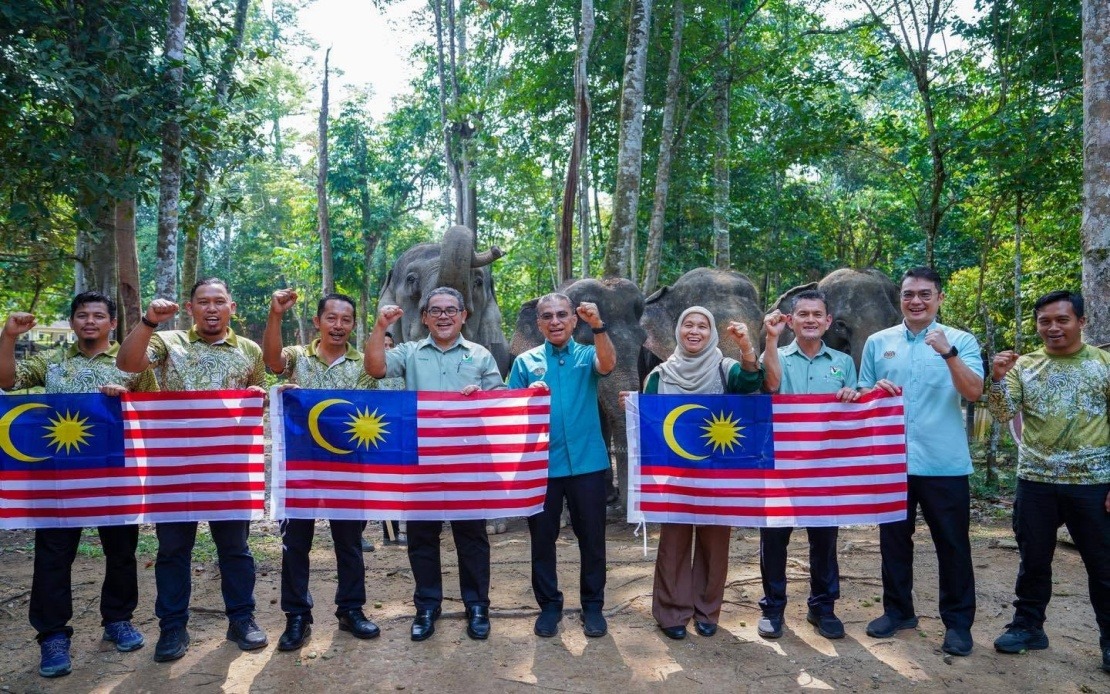
The Ministry of Natural Resources and Environmental Sustainability (NRES) and its Department of Wildlife and National Parks (Perhilitan) are developing new strategies to address the growing frequency of conflicts between humans and wild animals, with elephants emerging as a focal point for conservation officials managing the escalating crisis.
Syed Ibrahim Syed Noh, Deputy Minister of Natural Resources and Environmental Sustainability, emphasised that the ministry regards these incidents as a critical challenge requiring urgent intervention. The rising number of confrontations between wildlife and human populations has intensified pressure on Perhilitan to find effective solutions that protect both communities while preserving animal welfare. The situation has become increasingly complex as development pressures mount across the peninsula.
The underlying tension stems from a fundamental environmental paradox facing Malaysia. As new settlements, agricultural projects, and commercial developments expand into forested areas, wild animals—particularly the iconic Asian elephant—lose access to traditional migration routes and feeding grounds. Rather than peacefully coexisting in shrinking habitats, these displaced creatures venture into populated zones in search of food and shelter, creating dangerous encounters that endanger both human lives and the animals themselves. This pattern reflects broader challenges confronting Southeast Asian nations struggling to balance economic growth with biodiversity preservation.
Perhilitan's approach to managing these incidents reveals the philosophical tensions inherent in modern wildlife management. Officials deliberately avoid aggressive enforcement measures that might harm animals or force them into confinement, recognising that such interventions often prove counterproductive. Instead, the ministry champions continuous monitoring and adaptive management strategies that allow wildlife to remain as close as possible to their natural behaviours and habitats. This philosophy represents a departure from purely reactionary responses toward more nuanced, long-term conservation thinking.
The case of Sulong Chalil, an adult male elephant that recently captured public attention, illustrates these management complexities. After being relocated to a forested area in Gerik, Perak, the animal undertook a remarkable journey spanning hundreds of kilometres, walking on an injured leg to return to its original habitat in Gua Musang, Kelantan. Rather than viewing this as a failure of relocation efforts, conservation officials interpreted the elephant's determination as evidence of deep territorial and familial bonds that cannot be easily overridden through physical displacement.
Syed Ibrahim defended Perhilitan's decision to allow Sulong Chalil to roam freely while maintaining surveillance, underscoring that elephants possess complex behavioural characteristics that make forced confinement both ineffective and inhumane. The monitoring system represents an evolution in wildlife management philosophy—one that respects animal agency while maintaining protective oversight. This strategy acknowledges that elephants, like other intelligent species, resist artificial constraints and harbour strong preferences for their natal territories and established social structures.
For Malaysian readers and policymakers, these conflicts carry significant implications extending beyond conservation concerns. Rural communities in Kelantan, Perak, and other affected states face genuine safety risks when large herbivores venture into populated areas. Farmers experience crop destruction that threatens livelihoods, while villagers navigate the psychological stress of living adjacent to dangerous wildlife. Finding solutions requires balancing empathy for both human economic needs and animal welfare—a equilibrium proving increasingly difficult to maintain.
The ministry's commitment to formulating fresh approaches signals recognition that existing protocols have proven inadequate for managing escalating conflicts. Current strategies, rooted in older conservation models, struggle to address the pace and scale of habitat loss accompanying Malaysia's rapid development trajectory. Officials are reportedly consulting multiple stakeholders, including other government agencies, conservation experts, and local communities, to identify innovative solutions that might reduce incidents without compromising either human or animal welfare.
Regional context amplifies the urgency of Malaysia's efforts. Throughout Southeast Asia, human-wildlife conflicts have intensified as nations pursue development objectives while harbouring significant populations of endangered megafauna. Thailand, Indonesia, and Cambodia confront similar challenges with elephants, tigers, and other species increasingly venturing into human settlements. Malaysia's approach to developing new conflict-reduction methods could potentially serve as a model for neighbouring countries grappling with comparable pressures.
Syed Ibrahim's broader remarks about youth development and nation-building, made during the Mini MADANI Kita programme, connected wildlife management to wider governance priorities. He suggested that addressing environmental challenges requires building institutional capacity and fostering national commitment to sustainable practices—objectives demanding investment in human capital development alongside policy innovation. This framing implies that resolving wildlife conflicts involves cultural and educational components extending well beyond technical wildlife management solutions.
The path forward requires Malaysia to pursue development goals while simultaneously investing in habitat preservation and wildlife corridor protection. Planners must consider landscape-level approaches that maintain ecological connectivity, allowing animal populations to migrate naturally without encountering human settlements. Such planning demands coordination across multiple ministries and government levels, plus sustained political commitment despite competing budgetary pressures and development ambitions. The success of NRES and Perhilitan's new methods will ultimately depend on whether Malaysia's broader economic and development policies genuinely prioritise coexistence with wild populations.

