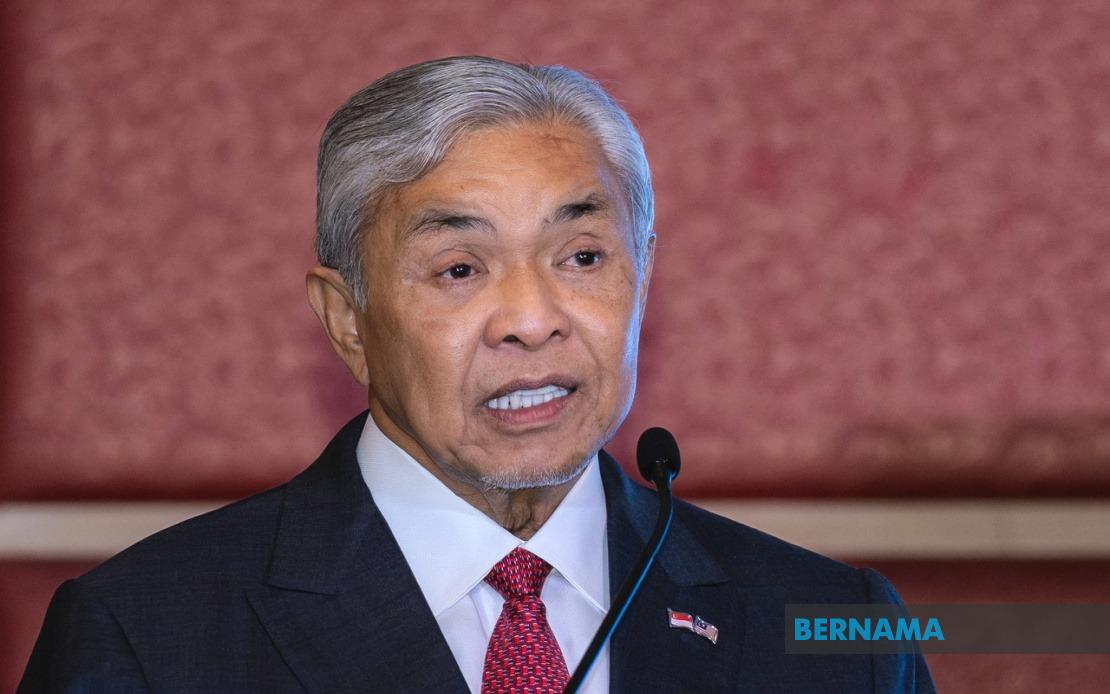
Malaysia's Technical and Vocational Education and Training institutions have reached a milestone in employment outcomes by ensuring that graduates secure positions before they even complete their courses, according to Deputy Prime Minister Datuk Seri Dr Ahmad Zahid Hamidi. Speaking in Kuala Lumpur on July 13, Ahmad Zahid attributed this unprecedented 100 per cent employability rate to a proactive model where educational providers and industry partners work in tandem from the curriculum planning stage onwards.
The mechanism underpinning this success involves TVET institutions engaging directly with companies and sectoral representatives well ahead of course delivery. This early engagement allows education providers to tailor their programmes to match real labour market demands rather than offering generic qualifications that may become obsolete or misaligned with employer needs. By consulting industry stakeholders at the design phase, TVET administrators can ensure that the skills imparted to students correspond precisely with the technical and soft competencies that employers actively seek in new hires.
Ahmad Zahid, who chairs the National TVET Council and also oversees the Rural and Regional Development Ministry, emphasised that this collaborative approach eliminates several persistent challenges that plague conventional vocational education systems. When job offers materialise before graduation, the customary anxieties that plague school leavers—such as skills mismatches with available positions, inadequate remuneration packages, or prolonged unemployment—are substantially mitigated. This contrasts sharply with traditional education models where graduates enter the job market with qualifications that may not correspond to employer expectations.
The government has further strengthened its commitment by introducing High TVET courses, a tier designed to produce graduates with advanced technical capabilities that align with evolving industry standards. This stratification within the TVET ecosystem allows for both entry-level and advanced skill development pathways, catering to diverse labour market segments. The initiative reflects recognition that modern economies increasingly demand workers with sophisticated technical knowledge, particularly in emerging sectors.
Malaysia's approach holds particular significance for Southeast Asia's broader vocational education landscape. Throughout the region, skills shortages and graduate unemployment persist despite robust economic growth in many countries. The Malaysian model, by directly linking educational output to employer demand through institutional partnerships, offers a potentially replicable framework for other nations grappling with youth unemployment and skills gaps. For Malaysian readers, this development signals government commitment to ensuring that technical education pathways provide genuine economic mobility rather than serving as a fallback option.
The practical implications extend beyond employment statistics. When students know their qualifications will lead directly to employment, enrolment in TVET programmes becomes increasingly attractive to school leavers and their families. This psychological shift can help address longstanding perceptions in Malaysia where vocational training has sometimes been viewed as inferior to academic university pathways. The demonstrated success of TVET graduates—who secure positions before finishing their studies—provides tangible evidence that vocational routes offer legitimate career advancement.
Ahmad Zahid made these remarks while addressing the TVET@KKDW contingent preparing to represent Malaysia at WorldSkills Shanghai 2026. The nine-person delegation, drawn from MARA TVET, Universiti Kuala Lumpur, and GIATMARA, will compete across nine skill categories spanning diverse fields including Fashion Technology, Cyber Security, and Electronics. This international participation underscores Malaysia's confidence in the quality of its TVET training and provides a platform to showcase vocational excellence on a global stage.
The competition, scheduled for Shanghai from September 22 to 27, represents an opportunity for Malaysian competitors to demonstrate that vocational excellence is not geographically or economically bounded. Ahmad Zahid urged participants to harness mental resilience and emotional discipline in their final two months of preparation, recognising that international competitions demand both technical mastery and psychological fortitude. Success at WorldSkills Shanghai would validate Malaysia's TVET approach and potentially inspire regional governments to adopt similar models.
The presence of Deputy Rural and Regional Development Minister Datuk Rubiah Wang at the address highlighted the significance the government places on this agenda. The two-tier ministerial attention suggests that TVET development is viewed not merely as an education matter but as a critical rural and regional development tool. Since TVET institutions are distributed across Malaysia's geography, strengthening their capacity and relevance can help distribute economic opportunities beyond major urban centres.
For Malaysian employers, the immediate benefit is access to a pipeline of pre-vetted graduates whose skills match their actual operational requirements. This reduces recruitment costs, shortens onboarding periods, and minimises wastage from hiring mismatches. Companies investing in curriculum consultation with TVET providers essentially participate in workforce development tailored to their specifications.
The sustainability of this model depends on maintaining robust dialogue between education and industry stakeholders. As technology and sectoral demands evolve—particularly in response to automation and digitalisation—TVET curricula must remain responsive and flexible. The government's ongoing implementation of High TVET courses suggests recognition of this imperative and commitment to continuous alignment with emerging industry needs.
For Malaysian youth, particularly those from lower-income backgrounds, TVET pathways increasingly represent a credible alternative to university degrees. The guarantee of employment upon or before graduation addresses a fundamental concern: the economic uncertainty that traditionally surrounds educational investments. This shift could reshape social mobility patterns in Malaysia by making technical qualifications a more attractive and economically rewarding choice.

