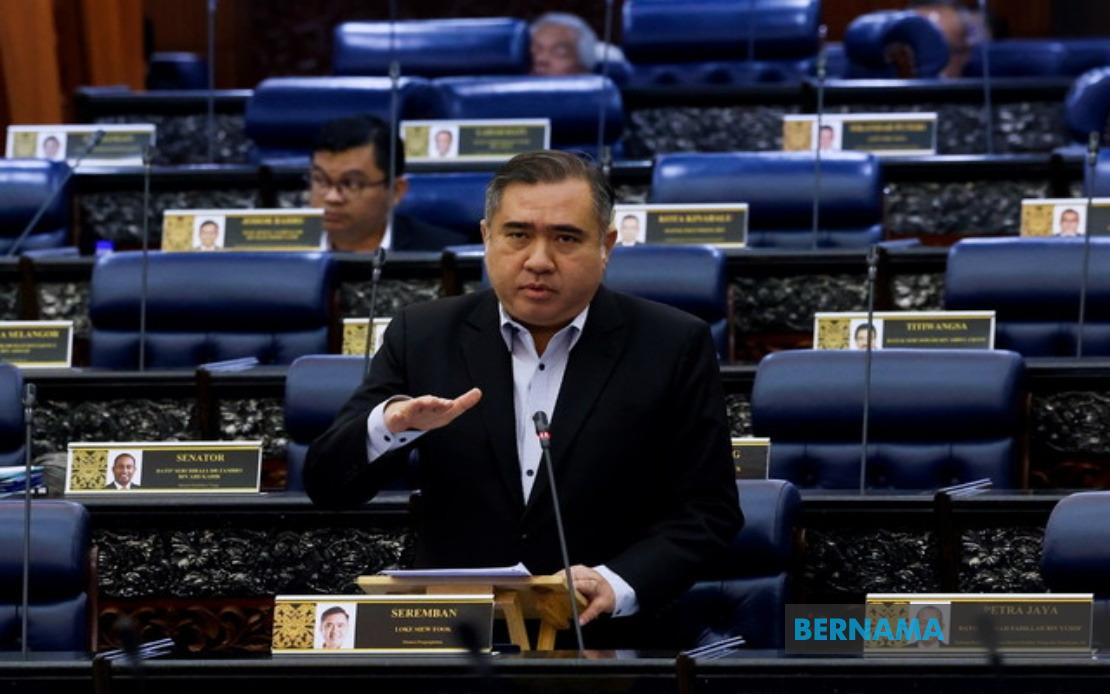
The Malaysian Transport Ministry is moving to establish a structured compensation framework for road accident victims and their families, signalling a shift toward treating serious traffic violations as major criminal offences rather than ordinary motoring infractions. Minister Anthony Loke announced the proposed amendments to the Road Transport Act 1987 in Parliament, outlining a mechanism that would empower courts to mandate financial restitution to victims or their lawful next of kin when drivers are convicted of serious offences resulting in death or permanent injury.
Under the framework being developed, judicial officers will evaluate each case on its individual merits, taking into account the severity of injuries sustained, fatalities caused, and the documented losses experienced by victims' families. The court will also consider the convicted offender's financial capacity to pay, ensuring that compensation orders remain realistic and enforceable. This approach reflects growing recognition within government circles that families devastated by fatal traffic accidents should have legal recourse to financial recovery beyond criminal sentencing alone, addressing a long-standing gap in victim protection across the region.
The compensation mechanism represents only one component of a broader legislative push by the Transport Ministry to eliminate illegal street racing, a phenomenon that has claimed multiple lives and sparked public outcry. The government has already introduced the Road Transport (Amendment) Bill 2026, which has cleared the Dewan Rakyat and establishes a dedicated offence category for illegal racing activities. This legislative separation is significant because it allows authorities to intervene and prosecute street racing participants before accidents occur, rather than waiting for tragedies to unfold.
Under the new penalties structure, first-time offenders involved in illegal racing face fines ranging from RM2,000 to RM10,000, imprisonment up to two years, or both. Repeat offenders face considerably harsher consequences: fines between RM5,000 and RM20,000, imprisonment stretching to five years, or both. These escalated penalties represent a dramatic toughening of enforcement compared to previous regulatory approaches and signal ministerial determination to disrupt the racing culture that has entrenched itself in several Malaysian urban and suburban areas.
The shift in legal strategy carries important implications for street racing communities across Malaysia and neighbouring countries where similar problems persist. By criminalising the activity itself rather than only its consequences, authorities can now systematically dismantle organised racing networks before they produce fatal incidents. This proactive stance contrasts with previous enforcement patterns that predominantly responded to accidents after they had occurred, leaving vulnerable road users exposed to preventable dangers.
Enforcement operations have already intensified under this new framework. Recent operations in Johor resulted in the arrest of 16 individuals and seizure of 260 motorcycles connected to illegal racing activities. These operations demonstrate that the ministry has operationalised its tougher stance across state boundaries, suggesting a coordinated national approach rather than fragmented, locality-specific responses. The scale of motorcycle seizures particularly underscores how extensively illegal racing infrastructure has spread through communities.
A sobering incident on June 1 at Kilometre 27 of Jalan Renggam-Simpang Renggam in Johor, which claimed five lives, prompted the Attorney-General's Chambers to invoke Section 302 of the Penal Code—the most serious charge available for causing death. This escalation in charging decisions indicates that prosecutorial approaches are aligning with legislative toughening, creating consistent pressure across the justice system against serious traffic violations.
Malaysia's road fatality burden remains substantial, with more than 6,000 deaths recorded annually, making transportation safety a critical public health concern rivalling infectious disease management in some respects. The transport minister emphasised that reducing this toll requires more than enforcement alone; it demands behavioural transformation and sustained public awareness campaigns. This recognition that legislation and policing constitute insufficient responses highlights the deeper cultural and social dimensions of Malaysia's road safety challenge.
The proposed cross-ministerial strategy to address illegal racing reflects acknowledgment that no single agency can resolve the problem independently. Coordination between transport, police, public works, and local government bodies becomes essential, alongside engagement with community leaders and civil society organisations. This whole-of-society approach mirrors contemporary thinking about road safety in developed nations where integrated, multi-stakeholder responses have proven more effective than enforcement-centric models.
The transport minister's cautionary statement against politicising road safety suggests underlying tensions regarding how the issue has been framed in public discourse. By emphasising that the government seeks consensual, non-partisan cooperation on this issue, Loke appears to be signalling concerns that the tragedy and enforcement responses could become weaponised in political competition. This positioning matters for Southeast Asian governance contexts where safety issues occasionally become partisan footballs rather than being treated as technical, evidence-based challenges.
For Malaysian motorists and road users, the combined effect of expanded compensation mechanisms, pre-emptive legal authority over street racing, and intensified enforcement creates a substantially altered risk environment for serious traffic violators. Families who have lost loved ones in racing-related accidents will now have clearer pathways to court-ordered compensation, though questions remain regarding enforcement of orders against individuals with limited financial assets. The deterrent effect of harsher penalties will ultimately depend on how consistently enforcement occurs across diverse regions and socioeconomic communities.
The amendments also carry implications for insurance markets and liability frameworks across the region, as expanded victim compensation mechanisms may influence how motor insurers price policies and manage claims. Brokers and underwriters will need to monitor how courts interpret the new compensation standards and whether typical awards rise substantially, potentially increasing the risk premium for serious traffic violations.

