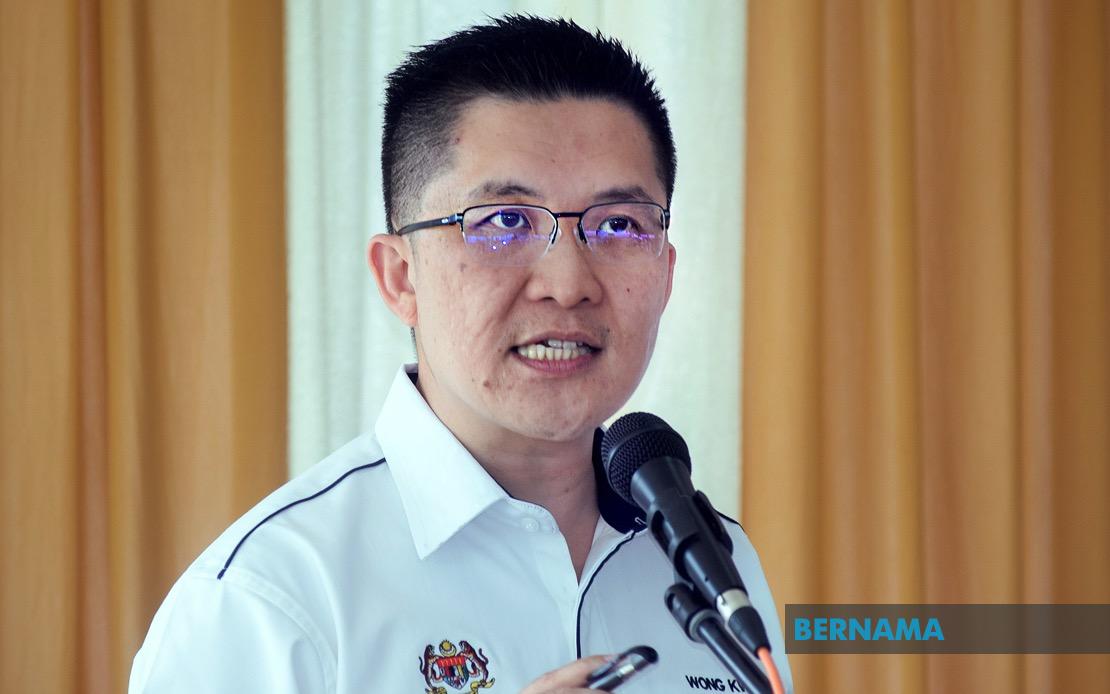
Malaysia's Tamil education system continues to operate across 528 national-type schools (SJKT) serving a combined enrolment of 78,501 pupils, according to figures presented in Parliament by Deputy Education Minister Wong Kah Woh. The statement, delivered during a Special Chamber session, reflects both the scale of Tamil medium education in the country and emerging challenges that the Ministry of Education (MOE) is working to address through strategic initiatives and infrastructure development.
The SPM examination statistics reveal a concerning downward trend in Tamil language subject registrations over recent years. In 2023, a total of 8,023 candidates sat the examination, a figure that has progressively declined to 7,925 the following year, 7,693 in 2025, and 7,494 new candidates this year. This trajectory suggests shifting patterns in student enrolment or language preferences that warrant closer scrutiny from policymakers concerned with preserving minority language education in the Malaysian school system.
Despite these declining numbers, the MOE has reaffirmed its commitment to sustaining Tamil language education through comprehensive support mechanisms. Wong clarified that Tamil will remain among the language subjects offered by the Examinations Syndicate and continue to feature prominently in the national curriculum framework. The ministry's strategic approach encompasses implementation of the 2027 School Curriculum reform, enhancement of classroom instruction quality, strengthening of Tamil literature programmes, and sustained financial and logistical backing for Tamil schools across the country.
Johor serves as a significant hub for Tamil education, housing 71 SJKTs with a combined enrolment of 12,906 pupils. Within Johor Bahru district specifically, fifteen schools operate with 7,840 pupils in total. Four establishments have demonstrated particularly robust enrolment figures: SJKT Taman Tun Aminah leads with 1,529 pupils, followed by SJKT Ladang Rini at 1,055, SJKT Jalan Yahya Awal with 890, and SJKT Masai with 768. These numbers indicate pockets of strong demand for Tamil medium education in specific localities, a pattern that informs the ministry's targeted development strategy.
Infrastructure development forms a cornerstone of the MOE's strategy to enhance Tamil school capacity and learning environments. The ministry has allocated RM4.3 million each for construction projects at SJKT Ladang Rini and SJKT Kulai Besar, with both facilities expected to accommodate an additional 200 to 300 pupils upon completion. These capital investments represent the government's concrete commitment to modernising Tamil educational facilities and expanding their reach to serve growing or emerging communities.
However, the system faces a persistent challenge of under-enrolment in certain schools. Two establishments in Johor Bahru—SJKT Ladang Sungai Plentong and SJKT Ladang Mados—operate with fewer than 30 pupils each, reflecting demographic shifts or changing residential patterns that have eroded their traditional catchment areas. To systematically address this structural issue, the MOE has rolled out a comprehensive roadmap targeting under-enrolled institutions, encompassing flexible multi-grade class arrangements, strategic school relocation to areas with higher demand, and retention decisions based on documented local requirements.
The scale of these interventions is substantial. As of May 31, 2026, the ministry reports that 135 under-enrolled SJKTs nationwide have successfully implemented multi-grade classes, enabling efficient resource utilisation while maintaining educational quality. Additionally, 36 SJKTs have received formal approval for relocation, repositioning them in communities where demand for Tamil education remains robust. These administrative measures reflect a pragmatic approach to managing declining enrolments without abandoning the principle of equitable access to mother-tongue education.
Teacher availability and qualification have received particular attention in ministry planning. The requirement for Tamil language option teachers in primary SJKTs stands at 1,334, a figure that the current workforce exceeds, with 1,733 qualified educators presently in post. At secondary level, the requirement of 584 teachers is similarly exceeded by a current staffing level of 648. This surplus capacity in both sectors suggests that the ministry has prioritised teacher recruitment and training investments, ensuring that declining pupil numbers do not compromise instructional quality through inadequate staffing ratios.
Wong addressed the critical issue of examination integrity and grading methodology, particularly given public scrutiny of national examination standards. He underscored that SPM results are determined through systematic and professional evaluation mechanisms rather than quota-based or target-driven approaches. The grading process involves panels of subject experts, curriculum specialists, and educational measurement professionals who collectively analyse candidate performance against established curriculum requirements, assessment objectives, and subject-specific standards. This rigorous methodology aligns with international examination practices and provides transparency regarding how Malaysian students' achievements are evaluated and certified.
Grade boundaries, Wong explained, may fluctuate from year to year according to the actual performance distribution within a given cohort and the technical characteristics of examination instruments deployed that year. This variable approach, he noted, reflects international best practice in examination administration and contrasts with rigid quota systems that might artificially inflate or suppress results. The clarification carries particular relevance for Malaysian parents and students concerned about the comparability of results across different examination years.
An important operational detail reinforced by Wong concerns examination flexibility and inclusive access. Pupils enrolled in schools that do not offer Tamil language instruction remain eligible to register and sit the subject in SPM, provided they meet standard examination registration requirements. This provision ensures that linguistic and cultural identity need not be constrained by school type or administrative category, enabling Tamil learners to pursue proficiency certification regardless of their primary educational setting. Such flexibility acknowledges Malaysia's multicultural student population and the varied paths through which language competence may be developed.
The broader significance of sustaining Tamil medium education extends beyond individual schools or examination statistics. Tamil schools represent an institutional mechanism through which Malaysia's Indian community maintains linguistic and cultural continuity while participating in the national education system. The declining SPM registrations may reflect broader demographic and socioeconomic patterns deserving separate investigation—whether they stem from shifting language preferences among younger generations, migration out of Tamil school catchment areas, or families opting for vernacular education alternatives. Understanding these underlying dynamics will be essential for the MOE to develop effective retention and growth strategies for the coming decade.
Going forward, the ministry's dual commitment to infrastructure expansion, teacher development, and pedagogical innovation will likely determine whether Tamil education's current enrolment trajectory reverses or continues its gradual decline. The success of measures like school relocation and multi-grade implementation will provide empirical evidence of whether administrative flexibility can stabilise under-enrolled institutions. For Malaysian policymakers concerned with cultural pluralism and educational equity, the health of the Tamil school system represents a significant indicator of whether minority language education receives substantive support beyond rhetorical commitment.