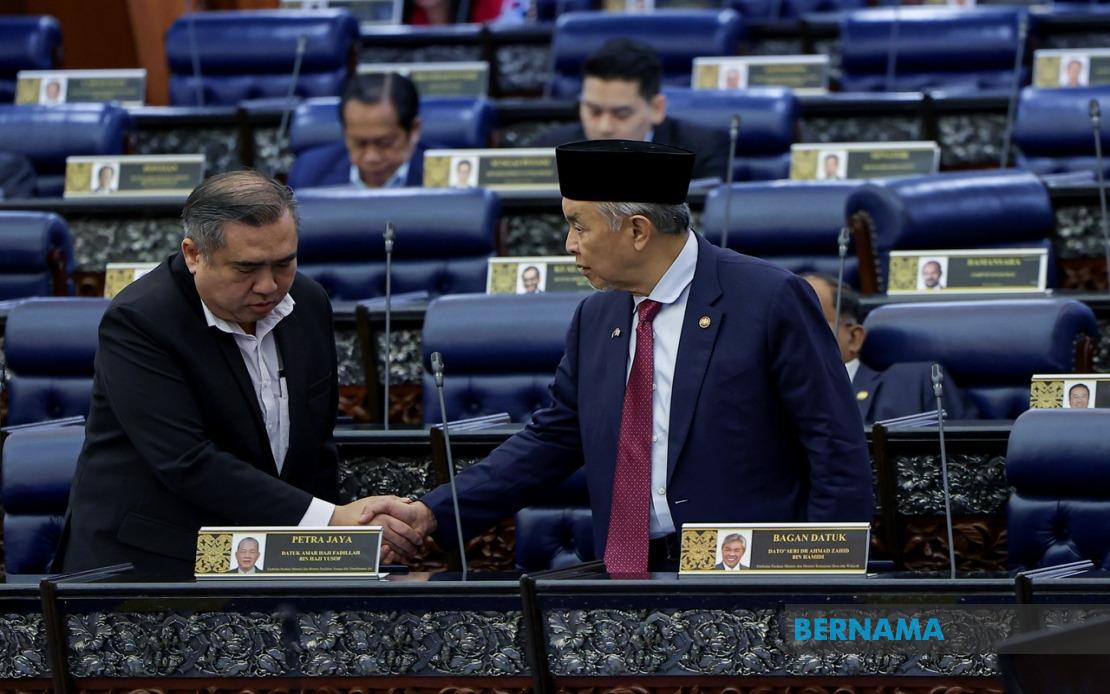
Parliament took a significant step towards tougher road enforcement this week when Transport Minister Anthony Loke presented the Road Transport (Amendment) Bill 2026 for its first reading in the Dewan Rakyat. The comprehensive legislative package seeks to substantially increase the regulatory teeth available to authorities and enforcement agencies tasked with maintaining road discipline across the nation. The second reading is expected to proceed during the current parliamentary session, signalling the government's intention to move the Bill through both houses within a reasonable timeframe.
At the heart of the proposed amendments lies a dramatic escalation in financial penalties across a broad spectrum of traffic violations. The baseline fine for numerous offences will jump from RM300 to RM500, representing a 67 percent increase designed to serve as a genuine deterrent rather than a minor inconvenience. This expanded penalty structure encompasses failures to display vehicle registration numbers, operating a vehicle without proper licensing, driving with an invalid or expired driving licence, exceeding speed limits, breaching standards governing vehicle construction and equipment, ignoring traffic signals and instructions, and participation in illegal street racing or speed-testing activities.
The Bill reserves particularly severe consequences for motorists who choose to drive while their licences have been formally suspended by authorities. Under the current law, such offenders face a maximum of one year's imprisonment or a fine reaching RM5,000. The amendment dramatically escalates this to a possible three-year prison sentence combined with financial penalties ranging from RM3,000 to RM10,000. This substantial increase reflects mounting governmental concern about repeat offenders and those who deliberately circumvent licensing requirements, behaviour that poses heightened risks to other road users.
Street racing and public road speed-testing activities receive particular legislative attention in the new Bill, indicating this remains a priority enforcement concern for Malaysian authorities. First-time convictions for such conduct will attract fines between RM2,000 and RM10,000, coupled with up to two years' imprisonment. The legislature has chosen to escalate consequences dramatically for second offences, imposing minimum five-year jail sentences alongside fines ranging from RM5,000 to RM20,000. This graduated penalty structure suggests legislators view illegal racing not merely as a traffic violation but as a serious public safety threat warranting criminal-level consequences.
Beyond traffic violations themselves, the Bill introduces substantial protections for enforcement personnel who increasingly face confrontation during their duties. Creating a new arrestable offence specifically addressing obstruction or assault against enforcement officers reflects the challenging operational environment that road transport officers and police encounter. This provision aims to fortify the position of enforcement personnel and underscore societal commitment to maintaining respect for authority figures tasked with public safety responsibilities.
The amendments also target dishonesty in interactions with authorities, recognising that false statements submitted to road transport officials undermine the integrity of the regulatory system. Proposed penalties for such conduct reach RM200,000 in fines or ten years' imprisonment, representing a severe response to what the legislature clearly regards as corruption of administrative processes. These provisions acknowledge that honest record-keeping forms the backbone of effective transportation regulation.
Additional operational enhancements grant both police and road transport officers expanded powers to manage traffic flow and redirect vehicles as circumstances require. These expanded enforcement capabilities respond to the evolving traffic management challenges faced by urban areas experiencing congestion and safety complications. The Bill also provides the Transport Minister with authority to establish fees for foreign vehicle entry permits, streamlining administrative procedures while generating revenue from international motor vehicle operations within Malaysian territory.
The legislation addresses the emerging phenomenon of micromobility devices, establishing formal procedures for their detention and disposal when used in violation of transportation laws. This reflects authorities' recognition that smaller powered transport devices increasingly feature in urban environments and require explicit regulatory frameworks. The Bill essentially modernises road transport legislation to encompass contemporary transportation modes beyond traditional automobiles.
For Malaysian drivers and transport operators, these amendments signal a fundamental shift in enforcement philosophy. Rather than functioning primarily as revenue-gathering mechanisms, penalties now serve as genuine deterrents backed by substantial jail terms for serious infractions. The emphasis on protecting enforcement officers and penalising those who mislead authorities reflects a broader commitment to establishing road discipline through both consequences and respect for the enforcement apparatus.
Regional observers noting Malaysia's approach may recognise it as part of a broader Southeast Asian trend toward stricter road safety enforcement, particularly targeting dangerous behaviours like street racing that generate public concern and tragedy. Other nations in the region have similarly escalated penalties and enforcement powers following spikes in road fatalities and public safety concerns. Malaysia's Bill therefore positions the nation alongside regional peers in adopting more stringent approaches to transportation discipline.
The practical implications for Malaysian road users extend beyond the specific penalties enumerated. The signal being transmitted through these amendments suggests that authorities are serious about enforcing road rules and will pursue violators with criminal-level consequences rather than treating violations as minor infractions. This represents a potentially significant shift in driver behaviour if implementation matches the legislative intent.
For transport operators and commercial vehicle users, the Bill necessitates careful review of their operations and driver training programmes. Companies must ensure vehicles meet construction standards, drivers maintain valid licences, and operations comply with traffic regulations, as non-compliance now carries elevated financial and criminal consequences. Insurance implications may also shift as underwriters assess the heightened legal environment affecting their clients' liability exposure.