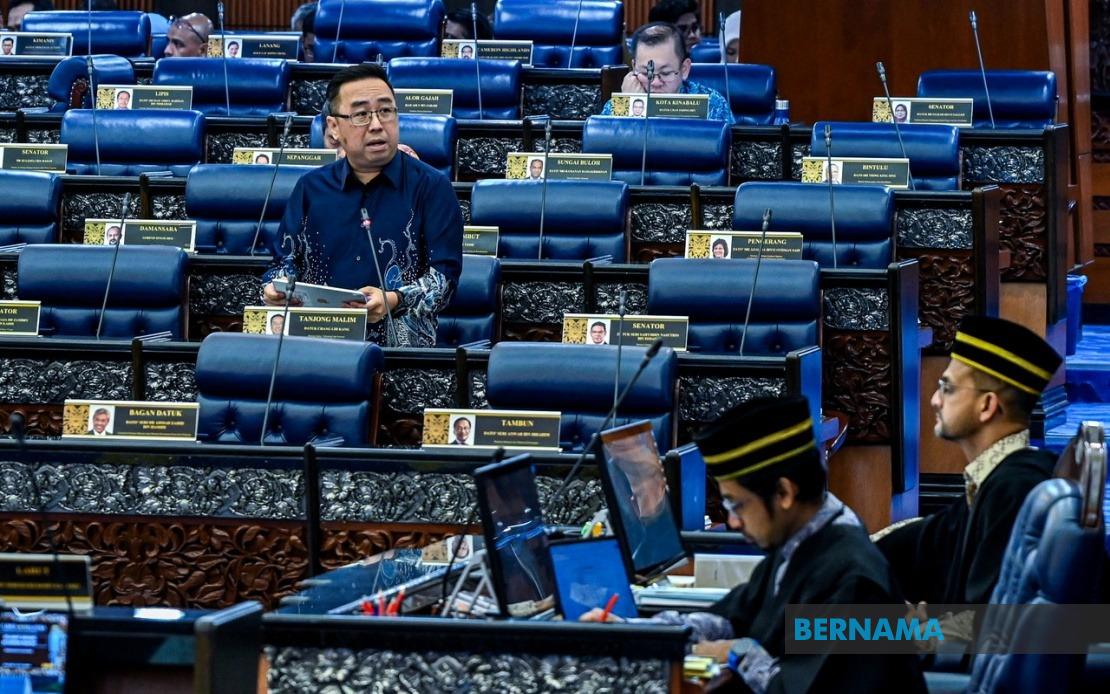
The Malaysian government has committed to bringing domestically-developed advanced semiconductor packaging technology to market within a two-year window, marking a significant step towards strengthening the nation's position in next-generation chip manufacturing. Speaking in Parliament, Science, Technology and Innovation Minister Datuk Chang Lih Kang outlined plans for the RM185 million initiative under the Malaysia Science Endowment, which represents a strategic investment to reduce reliance on foreign expertise in a sector increasingly vital to global technological competition.
At the heart of this initiative is a consortium drawing together five homegrown companies alongside government research institutions, working collaboratively to elevate the technology from its current development phase to market-ready status. The project structure reflects growing recognition that Malaysia's semiconductor ambitions require more than isolated efforts—they demand coordinated public-private partnerships capable of mobilising resources across the innovation ecosystem. By pooling capabilities and sharing infrastructure costs, the consortium approach reduces the financial burden on individual firms while accelerating knowledge transfer and capability building across the sector.
The government funding takes the form of direct grants specifically designed to advance the Technology Readiness Level of the packaging technology from TRL 5, representing proven technology in a research environment, through to TRL 9, which indicates the technology is fully validated and ready for commercial deployment. This progression is critical because the gap between laboratory success and industrial production often proves far wider than scientists anticipate. The intermediate stages require solving manufacturing scalability challenges, establishing quality control systems, and training personnel—precisely the work the two-year capacity-building phase addresses.
Minister Chang emphasised that once the technology reaches TRL 9 and government support concludes, responsibility transfers entirely to the participating companies. They will assume the obligation to identify paying customers, secure private financing for expansion, and compete in the open market without further subsidies. This transition framework deliberately avoids creating permanent government dependency, a concern that has plagued some earlier technology development programmes. The distinction matters: government financing gets the technology ready; industry must prove it commercially viable.
Advanced packaging represents a crucial segment within semiconductor manufacturing. While chip design and production capture significant attention, packaging—the process of integrating completed chips into functional assemblies—increasingly determines performance and cost competitiveness. As devices become more complex and integration-intensive, packaging technology directly influences power efficiency, heat dissipation, and miniaturisation capabilities. Malaysia's technological advancement in this area could unlock higher-value positions across the semiconductor value chain, moving the nation beyond assembly work into more sophisticated production.
The technology addresses applications commanding explosive global demand. Artificial intelligence infrastructure, cloud data centres, high-performance computing systems, 5G telecommunications networks, smart automotive electronics, and emerging quantum computing all depend on advanced packaging capabilities. By developing local expertise across these applications, Malaysia positions itself to serve regional markets across Southeast Asia while reducing vulnerability to supply chain disruptions in strategic technology sectors. The regional semiconductor ecosystem remains concentrated in Taiwan, South Korea, and China; Malaysian capabilities could diversify production sources for sensitive applications.
The RM185 million allocation signals genuine commitment to technological self-sufficiency in semiconductors, a sector where nations increasingly view domestic capability as essential infrastructure. Unlike consumer electronics or traditional manufacturing, semiconductor production sits at the intersection of national security, economic competitiveness, and technological sovereignty. Several governments have invested heavily to ensure indigenous technological foundations cannot be easily disrupted by geopolitical tensions or trade conflicts. Malaysia's initiative aligns with this global trend while remaining proportionate to the nation's economic scale and existing capabilities.
The consortium model also builds institutional knowledge that extends beyond the immediate project. As participating companies develop advanced packaging expertise, they become recruitment anchors for specialised talent and training hubs for supply chain partners. Universities and research institutions within the consortium gain access to real-world manufacturing challenges, enriching their research agendas and creating feedback loops that strengthen academic programmes. The technology itself—patents, processes, and systems—becomes national intellectual property that subsequent ventures can build upon, generating cumulative advantage over time.
Successful commercialisation within the timeframe depends on several factors remaining favourable. Global semiconductor demand must sustain at sufficient levels to justify production investment; competing technologies must not fundamentally alter packaging requirements; and the participating companies must possess management capacity to navigate the transition from subsidised development to market competition. Minister Chang's emphasis on industry independence after TRL 9 reflects realistic understanding that government cannot indefinitely shepherd commercial operations, yet the market-testing period they've committed represents genuine risk capital investment in unproven technology.
For Malaysia's broader technology ecosystem, the project signals that semiconductor advancement represents a policy priority alongside established sectors like palm oil and petrochemicals. This recognition opens potential for supporting infrastructure development—specialised testing facilities, talent pipelines through STEM education, and supply chain links to complementary technologies. A successful advanced packaging programme creates momentum for related capabilities in chip design, materials science, and equipment manufacturing, gradually deepening the technological base.
The two-year timeline carries implicit pressure. Markets move quickly in semiconductors; technologies that seem advanced today risk obsolescence within five years. The consortium must balance perfectionism in technology development against the urgency of reaching commercial viability before market windows close. Minister Chang's articulation of clear milestones and funding boundaries suggests understanding of these pressures, though execution will ultimately determine whether the RM185 million investment yields technologies that global manufacturers genuinely want to deploy versus those that remain primarily instruments of national pride.

