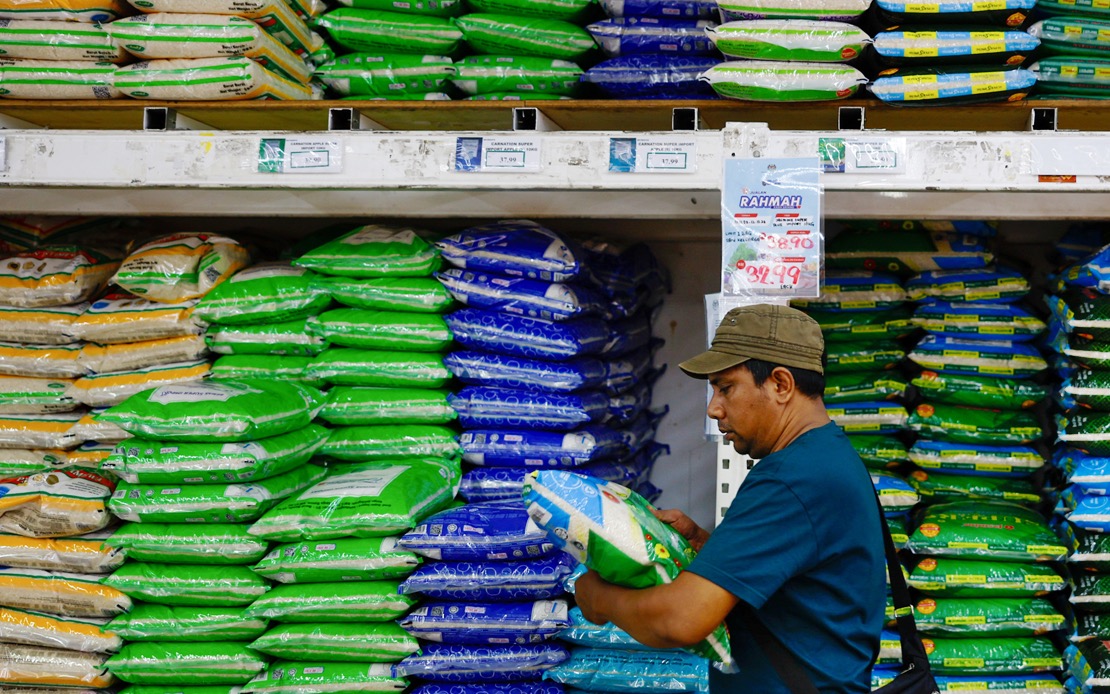
The government has reassured Malaysians that the nation's rice supply remains adequately secured against potential disruptions from ongoing geopolitical tensions in West Asia. Speaking in the Dewan Negara on August 4, Deputy Agriculture and Food Security Minister Datuk Chan Foong Hin disclosed that Malaysia holds 1.237 million tonnes of rice in reserve, a quantum deemed sufficient to sustain domestic needs for at least six months without requiring additional imports. This strategic stockpile comprises a dedicated national buffer stock of 200,000 tonnes managed by Padiberas Nasional Berhad (BERNAS) alongside 1.037 million tonnes of commercial reserves held by private sector operators.
The revelation comes as questions mount globally about food security risks emanating from Middle Eastern instability. Malaysia, like many nations dependent on international trade corridors, faces potential supply chain disruptions if regional conflicts escalate or disrupt shipping routes through critical waterways. The timing of this parliamentary disclosure underscores the government's attempt to dampen public anxiety about food availability while demonstrating that contingency planning is already in place. Chan's statement addressed concerns raised by Senator Datuk Dr Mohd Hatta Md Ramli regarding how effectively the nation manages staple food reserves during periods of international crisis.
Beyond raw stockpile figures, the government's strategy extends to price stability mechanisms that protect consumers from volatility in global commodity markets. Chan highlighted that direct government subsidies on locally produced white rice create a price stabilisation effect, insulating Malaysian households from sharp cost fluctuations that typically occur when international rice prices surge. This dual-track approach—maintaining physical reserves while managing domestic pricing through fiscal intervention—reflects an understanding that food security encompasses both availability and affordability. When global rice prices spike, as they have during previous crises, Malaysia's subsidised domestic supply becomes a comparative advantage for ordinary consumers.
Looking beyond the immediate six-month buffer, Malaysian agricultural authorities have articulated an ambitious longer-term vision to achieve 80 per cent self-sufficiency in rice production by 2030. Currently, the nation imports roughly 35 to 40 per cent of its rice consumption, a dependency that leaves it vulnerable to international price shocks and supply disruptions. The Ministry of Agriculture and Food Security (KPKM) has identified declining domestic production trends and climate-related threats, particularly the El Niño phenomenon, as the principal obstacles to achieving this goal. Addressing these structural challenges requires not merely policy adjustments but fundamental shifts in agricultural practice and crop variety selection.
The government's response centres on introducing drought-resistant padi varieties specifically developed to withstand environmental stress. The MR 380, MR 381, and MR 382 varieties represent the culmination of years of research aimed at breeding rice plants capable of maintaining yields despite reduced water availability. This approach directly counters the productivity losses experienced during El Niño episodes when rainfall patterns become erratic and water stress damages traditional varieties. Coupled with these improved seed stocks, KPKM is promoting modern water management techniques such as Alternate Wetting and Drying (AWD) and the System of Rice Intensification (SRI), methodologies that reduce water consumption per unit of output while often enhancing overall yield quality.
The practical implementation of these strategies is being piloted through a structured five-season rice cultivation programme spanning two years across areas administered by the Muda Agricultural Development Authority (MADA). MADA's jurisdiction covers some of the nation's most productive agricultural land, particularly in the northwestern states, making it an appropriate testing ground for innovative cultivation regimes. Simultaneously, the government is investing in irrigation infrastructure upgrades to ensure that water delivery systems can support these new farming protocols effectively. Such capital-intensive interventions signal a commitment to raising productivity per hectare, a necessary precondition for approaching self-sufficiency targets.
Recognising that innovation alone cannot succeed without addressing farmer economics, the government has announced several cost-mitigation measures targeting the agricultural sector's operational expenses. Most significantly, agricultural fertilisers including rock phosphate and magnesium sulphate will receive temporary exemption from the Sales and Service Tax from January 1, 2026, through December 31, 2027. This two-year tax holiday reduces input costs during a critical investment period when farmers are expected to adopt new varieties and techniques. For many smallholder rice farmers operating on thin margins, this fiscal relief can represent the difference between undertaking modernisation or maintaining status quo practices.
Additionally, the government has substantially increased ploughing incentives for the 2026 planting season, nearly doubling the per-hectare subsidy from RM160 to RM300. This enhancement, requiring approximately RM40 million in additional budget allocation, is projected to reach nearly 200,000 farming households. The magnitude of this expansion suggests policymakers recognise that financial incentives remain crucial for persuading farmers to participate in productivity-enhancement initiatives. The timing aligns with implementation of new cultivation projects, ensuring farmers possess both the financial capacity and motivation to participate in MADA's five-season experimental programme.
For Malaysian consumers and policymakers alike, these developments carry significant implications extending beyond rice alone. Rice occupies a culturally and nutritionally central position in Southeast Asian diets, but it also represents the most politically sensitive food commodity in Malaysia. Governments have historically faced severe political consequences when rice availability tightens or prices spike unexpectedly. By establishing credible reserve stocks, pursuing aggressive domestic production growth, and implementing targeted farmer support, the current administration is attempting to insulate itself from this vulnerability. The messaging is deliberately reassuring, designed to prevent panic purchasing or hoarding behaviour that can rapidly deplete markets.
Regionally, Malaysia's approach offers instructive lessons for other Southeast Asian nations managing similar food security challenges. Unlike some neighbours, Malaysia has avoided excessive dependence on Thai or Vietnamese rice exports, instead maintaining a strategic national capability cushioned by commercial market mechanisms. This balanced approach—neither fully autarkic nor excessively import-dependent—allows flexibility in responding to supply shocks. When global prices rise sharply, Malaysia can temporarily reduce its import volume while relying on domestic stocks, then gradually rebuild reserves when prices soften. This cycling strategy requires adequate reserves and domestic production capacity, both elements the government is now prioritising.
Looking forward, the success of Malaysia's rice security strategy depends fundamentally on whether agricultural modernisation targets are met on schedule. Climate variability poses an ongoing threat, with scientific consensus indicating increased frequency of extreme weather events across Southeast Asia. The adoption of drought-resistant varieties and improved water management thus assumes even greater urgency. Simultaneously, maintaining farmer participation in these programmes requires sustained price supports and input subsidies, representing ongoing fiscal commitments. Should global geopolitical tensions escalate further, disrupting shipping routes or destabilising major rice-producing regions, Malaysia's six-month buffer becomes increasingly precious, potentially extending to twelve months or longer if domestic production grows as envisioned. For now, the government's stated preparedness provides some reassurance that the nation's daily bread supply remains secure.

