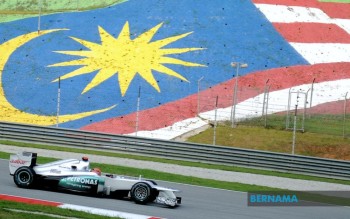
Malaysia is set to welcome Formula 1 back to Sepang International Circuit in October 2026 when the country hosts the Bahrain Grand Prix, marking a significant return for the championship after a nearly decade-long absence that ended in 2017. The race, scheduled for October 2-4 and positioned strategically between the Azerbaijan and Singapore grands prix, represents a rare opportunity to capitalise on international motorsport prestige without the substantial financial burden typically associated with hosting major sporting events. Industry figures have flagged this as a pivotal moment that could reshape conversations about Malaysia's role in global motorsport while simultaneously injecting money into the local economy through tourism, hospitality, and related sectors.
The arrangement carries a fundamentally different financial structure from Malaysia's previous F1 commitments. Rather than the Malaysian government funding the entire operation, Bahrain has secured the rights to stage their grand prix in Malaysia and will shoulder organisational and promotional costs. This inverted model essentially transforms the country into a venue for hire, dramatically lowering financial risk while still delivering the prestige and visitor traffic associated with world-class motorsport. Datuk Razlan Razali, former chief executive of Sepang International Circuit, emphasised that Malaysia emerged as the optimal choice precisely because it offers cost-effectiveness compared to alternative venues such as Portimao in Portugal, making the financial proposition compelling for race organisers seeking to relocate their event.
From an infrastructure perspective, minimal disruption should be expected. The Sepang circuit already operates to the highest international standards with proper certification from the Fédération Internationale de l'Automobile, though formal FIA inspections will be necessary before the 2026 event to confirm compliance with current F1 specifications. Razali indicated that while the circuit may not currently hold F1 homologation, the technical modifications required should be straightforward, suggesting that the compressed timeline between now and October 2026 presents no insurmountable operational obstacles. The burden of any significant upgrades would likely fall to Bahrain if they wish to implement changes, meaning Malaysian infrastructure could benefit from improvements funded by external sources without local taxpayers bearing the cost.
The economic windfall potential remains substantial despite the abbreviated lead time before the event. Tan Sri Mokhzani Mahathir, president of the Motorsports Association of Malaysia, highlighted that Formula 1 spectators typically include around thirty percent international visitors who inject money into hospitality, aviation, and food and beverage operations. The positioning of the race one week before the Singapore Grand Prix creates a geographic advantage for Malaysia, as price-conscious tourists often choose to base themselves in Malaysia before crossing into Singapore, benefiting both nations while creating opportunities for extended regional travel. Hotels across Kuala Lumpur and surrounding areas stand to capture significant occupancy during what would otherwise be an ordinary October period, while restaurants, entertainment venues, and tourist attractions gain access to affluent international audiences.
Domestic tourism and local business participation also feature prominently in the economic outlook. The short preparation window may limit overseas visitor numbers compared to a regular F1 season event, given that international enthusiasts typically book trips six months to a year in advance. However, dedicated Formula 1 fans from across Asia and beyond will likely prioritise attending at Sepang, particularly given the circuit's legendary status among motorsport communities and the rarity of F1 competition in Southeast Asia. Local contractors, suppliers, and workers will be engaged for event operations, creating temporary employment and commercial opportunities aligned with what Razali characterised as a straightforward track rental arrangement where local vendors should naturally be selected to support the weekend's logistics.
The accessibility question looms as a secondary consideration. Ticket pricing remains Bahrain's prerogative, and higher costs could dampen local attendance despite strong cultural enthusiasm for motorsport in Malaysia. Razali acknowledged this tension, noting that while Malaysians traditionally embrace international sporting events regardless of cost, the extent of domestic participation will only become apparent as pricing and promotional strategies materialise. The Motorsports Association's confidence in Malaysia's readiness to host reflects the country's extensive experience with large international events and well-developed accommodation infrastructure, suggesting that logistical execution should prove straightforward even with limited preparation time.
Beyond immediate economic considerations, industry leaders view the 2026 event as a diagnostic tool for evaluating Malaysia's potential role in Formula 1's future. The race functions as a live assessment of whether conditions exist for a more permanent F1 presence in Malaysia, though Razali cautiously framed permanent return as "very remote" given the championship's enormous ongoing costs and the political will required from Prime Minister Datuk Seri Anwar Ibrahim to pursue such ambitions. The October weekend will provide data on visitor behaviour, commercial viability, and operational performance that could inform conversations about Malaysia's long-term motorsport ambitions, even if immediate prospects for a permanent fixture remain uncertain.
The Motorsports Association of Malaysia will play a supervisory role, ensuring compliance with FIA regulations, safety standards, and circuit readiness rather than shouldering financial responsibility. This consultative position allows Malaysian motorsport authorities to exercise oversight while keeping administrative burden minimal, a distinction that underscores how the arrangement fundamentally differs from previous hosting arrangements where Malaysian entities bore primary operational responsibility. The association's involvement signals governmental support for the event while avoiding the fiscal exposure that would accompany direct management.
Former F1 driver Alex Yoong introduced a developmental dimension to discussions, arguing that the championship's return should be viewed as more than a single weekend spectacle. He advocated for leveraging the international attention to strengthen Malaysia's grassroots motorsport infrastructure, driver development programmes, and regional competitive ecosystem. Yoong's perspective reflects growing sentiment that hosting major events offers value only when integrated into broader strategic vision for motorsport advancement, suggesting that industry leaders should capitalise on the spotlight to build sustainable competitive pathways for Malaysian drivers and teams rather than treating F1 as an isolated tourism moment.
The timing within the global F1 calendar adds strategic value beyond typical race-day economics. Positioned between races in Baku and Singapore, the Sepang event sits within a window when international media, competitors, and dedicated fans already focus on the Asian region. This concentration of motorsport attention potentially amplifies coverage and interest compared to a standalone event elsewhere on the calendar, extending Malaysia's visibility beyond the three racing days. Regional airports and transportation hubs will experience elevated demand precisely when they have capacity to accommodate surges, suggesting that the October timing aligns naturally with existing travel patterns in Southeast Asia's motorsport calendar.
The arrangement also carries subtle diplomatic implications for Malaysia's standing in global motorsport governance. A successful Bahrain Grand Prix in Malaysia would demonstrate the country's continued capability to host world-championship events and could restore Malaysia to conversations about the championship's geographic expansion, particularly as F1 explores opportunities across the Asian-Pacific region. This soft influence compounds the direct economic benefits, positioning Malaysia as a reliable venue for international sporting organisations considering expansion or relocation strategies.
Looking forward, the October 2026 event will generate empirical evidence about whether circumstances favour Malaysia's deeper engagement with Formula 1 beyond this one-off arrangement. Success metrics will encompass visitor numbers, spectator satisfaction, media coverage, commercial activity, and operational execution, collectively determining whether Malaysia emerges as a candidate for future championships or settles into a more limited role within global motorsport. For now, the absence of financial risk combined with the potential for tangible economic benefit positions the event as an almost consequence-free opportunity to reconnect with a sport that defined Malaysian motorsport identity for two decades.

