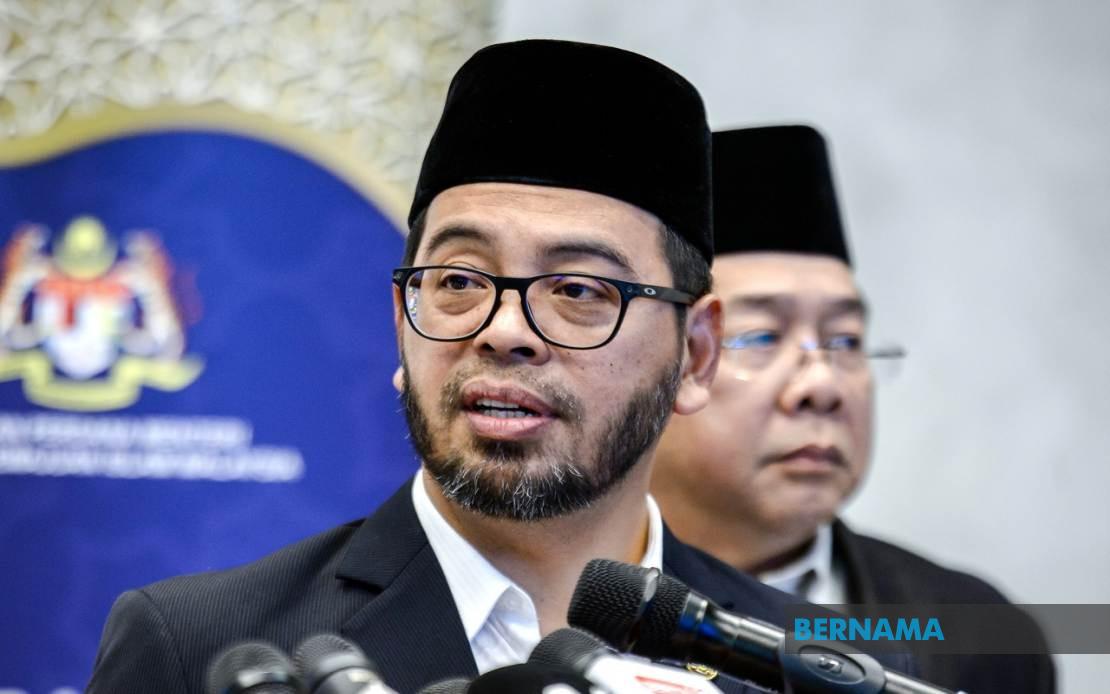
Malaysia's government has issued a sharp rebuke over the detention of Sheikh Muhammad Hussein, the Grand Mufti of Jerusalem and custodian of the Al-Aqsa Mosque, following last Friday's prayers at the holy site. Minister in the Prime Minister's Department (Religious Affairs) Senator Dr Zulkifli Hasan released a statement condemning what his office described as a violation of religious liberty, even though the religious leader was released shortly after the incident. The episode has reignited Malaysia's historical advocacy for Palestinians and Muslim-majority causes on the international stage, positioning the nation as a vocal supporter of religious freedoms in contested territories.
While Sheikh Muhammad Hussein's release came relatively quickly, Dr Zulkifli stressed that the mere act of detaining a senior cleric during his prescribed religious duties at one of Islam's most sacred locations represents a fundamental breach of internationally recognised protections. The Al-Aqsa Mosque holds enormous symbolic and spiritual significance for Muslims worldwide, serving as one of Islam's holiest sites and a focal point of Palestinian identity. The detention incident, in Dr Zulkifli's assessment, therefore transcends a simple security matter to become a question of whether fundamental rights of worship and leadership can be exercised without state interference.
In response, Dr Zulkifli has formally appealed to major international bodies to intervene. His call specifically targets the United Nations and the Organisation of Islamic Cooperation, urging both organisations to employ their considerable diplomatic and institutional machinery to guarantee that worshippers can practise their faith freely, that religious leaders remain protected while fulfilling their spiritual roles, and that the sanctity of the Al-Aqsa Mosque is preserved under international law. This multilateral approach reflects Malaysia's broader foreign policy strategy of raising human rights concerns through established global institutions rather than through unilateral statements alone.
The statement reinforces Malaysia's consistent positioning on the Israeli-Palestinian conflict, with Dr Zulkifli reaffirming the nation's unwavering solidarity with the Palestinian people. He pledged that Malaysia would persist in supporting endeavours aimed at achieving equitable peace, defending Palestinian rights, and eliminating what the statement characterises as systematic oppression. This declaration underscores how religious and geopolitical concerns intersect in Malaysia's diplomatic framework, where support for fellow Muslim-majority populations abroad remains a significant element of national identity and foreign policy.
Beyond the Jerusalem controversy, Dr Zulkifli used his platform to commemorate the 31st anniversary of the Srebrenica massacre, a 1995 atrocity in Bosnia and Herzegovina that claimed the lives of more than 8,000 Bosniak Muslim men and boys over several days in July. Despite the United Nations formally designating Srebrenica a protected safe area, Bosnian Serb forces nonetheless launched a devastating assault that resulted in one of Europe's bloodiest ethnic cleansings. More than 1,000 victims from the massacre remain missing, with identification and repatriation efforts continuing decades later—a grim testament to the scale and systematic nature of the violence.
Malaysia's connection to the Bosnian tragedy runs deep and multifaceted. Dr Zulkifli highlighted the nation's prominent historical role in championing Bosnian Muslim causes, tracing this commitment through the work of former Prime Minister Tun Dr Mahathir Mohamad and current Prime Minister Datuk Seri Anwar Ibrahim. Beyond political leadership, Malaysian civil society organisations contributed early humanitarian assistance, with the Muslim Youth Movement of Malaysia (ABIM) among those providing support during the conflict and its aftermath. This longstanding engagement demonstrates how Malaysia has positioned itself as a significant actor in global Muslim affairs, extending its advocacy beyond immediate regional concerns.
On the ground, Malaysia's contribution to stabilising Bosnia proved substantial and tangible. Between 1993 and 1998, the Malaysian Armed Forces deployed 10,514 officers and personnel across UN peacekeeping operations in Bosnia and Herzegovina, operating under both the Malaysian Battalion (MALBAT) and the Implementation Force (IFOR). Malaysia also opened its borders to Bosnian refugees, providing sanctuary for displaced families, and extended educational opportunities through the International Islamic University Malaysia (IIUM), enabling younger Bosnians to pursue higher education and build futures away from the conflict zone. These multifaceted efforts—military, humanitarian, educational, and diplomatic—illustrate Malaysia's comprehensive approach to supporting Muslim communities facing existential threats.
For Malaysian readers, Dr Zulkifli's dual focus on Jerusalem and Srebrenica reflects a consistent philosophical orientation: the protection of Muslim religious and human rights globally remains integral to Malaysia's national identity and foreign policy calculus. The invocation of both contemporary detention and historical genocide serves to illustrate how religious liberty and community security remain interconnected concerns that justify sustained Malaysian engagement with international organisations. The commemoration also carries implicit lessons for younger Malaysians about the consequences of sectarian violence and the importance of interfaith understanding.
Dr Zulkifli's appeal carries particular weight given Malaysia's demographic composition and its formal status as an Organisation of Islamic Cooperation member. When Malaysian officials voice concerns about religious persecution or communal violence affecting Muslims abroad, they do so from a position of representing both a significant Muslim nation and a nation with proven capacity to mobilise resources for humanitarian causes. The statement therefore functions simultaneously as a moral witness to injustice and a reaffirmation of Malaysia's willingness to contribute—diplomatically, militarily, and humanitarianly—to causes affecting Muslim populations globally.
The minister concluded his remarks by calling on Malaysian youth to extract enduring lessons from the Srebrenica tragedy. He urged younger generations to categorically reject hatred, division, and oppression in all forms, framing the massacre not merely as historical event but as ongoing moral lesson. His invocation of traditional prayers for the Srebrenica martyrs—requesting that they be granted the highest station before Allah and that surviving families be granted strength and fortitude—wrapped the statement in spiritual language that connects religious devotion to social justice advocacy. This rhetorical strategy seeks to inspire Malaysian youth to view their own commitment to justice and religious freedom as fundamentally intertwined with their faith.

