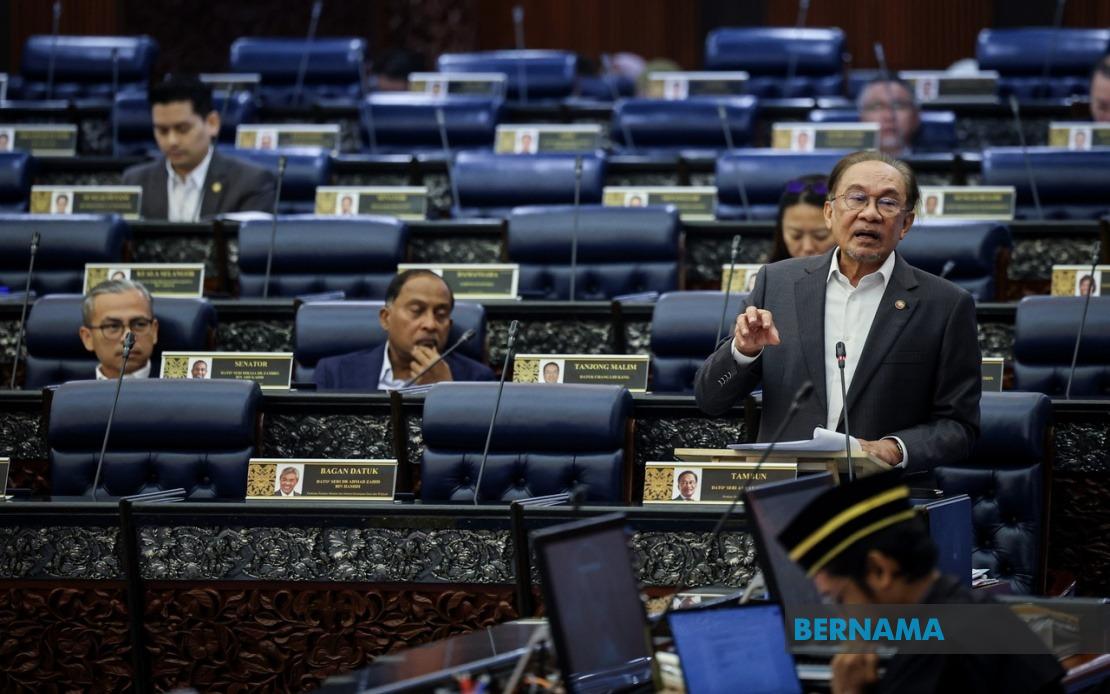
Malaysia's drop to 95th place in the 2026 World Press Freedom Index from 88th the previous year stems largely from government enforcement actions against several media outlets, according to Prime Minister Datuk Seri Anwar Ibrahim. Speaking during Minister's Question Time in Parliament on July 7, the Prime Minister acknowledged that such actions had influenced Malaysia's lower standing in the Reporters Without Borders assessment, but he emphasised that these measures were narrowly targeted and did not constitute attempts to suppress press freedom or stifle legitimate political discourse.
The Prime Minister pointed to specific cases that had drawn international scrutiny. Sin Chew Daily faced action following the publication of an inaccurate illustration of the Jalur Gemilang, whilst Sinar Harian was similarly targeted over its handling of the Inspector-General of Police's biography. These incidents were particularly damaging to Malaysia's ranking because the international media community viewed them as egregious violations of journalistic independence. Anwar acknowledged the international perspective but underscored that Malaysia's approach to matters involving the national flag reflected deeply held constitutional values that may differ from practices in other democracies.
Crucially, Anwar distinguished between legitimate government enforcement and press suppression by clarifying the categories of content subject to regulatory action. The government takes action specifically against material involving the three Rs—religion, race, and the royal institution—as well as content deemed threatening to national security. However, the Prime Minister stressed that purely factual inaccuracies or political criticism alone do not trigger enforcement action. Instead, the government prefers public clarification through parliamentary statements and other transparent mechanisms, demonstrating a preference for dialogue over punishment in most circumstances.
The government's legal framework has evolved to accommodate contemporary concerns about free expression. Anwar highlighted amendments to Section 233 of the Communications and Multimedia Act 1998, which represent a significant liberalisation of existing provisions. Under these changes, satirical remarks directed at the Prime Minister or other political leaders are no longer treated as criminal offences, a move that reflects the administration's commitment to permitting robust public commentary on governance and leadership. This legal refinement addresses a historical concern amongst media practitioners and civil society organisations regarding overly broad restrictions on political speech.
Anwar's explanation also contextualised Malaysia's ranking within the broader Reporters Without Borders assessment methodology. The RSF index considers multiple dimensions beyond direct government action, including the political environment, legal framework, economic conditions, socio-cultural context, and security situation. This multifaceted approach means that Malaysia's ranking reflects not only state conduct but also structural and contextual factors that shape the media landscape. Understanding this complexity is essential for observers seeking to interpret Malaysia's position relative to other Southeast Asian nations and globally.
A significant but often overlooked factor in Malaysia's ranking involves the role of social media platforms themselves. The Prime Minister noted that major technology companies remove content based on user complaints and their own content moderation policies, independent of government direction. This dynamic has affected Malaysia's assessment despite the government's disagreement with particular platform decisions. Notably, Anwar cited his own experience, wherein posts related to Hamas were removed by social media companies despite the government's position that such removals were unjustified. This phenomenon highlights the growing power of private tech corporations in shaping the information environment, a reality that transcends traditional press freedom frameworks.
The Malaysian Communications and Multimedia Commission's role in content regulation reflects another nuance in the enforcement landscape. Whilst the MCMC makes requests for content removal, it lacks authority to compel compliance from social media platforms. Final decisions rest with the respective platform operators, whose commercial and reputational considerations may diverge significantly from regulatory objectives. This structural limitation means that the government cannot unilaterally dictate the information environment, a constraint that press freedom advocates should acknowledge when assessing regulatory overreach.
Anwar emphasised the government's commitment to the position established by the Conference of Rulers, which maintains close oversight of content involving insults to the royal institution and material that could incite racial or religious tensions. This constitutional arrangement reflects Malaysia's distinctive constitutional settlement, wherein the monarchy holds a special constitutional status that differs from ceremonial monarchies in other democracies. The Prime Minister's framing suggests that enforcement on 3R issues represents a constitutional obligation rather than arbitrary state control, a distinction that may be lost on international assessment mechanisms that do not account for Malaysia's specific constitutional architecture.
The tension between Malaysia's regulatory approach and international press freedom standards reflects broader questions about cultural relativism and universal principles. Anwar's explanation acknowledges that what constitutes an acceptable restriction on expression varies across national contexts shaped by historical experiences, constitutional structures, and social values. Whilst the international media community may view enforcement on 3R issues as incompatible with press freedom, Malaysia's government contends that protecting communal harmony and constitutional institutions represents a legitimate public interest that justifies circumscribed restrictions.
For Malaysian media practitioners, these clarifications provide somewhat reassuring guidance regarding the government's enforcement priorities. The distinction between political criticism and 3R violations, combined with the removal of criminal liability for satire targeting leaders, suggests a narrower enforcement scope than historical precedent. However, the inherent subjectivity in determining whether content touches on religion, race, or the royal institution means that considerable uncertainty persists for journalists navigating sensitive topics.
The international implications of Malaysia's press freedom ranking warrant consideration for regional observers. As a prominent Southeast Asian economy and democracy, Malaysia's standing influences perceptions of media freedom across the region. Other ASEAN nations face comparable tensions between protecting communal harmony and respecting journalistic independence, making Malaysia's policy approach a relevant reference point for regional policymakers grappling with similar challenges.
Looking forward, Malaysia's engagement with press freedom assessment mechanisms requires balancing international standards with distinctive constitutional arrangements and social contexts. The government's willingness to engage with these rankings and provide detailed explanations, as demonstrated by Anwar's parliamentary response, suggests openness to dialogue rather than dismissal of external scrutiny. However, whether Malaysia's enforcement approach will satisfy international assessment standards remains uncertain, particularly if the government continues prioritising 3R enforcement over alternative regulatory mechanisms.

