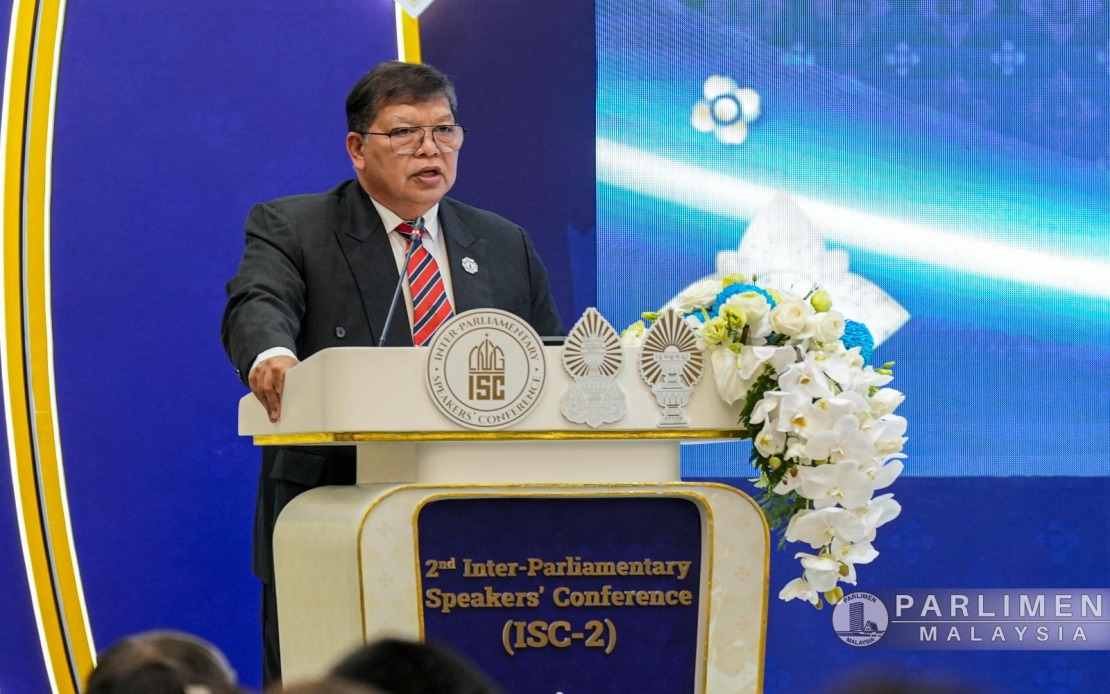
At the Second Inter-Parliamentary Speakers' Conference in Phnom Penh this week, Dewan Rakyat Speaker Tan Sri Dr Johari Abdul delivered an urgent appeal for decisive global action on climate change, emphasizing that the crisis transcends environmental concerns to threaten the economic stability and public health of nations across Asia. Speaking to media on Friday, he highlighted the interconnected nature of modern climate risks, warning that continued inaction would deepen suffering among vulnerable populations already bearing the brunt of environmental degradation.
Johari expressed frustration that climate change remains inadequately addressed in political discourse and legislative deliberation. He pointed out a troubling gap in climate literacy among lawmakers and decision-makers, questioning why renewable energy solutions such as solar, wind, and ocean wave power receive insufficient policy attention and investment. The speaker's remarks reflect a broader concern that many Asian governments have failed to adequately mainstream climate considerations into their strategic planning and resource allocation.
The climate crisis, according to Johari, now represents a multifaceted threat extending far beyond environmental damage. Economic productivity faces mounting pressure from climate-related disruptions, while public health systems struggle with disease vectors amplified by changing weather patterns. Food security deteriorates as agricultural systems become increasingly unstable, and energy security becomes precarious as nations overdepend on fossil fuels that simultaneously exacerbate the crisis. This interconnectedness means that addressing climate change is fundamentally a matter of national security and economic prosperity, not merely environmental stewardship.
Johari's intervention comes amid a cascade of climate-related disasters across South and Southeast Asia that have claimed thousands of lives. Nepal recently experienced catastrophic flooding triggered by a glacial collapse in the Himalayas, with preliminary reports confirming 469 deaths and over 2,300 people unaccounted for, including 644 foreign nationals. Several Malaysian citizens remain among the missing, bringing the crisis into sharp focus for Malaysia's political establishment. The disaster underscores how climate impacts no longer respect borders or development status, affecting wealthy nations and poor countries alike.
The regional context amplifies the urgency of Johari's message. From Nepal's mountain valleys to Laos's landlocked plains, communities across Asia face relentless cycles of climate-induced disasters. Rural populations particularly bear the burden, living in constant vulnerability to flash floods, landslides, storms, and tropical typhoons that obliterate crops and demolish critical infrastructure. The Philippines endures approximately twenty typhoons annually, creating a pattern of cyclical disaster that strains recovery efforts and perpetuates poverty. Across the Mekong region, communities confront rising water levels and unpredictable precipitation patterns that undermine agricultural livelihoods.
Addressing these challenges requires a fundamental shift in governmental priorities and investment patterns. Johari advocated for substantially expanded funding in early childhood education programs where climate literacy can be embedded from foundational learning stages. Equally critical is dramatically increased research and development spending to accelerate innovation in renewable energy technologies, sustainable agriculture, and climate adaptation infrastructure. He emphasized that technology holds transformative potential, but only when coupled with political will and adequate resource commitment from both developed and developing nations.
The speaker drew particular attention to China's strategic approach to green technology development, noting that sustained governmental commitment to eco-friendly innovation, electric vehicle production, and green space expansion demonstrates how coordinated policy can drive systemic change. This example illustrates that substantial climate action remains technically and economically feasible when governments prioritize such investments alongside their traditional infrastructure and energy spending. The contrast between China's proactive approach and the reactive posture of many other nations underscores the political choices involved in climate response.
Johari's characterization of climate change as fundamentally a political challenge reflects a sophisticated understanding that technical solutions already exist but require leadership commitment to implement. He articulated frustration with the widening gap between wealthy nations capable of bearing transition costs and poorer countries facing the gravest impacts from climate change they did not create. This inequality in climate burden distribution remains one of the most intractable aspects of international climate negotiations, requiring not just technical cooperation but genuine commitment to climate justice and equitable resource sharing.
Cambodian Prime Minister Hun Manet's concurrent warnings about rising Mekong River water levels reinforce the acute pressures confronting Southeast Asian governance. While acknowledging that communities cannot entirely prevent natural disasters, Hun Manet emphasized the necessity of building institutional resilience and rapid-response systems that can mitigate damage when climate events occur. This pragmatic approach recognizes that adaptation and disaster preparedness must complement efforts to reduce emissions and slow climate change itself.
For Malaysia, Johari's intervention signals that climate change is transitioning from a technical policy matter to a central political imperative. As the nation grapples with its own vulnerability to flooding, sea-level rise, and agricultural disruption, parliamentarians must advance the speaker's agenda by embedding climate considerations across all legislative initiatives. Education reform should prioritize environmental literacy, while budget allocations should systematically favor renewable energy infrastructure and green technology research. The presence of missing Malaysians among Nepal's flood victims serves as a sobering reminder that climate disasters recognize no national boundaries.
The path forward demands moving beyond rhetorical commitment to measurable policy action and budget reallocation. Johari's call for greater R&D investment in renewable technologies, accelerated educational reform centered on climate science and sustainability, and coordinated regional cooperation suggests a recognition that climate action cannot succeed through national efforts alone. Southeast Asian nations must work collectively to develop shared adaptation strategies while individually pursuing aggressive emissions reduction and clean energy transition plans that align economic development with environmental sustainability.

