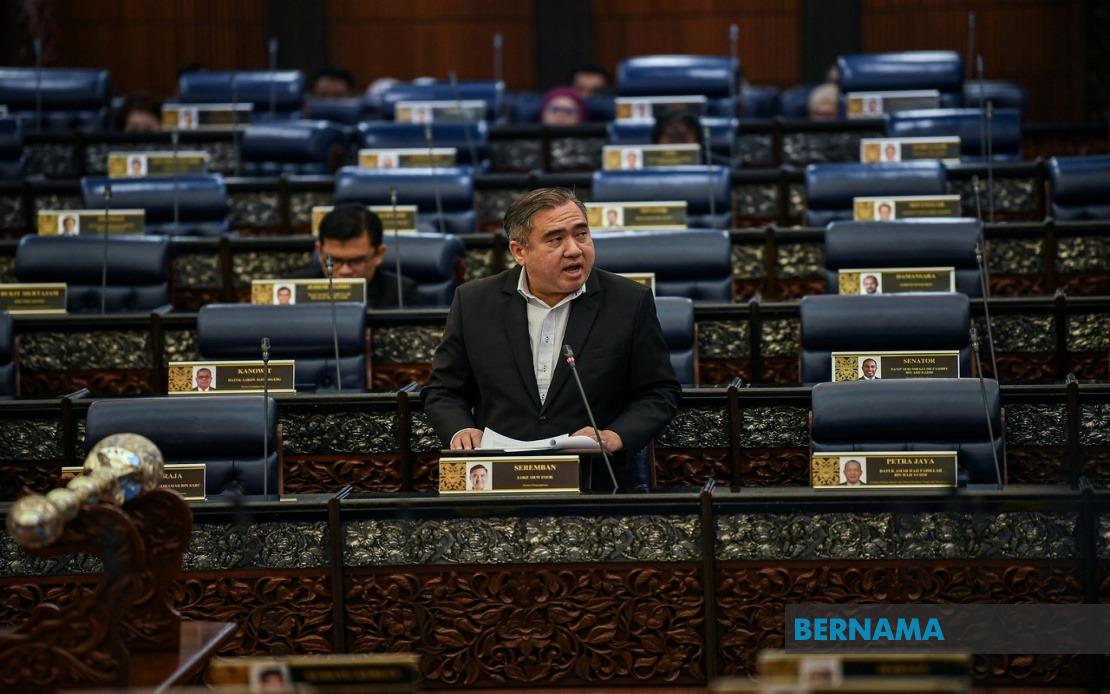
Transport Minister Anthony Loke has tabled the Road Transport (Amendment) Bill 2025 in Parliament, a legislative initiative designed to clamp down on illegal street racing and speed testing by establishing these activities as distinct criminal offences under Malaysian road laws. The Bill marks a significant shift in how authorities will handle these dangerous driving practices, moving away from relying solely on broader dangerous driving provisions that have historically created enforcement bottlenecks and prevented intervention before accidents occur.
The centrepiece of this legislative reform is the proposed Section 42A, which would establish racing and speed testing as standalone offences under the Road Transport Act 1987. This change represents a fundamental reorientation of enforcement priorities, as it allows authorities to intervene at the moment an illegal racing activity is detected, rather than waiting for a collision, injury, or fatality to provide the legal trigger for prosecution. For first-time offenders, the penalties are structured to reflect the severity of the behaviour while leaving room for rehabilitation—a fine ranging from RM2,000 to RM10,000, imprisonment not exceeding two years, or a combination of both upon conviction.
The penalty structure becomes substantially harsher for repeat offenders, reflecting Parliament's intention to deter habitual participation in these dangerous activities. Those convicted a second time or subsequently face fines between RM5,000 and RM20,000, imprisonment of up to five years, or both. This escalating approach sends a clear signal that first-time offenders may still receive lenient treatment, but the justice system will not tolerate persistent risk-taking behaviour that endangers other road users.
Loke explained that the existing framework has created enforcement challenges because dangerous driving provisions do not explicitly criminalise racing or speed testing activities. This legal ambiguity has hampered police operations and created situations where enforcement officers struggle to take preventive action before tragic consequences unfold. The minister provided practical examples of how the new provision would function: if two or more motorcyclists engage in a race or speed competition against one another on a public road, authorities can now take immediate action even if no accident results. Similarly, drivers illegally using public roads to test vehicle speeds would face prosecution without requiring proof of actual harm or damage.
Beyond the racing offence itself, the Bill introduces Section 110B to address deliberate obstruction of law enforcement activities. This new provision targets individuals who interfere with enforcement officers' operations by blocking, assaulting, threatening, or following their vehicles, as well as those who deliberately share information about enforcement operations to help suspected offenders evade capture. The penalties for these obstructive behaviours range from RM10,000 to RM50,000 in fines, one to five years' imprisonment, or both, and such violations would be classified as arrestable offences, allowing police to apprehend suspects without a warrant.
This obstruction provision addresses a persistent challenge faced by road enforcement agencies across Southeast Asia: the coordination of assistance networks that alert violators to police checkpoints and operations. By criminalising information-sharing designed to help offenders escape accountability, the Bill attempts to disrupt the informal communication systems that have historically compromised enforcement effectiveness. The provision also protects officers from physical intimidation and interference, acknowledging the increasingly confrontational nature of some enforcement encounters.
The amendments also restructure the compound system for traffic violations, increasing the baseline minimum fines from RM300 to RM500 for selected offences. Importantly, Loke clarified that this does not mean all offenders will automatically receive RM500 compound notices; rather, it raises the maximum compound offer limits that enforcement officers can impose. The actual amount imposed would vary according to the specific nature of the infraction, its severity, whether the offender settles promptly, and other prescribed procedures. This flexibility allows enforcement agencies to differentiate between minor and serious violations while providing incentives for early settlement.
The new maximum compound rates are proposed to come into effect on 1 January 2029, providing a transition period for both enforcement agencies and the public to adjust to the revised penalty structures. This phased implementation approach is typical in Malaysian legislative practice, allowing time for training, system updates, and public education campaigns to prepare road users for the stricter regime.
For Malaysian and Southeast Asian readers, this Bill carries significant implications. Street racing and illegal speed testing have become increasingly problematic in Malaysia and neighbouring countries, particularly among younger drivers and motorcycle enthusiasts. The activities not only endanger participants but also create risks for innocent bystanders, pedestrians, and other motorists. By establishing these as distinct offences, Malaysia joins a growing regional trend toward more specific and targeted traffic legislation rather than relying on catch-all dangerous driving provisions.
The Bill also reflects evolving attitudes toward road safety enforcement, prioritising preventive action over reactive prosecution. Rather than waiting for tragedy before acting, authorities can now intervene at the moment an illegal racing incident is detected, potentially preventing deaths before they occur. This represents a philosophical shift toward proactive public safety management, aligning with international best practices in road safety governance.
The obstruction provisions address a practical reality in Malaysian enforcement operations: the coordination of informal networks that undermine police effectiveness. By making it a crime to deliberately share enforcement information to facilitate escapes, the Bill attempts to close a loophole that has long compromised road safety operations. This provision may prove particularly valuable in cracking down on organized illegal racing syndicates that rely on distributed information networks to evade capture.
For commercial vehicle operators, the amendments offer additional focus on enforcement against overloading and non-compliance, areas that have generated complaints from legitimate businesses about uneven competition. The increased compound limits and revised penalties signal government commitment to levelling the playing field in the transport sector by making non-compliance more costly.
The Bill's passage represents a comprehensive recalibration of Malaysia's road safety enforcement toolkit, addressing multiple vulnerabilities in the current legal framework while providing enhanced protections for enforcement officers themselves. As Parliament considers this legislation further, road safety advocates will likely monitor its implementation to assess whether the new offences and penalties achieve the intended deterrent effect on illegal racing culture.