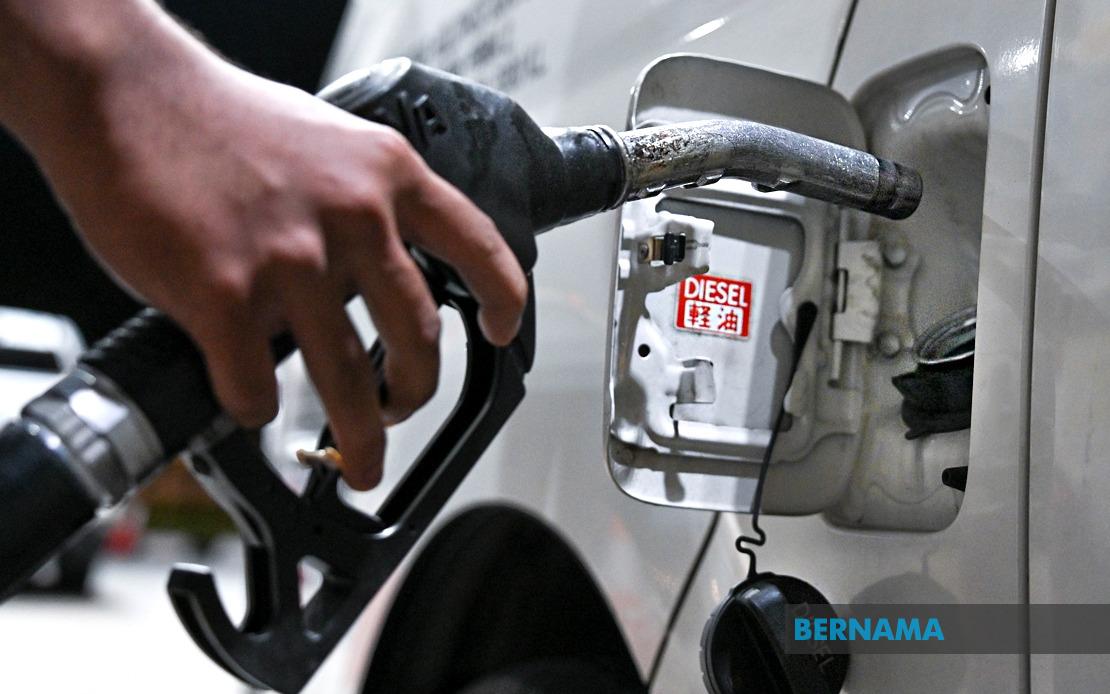
Malaysia's government is rolling out a comprehensive overhaul of its diesel subsidy system, with Second Finance Minister Datuk Seri Amir Hamzah Azizan announcing that the new BUDI MADANI Diesel programme will deliver substantial fiscal relief while maintaining affordable fuel for eligible citizens. The initiative, set to launch on July 1 at a capped price of RM2.10 per litre, represents a strategic shift toward precision targeting that officials expect will recover up to RM2 billion annually from subsidy wastage.
The diesel subsidy reform addresses a mounting fiscal crisis that has caught policymakers off guard in recent months. Government fuel subsidy expenditure ballooned from a baseline of approximately RM800 million monthly to nearly RM4.7 billion in March and RM4.9 billion in April as global crude oil prices surged, straining the Treasury and forcing a reckoning with systemic inefficiencies that have long plagued the fuel assistance framework. The sharp escalation underscored how vulnerable Malaysia's subsidy framework had become to international market volatility and internal leakage mechanisms.
Diesel consumption figures reveal the scale of the problem that prompted government action. Monthly diesel offtake jumped abnormally from around 624 million litres to nearly 1.2 billion litres, a near-doubling that internal analysts attribute to illegitimate channels rather than legitimate demand growth. Particularly alarming are consumption patterns in Sabah and Sarawak, where annual usage now approaches two billion litres against an estimated genuine requirement of approximately one billion litres, indicating leakages of roughly one billion litres yearly that require urgent intervention.
The leakage mechanisms operate across multiple vectors that have systematically undermined subsidy programme integrity. Cross-border smuggling funnels subsidised diesel into neighbouring countries where it commands premium prices, while abuse of subsidy verification channels allows commercial operators and ineligible purchasers to access government-supported fuel at petrol station pumps intended for qualified users. These diversions simultaneously drain government finances and threaten domestic supply stability, creating a compounding crisis where each dollar lost to leakage potentially constrains legitimate fuel availability for essential economic sectors including agriculture, transport, and manufacturing.
To plug these leakages, the government is deploying the BUDI MADANI Diesel framework, which employs MyKad biometric verification technology similar to the existing BUDI RON95 petrol subsidy scheme. The system restricts subsidised diesel access to 700,000 registered private diesel vehicle owners whose identity credentials are verified at point-of-sale across all petrol stations nationwide. This technology-driven gatekeeping mechanism aims to eliminate the manual oversight failures and documentation vulnerabilities that enabled previous leakages, creating an audit trail that connects individual beneficiaries to their fuel purchases.
For beneficiaries currently receiving diesel support through the BUDI Diesel Individual programme, the transition involves replacing their existing RM400 monthly cash assistance with direct subsidies applied at the pump through MyKad authentication. The government is automating this migration process, eliminating additional application requirements and streamlining administrative burden for existing recipients. To facilitate smooth implementation ahead of the July 1 official launch, early access commences on June 27 for eligible private diesel vehicle owners in Peninsular Malaysia, allowing systems testing and public familiarisation.
The programme reflects a broader philosophical shift in how Malaysia approaches subsidy policy, moving away from blunt universal mechanisms toward what officials term "targeted" support that ostensibly directs assistance to those "genuinely eligible" while creating mechanisms for verification and enforcement. This approach acknowledges that indiscriminate fuel subsidies, while politically popular, have created perverse incentives encouraging smuggling, black-market diversion, and consumption patterns misaligned with actual economic need. By restricting access to verified beneficiary cohorts, the government aims to recalibrate subsidy programmes toward affordability for legitimate users rather than subsidising activities that deplete public resources.
The RM2 billion annual savings figure represents substantially recovered fiscal space that the government intends to redirect toward public priorities. Finance ministry communications indicate these reclaimed funds will be channelled back to citizens through sustained diesel price caps at RM2.10 per litre, preventing the price volatility that occurs when global oil markets spike. This mechanism theoretically insulates Malaysian consumers from external oil price shocks while ensuring that subsidy expenditure remains predictable and containable rather than oscillating wildly with international commodity markets.
For Malaysian businesses and consumers, the BUDI MADANI Diesel implementation carries mixed implications. Commercial transport operators and small logistics businesses dependent on diesel fuel gain price certainty at RM2.10 per litre, allowing more stable cost planning and potentially improving competitiveness in price-sensitive sectors. However, the verification requirement means that diesel vehicle owners must hold valid MyKad documentation and maintain registration with the system, potentially creating administrative friction for those unfamiliar with digital authentication processes or lacking proper identification documentation.
The initiative also has regional significance given Malaysia's geographical position and cross-border dynamics. Neighbouring countries monitor Malaysian fuel pricing closely, particularly in border regions where price differentials encourage smuggling networks. By tightening subsidy access through biometric verification, Malaysia effectively reduces arbitrage opportunities that fuel cross-border diversion, potentially improving overall regional supply stability and reducing the competitive pressure on neighbouring countries' own subsidy frameworks.
Implementation success will depend critically on execution quality, particularly regarding MyKad verification system reliability across the petrol station network. System downtime or authentication failures could create bottlenecks that frustrate eligible beneficiaries and undermine public confidence in the programme. The government's previous experience with the BUDI RON95 petrol subsidy programme provides some operational template, though scaling diesel verification across a potentially larger beneficiary base introduces additional technical complexity.
Longer-term programme sustainability hinges on whether the targeted approach genuinely eliminates leakage mechanisms or merely redirects them toward new circumvention pathways. Smuggling networks and subsidy abuse schemes have historically adapted quickly to policy changes, suggesting that sustained anti-leakage vigilance and cross-border coordination will prove essential. The government has signalled commitment to this ongoing enforcement challenge, but historical patterns suggest complacency could allow leakages to resurface within months of implementation.