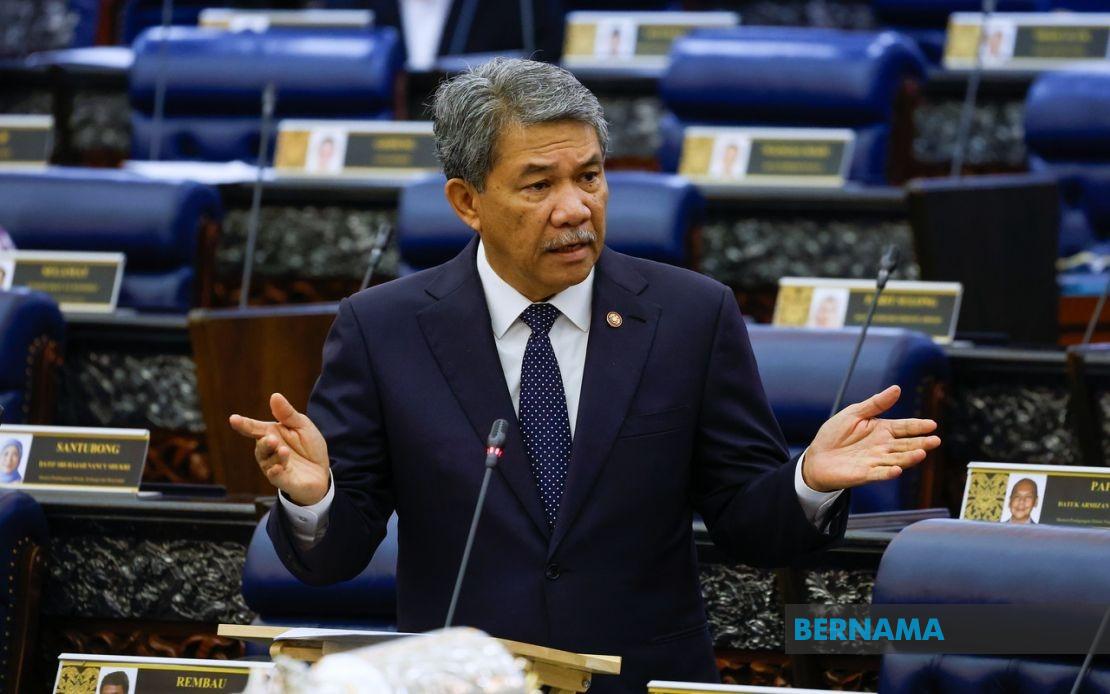
Foreign Minister Datuk Seri Mohamad Hasan has moved to dispel any misconceptions surrounding Malaysia's engagement with Myanmar, insisting that a delegation visit to the Southeast Asian nation last month carried no implicit endorsement of the military administration. Speaking in parliament, Mohamad stressed that Malaysia's diplomatic posture toward Myanmar remains unchanged, with the country continuing to withhold recognition of the junta despite high-level contact between officials.
The clarification addresses potential criticism that engagement with Myanmar's current leadership could signal a shift in Malaysia's principled stance. Mohamad explained that the visit formed part of a broader ASEAN strategy to maintain communication channels with Myanmar rather than an isolated Malaysian initiative. This distinction is significant in the context of regional diplomacy, where perceptions of legitimacy carry considerable weight. The visit followed a directive issued at the 48th ASEAN Summit, which instructed foreign ministers across the bloc to pursue informal dialogue with Myanmar's government as part of collective crisis management efforts.
During his meeting with Myanmar Foreign Minister Tin Maung Swe in May, Mohamad emphasised the informal nature of the engagement by meeting at a hotel venue rather than at the Myanmar Foreign Ministry—a deliberate choice underscoring the non-official character of discussions. The Foreign Minister used the occasion to convey Malaysia's positions on the need for political transformation in Myanmar, leveraging the opportunity to reinforce the region's expectations for meaningful change. This approach reflects a calculated balancing act that Southeast Asian nations must perform when dealing with Myanmar's military government: maintaining enough contact to influence outcomes whilst avoiding actions that could be construed as normalising the junta's rule.
Crucially, Mohamad reiterated Malaysia's unwavering commitment to the Five-Point Consensus, the cornerstone of ASEAN's response to Myanmar's political crisis. This framework, established to guide the region's approach to resolving Myanmar's turmoil, emphasises dialogue, non-interference, humanitarian aid, and cessation of violence. By anchoring Malaysia's engagement strategy within this consensual framework, Mohamad sought to position the country's bilateral contact as aligned with collective ASEAN principles rather than as independent action that might undermine regional solidarity on the Myanmar issue.
A significant element of Mohamad's messaging involved reminding Myanmar of the reciprocal nature of ASEAN membership. While member states enjoy certain privileges and protections inherent to bloc participation, they simultaneously bear responsibilities to uphold regional norms and principles. This reminder carries particular weight given Myanmar's status as a full ASEAN member whose behaviour directly affects the bloc's credibility and cohesion. Mohamad's explicit articulation of these mutual obligations suggests that Malaysia views the relationship not as one of unqualified acceptance but as one conditional upon Myanmar's commitment to acceptable standards of governance and respect for regional consensus.
The rationale for maintaining dialogue with Myanmar, despite profound misgivings about its current leadership, is rooted in pragmatic regional calculations. Mohamad warned that excessive isolation of Myanmar could create a geopolitical vacuum that external powers might exploit, potentially undermining ASEAN's central role in shaping the regional security environment. This concern resonates with historical patterns in Southeast Asia, where great power rivalries have often filled spaces abandoned by regional organisations. By keeping Myanmar engaged, ASEAN aims to retain influence over the country's trajectory whilst preventing it from drifting toward dependence on external actors with competing interests.
Looking forward, Malaysia indicated its intention to convene additional meetings with various Myanmar stakeholders, with preliminary scheduling suggesting early or mid-July for the next round. These planned engagements demonstrate that Malaysia views the Myanmar situation as requiring sustained diplomatic effort rather than episodic interventions. The decision to broaden discussions beyond government representatives to include other stakeholders reflects recognition that resolving Myanmar's multifaceted crisis requires engaging diverse groups across political, military, and civil society domains.
The substance of Malaysia's messaging to Myanmar centres on core demands consistent with ASEAN's Five-Point Consensus. Mohamad indicated that Malaysia would continue pressing all parties to end the violence that has characterised Myanmar's post-coup environment, implement credible ceasefires, pursue inclusive dialogue mechanisms that incorporate broad representation, and facilitate humanitarian operations to address civilian suffering. These priorities align Malaysia's bilateral engagement with the collective regional approach, presenting a unified front that Myanmar faces from its ASEAN partners.
For Malaysian audiences and broader regional observers, Mohamad's parliamentary statement clarifies the distinction between diplomatic engagement and political recognition—a nuance that international relations scholars recognise but that often becomes blurred in public discourse. Malaysia's position reflects the complex equilibrium that middle-power nations must maintain when confronting governance crises in neighbouring countries. The approach privileges maintaining influence through communication over the moral satisfaction of isolationist stances, a calculation that assumes constructive engagement offers better prospects for eventual change than complete disengagement.
The Myanmar situation continues to test ASEAN's unity and credibility as a regional institution. Malaysia's reaffirmation of its principled stance whilst simultaneously engaging in dialogue demonstrates the region's attempt to navigate between two difficult alternatives: remaining irrelevant through isolation or compromising core principles through uncritical engagement. How effectively this balance serves Myanmar's long-suffering population and ASEAN's broader interests remains an open question that will become clearer as diplomatic efforts progress through the remainder of the year.

