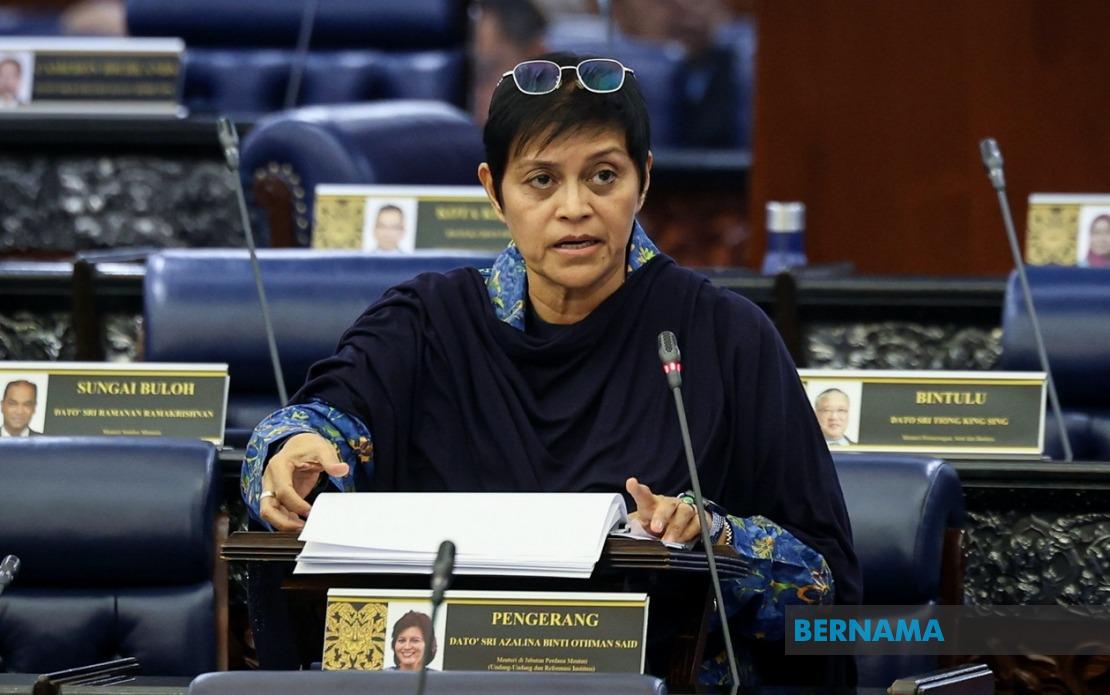
Malaysia is poised to undertake one of its most significant judicial reforms in recent years as the government prepares to present a Special Select Committee report to Parliament on separating the roles of the Attorney General and the Public Prosecutor. Datuk Seri Azalina Othman Said, the Minister in the Prime Minister's Department overseeing Law and Institutional Reform, confirmed that the report will be tabled in the Dewan Rakyat tomorrow, representing a watershed moment in the MADANI Government's broader institutional reform programme aimed at reinvigorating public faith in Malaysia's justice apparatus.
The proposed separation addresses a longstanding structural concern within Malaysia's legal framework where the dual role has raised questions about prosecutorial independence and accountability. Currently, the Attorney General serves as both the chief legal officer of the government and oversees criminal prosecution, a concentration of power that international observers and local legal practitioners have periodically questioned. By disaggregating these functions, the government signals its intention to create clearer institutional boundaries and enhance the separation of powers doctrine that underpins democratic governance.
After conducting seven substantive meetings, the Special Select Committee has developed a comprehensive reform package centred on seven principal improvements designed to buttress the independence, integrity and accountability mechanisms of the Public Prosecutor's office. These recommendations reflect careful deliberation on how to modernise institutional arrangements whilst maintaining constitutional propriety and respecting the role of the Yang di-Pertuan Agong as head of state. The committee's work represents an attempt to recalibrate Malaysia's prosecutorial structures in line with contemporary best practices observed in comparable jurisdictions.
Among the most consequential proposals is the introduction of a fixed, non-renewable seven-year tenure for the Public Prosecutor, a measure that would insulate the office from political pressures associated with changes in government or ministerial preferences. This contractual certainty would allow prosecutorial decision-making to develop along professional rather than political lines, theoretically reducing the risk of selective prosecution or interference in high-profile cases. The establishment of a dedicated Code of Ethics for Public Prosecutors further reinforces institutional norms by making explicit the ethical expectations governing prosecutorial conduct, creating a transparent benchmark against which professional behaviour can be assessed.
The architectural centrepiece of the reform concerns the appointment mechanism. Rather than the Prime Minister or Cabinet wielding influence over prosecutorial appointments, the Judicial and Legal Service Commission (SPKP) will nominate candidates for Public Prosecutor. This nomination will then be submitted to the Dewan Rakyat Speaker for parliamentary scrutiny through a House Select Committee process before the recommendation returns to the SPKP for final advice to the Yang di-Pertuan Agong. This multi-stage approval structure embeds parliamentary oversight into the appointment process, ensuring that legislative representatives can examine the credentials and suitability of nominees before they assume office.
The government has additionally signalled its intention to amend Clause 18 of Article 145A of the Federal Constitution to formally enshrine Parliament's enhanced role in this appointment process. Constitutional amendments in Malaysia require substantial parliamentary majorities, indicating that the government views this reform as sufficiently important to command broad-based political support. Such an amendment would permanentise the reformed appointment architecture, making it difficult for future governments to unilaterally revert to arrangements that concentrate power in the executive branch.
Minister Azalina's framing of these reforms emphasises the distinction between mere institutional reshuffling and substantive governance improvement. She characterises the separation not as a technical exercise but as an opportunity to construct a prosecution system that operates with greater autonomy, transparency and public accountability. This rhetorical positioning reflects an understanding that judicial legitimacy ultimately depends on public perception of institutional fairness and independence. When citizens question whether prosecutorial decisions reflect legal merit or political calculation, the entire justice system suffers reputational damage that extends beyond any individual case.
The Malaysian context makes these reforms particularly significant given the country's recent political turbulence and concerns about the rule of law that have periodically surfaced during periods of intense political competition. High-profile prosecutions of political figures have sometimes been viewed through a partisan lens, with opposition groups questioning whether legal proceedings reflected genuine criminal wrongdoing or represented weaponisation of the justice system for political advantage. By institutionalising prosecutorial independence, the government attempts to depoliticise the criminal justice process and restore public confidence that prosecution decisions follow professional criteria rather than political direction.
Regionally, Malaysia's reform trajectory carries implications for how Southeast Asian democracies manage the tension between executive power and judicial independence. The region has witnessed various experiments with institutional design aimed at constraining executive overreach, and Malaysia's approach to prosecutorial independence will likely inform ongoing discussions in neighbouring countries about best practices for protecting the rule of law. Thailand, Indonesia and the Philippines have all grappled with similar challenges regarding prosecutorial capture and political interference, making Malaysia's reform experience potentially instructive for regional peers.
The proposal to strengthen Parliament's role in appointments resonates with broader democratic principles emphasising legislative oversight of executive decisions. By inserting parliamentary scrutiny into the appointment process, the reform acknowledges that prosecutorial power is ultimately accountable to elected representatives and, through them, to the broader citizenry. This mechanism prevents any individual prime minister or cabinet from monopolising appointment decisions and creates multiple veto points where concerns about nominee suitability can be raised and addressed before appointment.
Implementing these reforms will require sustained political commitment and careful attention to transitional arrangements for existing office-holders. Questions remain about how the reforms will apply to the current Public Prosecutor and whether transitional provisions will smooth the shift toward the new appointment and tenure framework. The government's success in navigating these implementation challenges will significantly influence whether the reforms deliver their intended benefits or become nominal changes that fail to alter underlying power dynamics.
The reform agenda ultimately reflects a strategic choice to rebuild institutional legitimacy by redistributing prosecutorial power away from executive concentration toward more dispersed arrangements involving Parliament and the Judicial and Legal Service Commission. Whether this restructuring successfully translates into genuine independence and public confidence will depend on how appointed Public Prosecutors exercise their authority once the reforms take effect and whether political actors respect the boundaries established by the new institutional framework.

