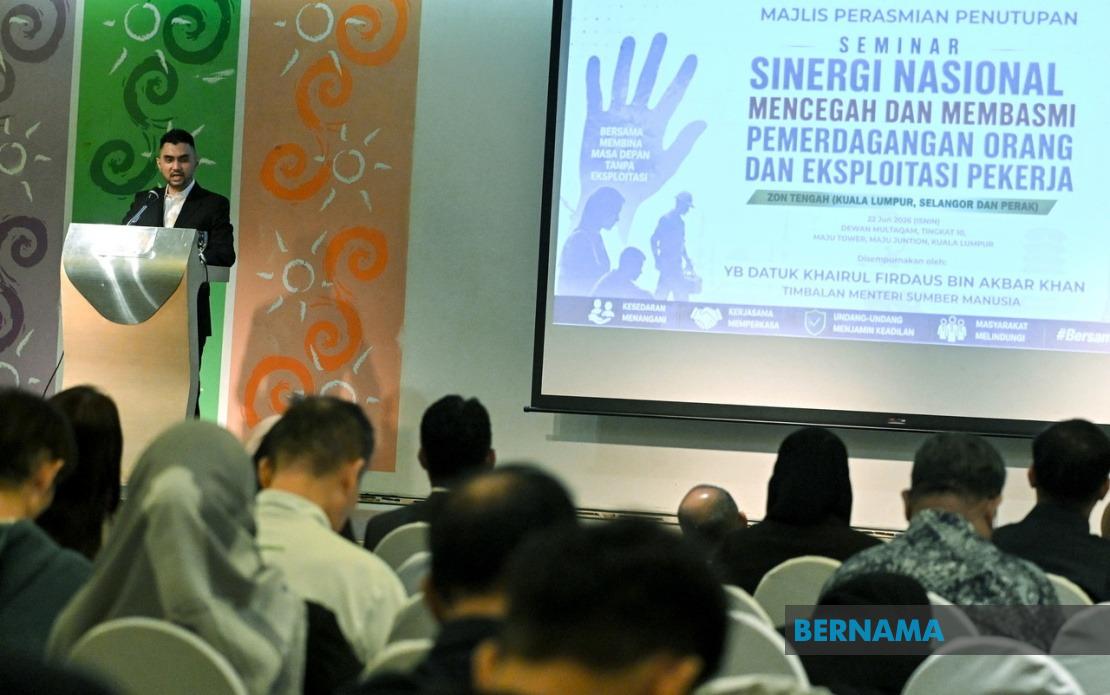
The number of human trafficking and labour exploitation victims rescued across Malaysia has fallen sharply over the past two years, according to data presented by Deputy Human Resources Minister Datuk Khairul Firdaus Akbar Khan. Figures from the Peninsular Malaysia Manpower Department reveal the decline began in 2023 with 70 victims rescued, dropping to just 10 in 2024, then rising slightly to 17 in 2025 before settling at four cases through May this year. The trend suggests that intensified government crackdowns and prevention initiatives are yielding measurable results in combating one of Southeast Asia's most persistent human rights challenges.
Yet the minister's own cautionary remarks underscore a critical limitation in these statistics: the figures capture only reported cases and successful rescue operations, not the full scope of exploitation happening beyond the reach of authorities. Khairul Firdaus acknowledged this gap when he told reporters that while declining numbers are encouraging, "there may be things that we do not see (not reported), so we cannot take it lightly." This observation reflects a reality that human trafficking networks operate in shadows, with victims often isolated, misinformed about their rights, or coerced into silence by traffickers who exploit their vulnerable status and fear of authorities.
Government enforcement activity demonstrates renewed commitment to combating forced labour across the country. From January to May this year alone, authorities conducted 386 nationwide operations specifically targeting labour exploitation and trafficking. These operations resulted in the opening of 311 investigation papers, indicating sustained investigative momentum that could yield prosecutions and further disruptions to trafficking networks. The scale of these enforcement activities signals that Malaysian authorities recognise the systemic nature of labour trafficking and are deploying resources accordingly across multiple sectors and regions.
Malaysia's approach to tackling trafficking now operates within an international framework, with the government committed to implementing protocols ratified under the International Labour Organisation. This alignment with ILO standards represents an important commitment to addressing forced labour as defined by international best practices, though translating global standards into local enforcement effectiveness remains an ongoing challenge. The emphasis on meeting international obligations also opens pathways for cross-border cooperation with neighbouring countries in Southeast Asia, where trafficking networks frequently operate across multiple jurisdictions.
A significant component of the government's strategy involves awareness and education rather than enforcement alone. The National Synergy Seminar series on Preventing and Eradicating Human Trafficking and Labour Exploitation, which concluded its Central Zone programme in Kuala Lumpur, has been rolled out across Malaysia's regions to build capacity and consciousness among frontline workers and community stakeholders. Earlier seminars in the North Zone at Sungai Petani, Kedah in May and the South Zone at Kluang, Johor in June, combined with the Central Zone event, engaged nearly 1,000 participants who shared insights and coordinated responses to trafficking in their areas.
The seminar series represents a recognition that combating trafficking effectively requires multisectoral engagement extending beyond law enforcement. By bringing together government agencies, NGOs, labour sector representatives, and community leaders, the forums create space for stakeholders to exchange information, identify gaps in current approaches, and develop collaborative solutions. Participants from various sectors gain direct exposure to trafficking indicators, victim support mechanisms, and reporting procedures, equipping them to recognise and report potential cases within their professional spheres.
The falling rescue numbers merit careful interpretation within Malaysia's broader labour migration context. The country hosts millions of migrant workers in construction, agriculture, manufacturing, and domestic service sectors—industries identified globally as high-risk for trafficking and exploitation. Fewer rescues could reflect either genuine reductions in trafficking incidence or, conversely, improved concealment by traffickers or reduced reporting by victims. The minister's explicit acknowledgment of the underreporting risk suggests authorities themselves remain uncertain whether the declining trend represents substantive progress or merely a shift in trafficking patterns that evade detection.
For Malaysian workers and employers alike, the enforcement intensification carries both deterrent and practical implications. Stricter labour audits and investigations increase costs of non-compliance for businesses reliant on exploitative practices, creating market pressure toward legitimate labour standards. Simultaneously, heightened scrutiny may drive trafficking networks to operate more clandestinely or relocate to jurisdictions with weaker enforcement, potentially shifting rather than eliminating the problem within the Southeast Asian region. Cross-border coordination with Thailand, Indonesia, Bangladesh and other trafficking origin countries becomes increasingly critical under such circumstances.
The government's framing of declining rescue numbers as evidence of effectiveness warrants qualification. While law enforcement results matter, the true measure of anti-trafficking success lies in victim recovery and support, perpetrator accountability, and systemic prevention that removes conditions enabling exploitation. The 386 operations conducted this year and 311 investigation papers opened represent activity but not necessarily outcomes—prosecution rates, conviction rates, and victim rehabilitation outcomes remain unpublished and would offer more meaningful indicators of programme effectiveness.
Moving forward, Malaysian policymakers face the challenge of sustaining enforcement momentum while addressing root causes that make certain populations vulnerable to trafficking. Economic disparities, limited labour market opportunities, and information gaps among migrant workers create conditions traffickers exploit. Education initiatives like the National Synergy Seminar series address awareness deficits, yet structural economic interventions remain equally necessary to reduce trafficking incidence rather than merely detecting it after victimisation occurs. The declining rescue numbers, while superficially encouraging, ultimately demand that authorities look beyond statistics to the hidden dimensions of labour trafficking persisting within Malaysia's economy.