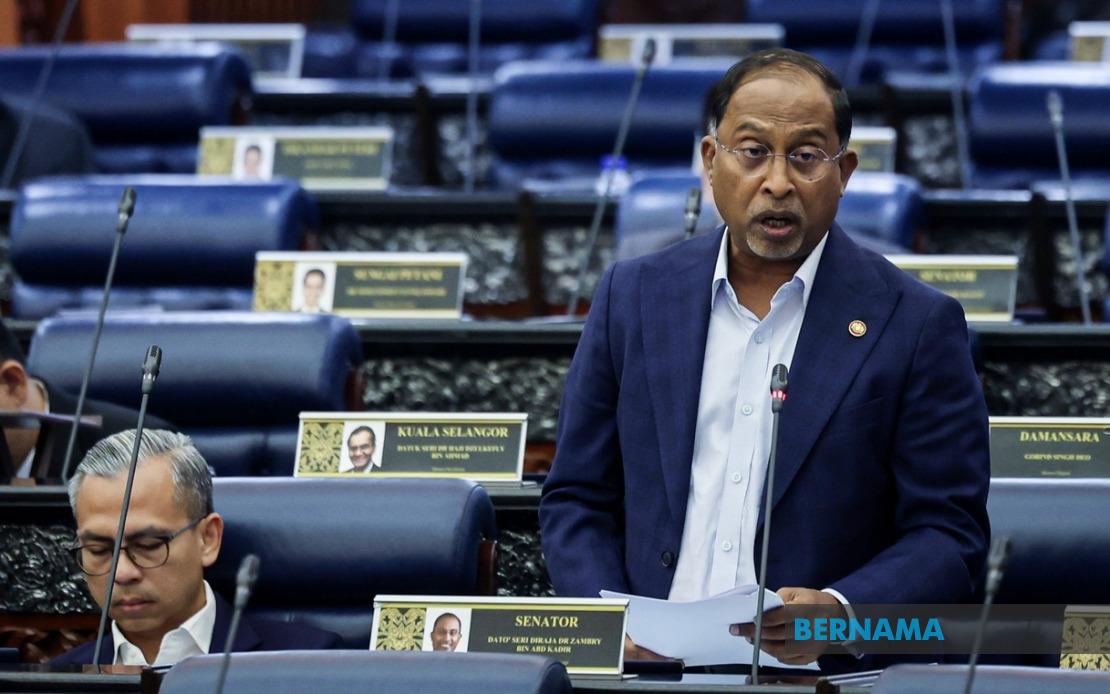
The Malaysian Higher Education Ministry has signalled its readiness to evaluate fresh academic programme proposals from Universiti Malaysia Sabah, polytechnics, and community colleges across the state, addressing long-standing concerns about limited higher education options in East Malaysia. Minister Datuk Seri Dr Zambry Abdul Kadir made the announcement during parliamentary proceedings on July 7, responding to calls from lawmakers to broaden the study landscape in Sabah and reduce the geographic burden on families whose children must travel to Peninsular Malaysia for tertiary education.
The openness to new programmes represents a strategic pivot toward decentralising higher education in a state where geographic and logistical constraints have historically funnelled ambitious students toward distant campuses. Dr Zambry outlined a rigorous assessment framework governing which proposals would succeed, emphasising that each application must demonstrate institutional capability to deliver quality education. The evaluation criteria encompass the submitting institution's existing academic strengths, alignment with identifiable industry demands in Sabah's economy, genuine delivery capacity without overextending resources, measurable student interest, and crucially, the employability prospects of graduates entering the job market.
A central pillar of the ministry's strategy involves preventing wasteful programme duplication across Sabah's public higher education institutions. This approach reflects lessons learned elsewhere in Malaysia where multiple campuses offering identical courses has diluted educational quality and overburdened limited infrastructure. By enforcing specialisation and geographic differentiation, the ministry aims to optimise the collective intellectual capital and physical resources already invested in higher education facilities across the state. This careful curation ensures that scarce development funding produces maximum educational return while maintaining standards commensurate with Malaysia's higher education aspirations.
Current provision in Sabah comprises a modest but growing ecosystem of institutions. As of June 30, a total of sixteen public higher education institutions were operational across the state, including their branch campuses, comprising four public universities, three polytechnics, and nine community colleges. This infrastructure represents substantial government investment, yet the geographic spread and course offerings remain insufficient to meet regional demand. The existence of multiple UMS branch campuses indicates the government's previous commitment to geographic accessibility, though programme diversity at these satellite locations remains constrained by resource limitations and the need to maintain quality standards.
Universiti Malaysia Sabah has positioned itself as the flagship research-intensive institution, deliberately building a distinctive academic identity centred on Borneo's natural endowments and geopolitical location. The university is developing specialisations in marine science and aquaculture, recognising Sabah's extensive coastlines and fishing heritage. Its tropical biotechnology initiatives leverage the state's extraordinary biodiversity, while medical sciences programmes address critical healthcare workforce gaps in East Malaysia. Additionally, programmes in heritage, social sciences, ecotourism, and business studies are designed to serve both Sabah's cultural preservation and tourism-dependent economy.
Universiti Teknologi MARA's Sabah branch has carved out a complementary niche centring on tourism and hospitality education, reflecting the industry's economic importance to the region. This institutional differentiation prevents overlap while acknowledging that both research universities and applied vocational institutions serve essential but distinct roles in the state's human capital development. The structured approach suggests that new programme approvals will likely emphasise areas where existing providers lack presence or capacity rather than replicating established offerings.
The government's commitment extends beyond policy announcements into tangible capital investment. The Higher Education Ministry is advancing twenty-one distinct development projects across Sabah with a combined value of RM1.05 billion, specifically designed to bolster institutional capacity. Within the Thirteenth Malaysia Plan cycle through 2026, RM160.6 million has been allocated under the First Rolling Plan specifically for higher education expansion. This substantial financial commitment signals that the openness to new programmes is not merely rhetorical but backed by budgetary resources necessary for infrastructure, staffing, and equipment acquisition.
Dr Zambry acknowledged that the ministry operates without inflexible quotas dictating the percentage of higher education places that must be located in Sabah. This pragmatic flexibility recognises that some specialised courses require critical mass of students and faculty concentration that smaller states cannot sustain locally. Certain programmes may remain more efficiently delivered in Peninsular Malaysia or Sarawak, where larger pools of students and established centres of excellence exist. However, the minister emphasised a deliberate niche-based strategy to address Sabah-specific legal needs, where both Sabah and Sarawak face pronounced shortages of qualified lawyers. Establishing law programmes locally would directly address these jurisdictional requirements while keeping students within Borneo during their formative education years.
The government's research support infrastructure complements its focus on programme expansion. Through both the Higher Education Ministry and the Ministry of Science, Technology and Innovation, funding mechanisms support university research activity that generates practical economic value. The Research, Development, Innovation, Commercialisation and Economy Programme specifically targets research projects with commercial applications, encouraging institutions to bridge the gap between academic inquiry and entrepreneurial utilisation. This ecosystem approach recognises that higher education institutions function optimally when research discoveries can be translated into business ventures and employment opportunities.
For Malaysian policymakers, this initiative addresses a fundamental equity concern: whether students' geographic location at birth should constrain access to quality higher education. Sabah's substantial population and economic importance warrant proportional investment in educational infrastructure. The ministry's openness to new programmes, paired with rigorous quality controls and strategic alignment with regional needs, represents an attempt to balance the competing imperatives of accessibility, quality, and fiscal responsibility. Success will depend on whether institutions can attract sufficient qualified applicants, whether graduates can secure employment proportional to their qualifications, and whether the accumulated investment produces research and innovation that strengthens Sabah's economic competitiveness within Malaysia's broader knowledge economy.

