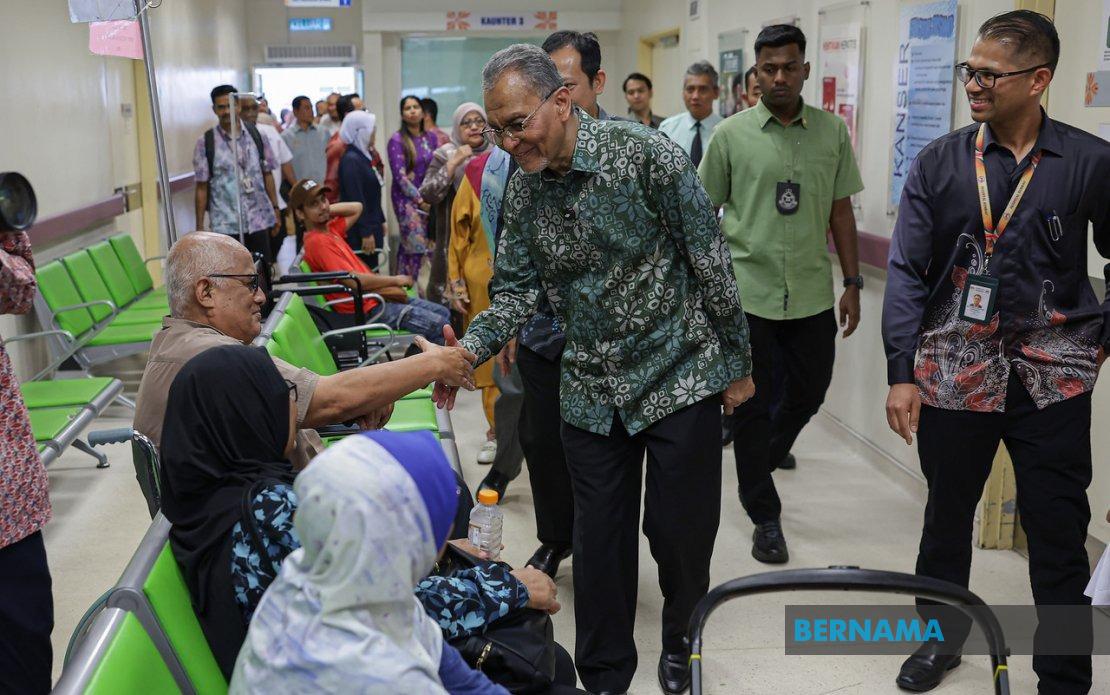
The Ministry of Health has committed to completing a draft workplace mental health policy within the next three months, provided that ongoing consultations with key stakeholders conclude on schedule. Health Minister Datuk Seri Dr Dzulkefly Ahmad made this announcement at a recent event in Negeri Sembilan, signalling the government's prioritisation of employee mental wellbeing as a critical public health concern.
The development of this policy represents a significant step forward for Malaysia's occupational health framework. Stakeholder engagement will involve multiple organisations including the Ministry of Human Resources, the Department of Occupational Safety and Health, the Malaysian Employers Federation, and the Malaysian Trades Union Congress. This multi-agency approach reflects recognition that workplace mental health extends beyond the healthcare system and requires coordination across labour, human resources, and occupational safety domains.
Dzulkefly emphasised that the policy would encompass far more than simply offering counselling services to employees. The framework will address work-life balance, implement robust support mechanisms for workers, and establish systems to identify and mitigate burnout and excessive workload—issues increasingly documented in Malaysian workplaces across sectors ranging from finance to manufacturing to public service. This holistic approach aligns with international best practices and recognises that mental health requires environmental and structural changes rather than purely therapeutic interventions.
The timing of this policy development reflects growing acknowledgment of mental health crises affecting the Malaysian workforce. Stress-related illnesses, anxiety disorders, and depression have become more prevalent among working adults, yet many employers lack clear protocols or guidelines for supporting affected employees. By establishing a national policy framework, the government aims to create minimum standards that protect worker wellbeing while helping organisations understand their obligations and the practical steps required to foster psychologically safe workplaces.
Workplaces across Malaysia operate within vastly different contexts—multinational corporations in Kuala Lumpur may face different challenges than manufacturing plants in Johor or rural healthcare facilities in Sabah. The policy framework must therefore provide sufficient flexibility for organisations to adapt principles to their specific circumstances while maintaining core protections. The involvement of the Malaysian Employers Federation ensures that business perspectives inform policy design, potentially increasing adoption rates when the framework is eventually implemented.
The policy development also connects to Malaysia's commitment to the Sustainable Development Goals, particularly SDG 3 on good health and wellbeing. This international dimension suggests that the ministry views workplace mental health not merely as a domestic labour issue but as part of broader national development objectives. Healthier, more supported workers contribute to increased productivity, reduced absenteeism, and stronger economic output—benefits that extend beyond individual employees to organisational and national levels.
In parallel with workplace mental health efforts, the Health Ministry is pursuing structural reforms to strengthen hospital services nationwide through its cluster hospital concept. This approach leverages expertise from specialist facilities at tertiary hospitals to enhance services at smaller, non-specialist institutions. Rather than requiring massive capital expenditure on new buildings or infrastructure, the cluster model maximises existing resources by enabling knowledge transfer and specialist outreach.
The cluster concept particularly benefits rural and semi-rural Malaysia, where access to specialist services like paediatrics, obstetrics and gynaecology, ophthalmology, and otolaryngology remains limited. By establishing formal relationships where specialists from major hospitals conduct clinics or consultations at secondary hospitals, patients avoid lengthy journeys to urban centres while secondary care facilities gain capacity to handle more complex cases locally. This approach improves equity in healthcare access across the nation's geography.
The systematic upgrading of non-specialist hospitals occurs in phases based on local needs, demand, and practical feasibility rather than adhering to a uniform national template. This demand-driven approach recognises that Selangor's requirements differ from Terengganu's, just as Labuan's needs differ from Melaka's. By tailoring specialist service expansion to community profiles and epidemiological patterns, the ministry can allocate resources more efficiently and ensure that upgrades address genuine service gaps.
Since Malaysia's health infrastructure already encompasses numerous hospitals at various capability levels, strategic enhancement of existing facilities often proves more effective than establishing new institutions. Strengthening the primary healthcare system simultaneously ensures that secondary and tertiary care function efficiently by handling appropriate caseloads. This tiered system prevents overcrowding at major hospitals with cases that could be managed in community settings, freeing specialist capacity for genuinely complex presentations.
The convergence of workplace mental health policy development with hospital service strengthening reflects a comprehensive approach to occupational and public health. Mental health conditions requiring clinical intervention demand accessible hospital services, yet prevention and early management occur in workplaces. By simultaneously advancing both policy frameworks, the Health Ministry acknowledges that population mental health requires action across multiple settings and systems.
For Malaysian employers, the approaching policy should prompt reflection on current workplace mental health practices. Organisations that proactively establish supportive environments, develop clear referral pathways to professional services, and cultivate management cultures emphasising psychological safety will likely find the transition to formal policy requirements less disruptive than those currently neglecting these areas. The October deadline provides a reasonable window for businesses to prepare implementation strategies.
As regional competition for skilled workers intensifies, workplace mental health has become a recruitment and retention consideration. Organisations offering strong mental health support gain competitive advantage in attracting talent, while those with reputations for poor workplace mental health struggle to recruit and experience higher turnover. The upcoming national policy may therefore catalyse competitive improvements as organisations recognise that mental health support constitutes part of broader employee value propositions in modern labour markets.

