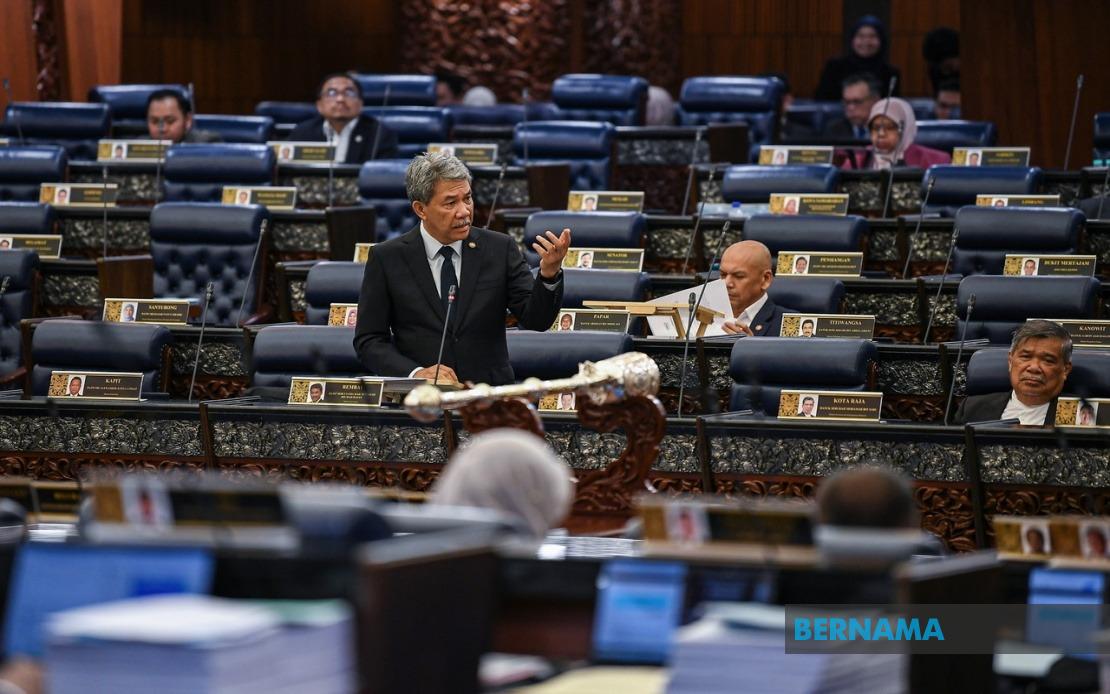
Foreign Minister Datuk Seri Mohamad Hasan has moved to dispel concerns about the management of Malaysia's Humanitarian Trust Fund for the People of Palestine (AAKRP), emphasising that the mechanism functions with robust institutional safeguards and professional oversight. Speaking in Parliament during Question Time, he rejected suggestions that the fund operates without adequate controls, clarifying instead that it remains firmly within government administration rather than being delegated to external organisations.
The minister's statement represents a direct response to circulating allegations questioning how the AAKRP channels resources to Palestinian beneficiaries. Mohamad stressed that suspicions about mismanagement are unfounded, citing the involvement of Malaysia's Auditor-General in regular audits and mandatory reporting procedures to Cabinet. These institutional checks reflect Malaysia's commitment to ensuring that humanitarian resources reach intended recipients rather than being diverted or misappropriated—a concern that has occasionally surfaced in public discourse regarding international aid initiatives.
To guarantee the effective delivery of assistance, Malaysia has established partnerships with established international and regional humanitarian bodies. The fund directs contributions through the United Nations Relief and Works Agency for Palestine Refugees in the Near East (UNRWA), the Jordan Hashemite Charity Organisation (JHCO), the Palestine Red Crescent Society, and King Hussein Hospital. By routing aid through these vetted organisations with their own operational integrity standards, Malaysia reduces risks associated with direct transfers and leverages existing networks with established presence on the ground.
Beyond financial transfers, Malaysia has supplemented the trust fund with tangible humanitarian goods. The country has dispatched food supplies, medical equipment, and health-related aid to Gaza, with recent consignments benefiting from improved corridor access following the reopening of overland humanitarian routes coordinated with Egyptian authorities. These physical shipments represent a multifaceted approach to Palestinian relief that extends beyond monetary contributions and demonstrates Malaysia's willingness to utilise diplomatic channels to facilitate aid delivery infrastructure.
The timing of Mohamad's parliamentary remarks reflects ongoing international concern over Gaza's deteriorating humanitarian conditions. The territory faces critical shortages in basic services due to widespread destruction of essential infrastructure. Hospitals operate at severely reduced capacity, educational institutions have been largely destroyed, and religious facilities have suffered significant damage from the protracted conflict. Against this backdrop of acute need, questions about aid management become particularly sensitive, as any perception of inefficiency directly translates to extended suffering for vulnerable populations.
The minister's reference to inaccurate social media claims highlights a broader challenge facing official humanitarian efforts in the contemporary information environment. Unverified narratives circulate rapidly on digital platforms, sometimes undermining public confidence in legitimate government initiatives. By publicly addressing these concerns and reaffirming the AAKRP's institutional credibility, Mohamad seeks to counteract misinformation while simultaneously reassuring Malaysian donors and the broader public that their contributions serve intended purposes.
Malaysia's approach to Gaza humanitarian support reflects the country's broader positioning within regional geopolitics and its role as a leading voice for Palestinian interests within multilateral forums. The establishment of a dedicated trust fund, coupled with transparent governance structures, allows Malaysia to maintain consistent engagement with Palestinian relief efforts while adhering to international standards for fund management. This stance resonates particularly with Malaysia's domestic constituencies and aligns with the country's diplomatic emphasis on supporting vulnerable populations affected by conflict.
The involvement of Egypt in reopening humanitarian corridors underscores how effective aid delivery requires coordination among multiple state actors and international organisations. Malaysia's willingness to work through Egyptian channels demonstrates pragmatic acknowledgment that unilateral efforts, however well-intentioned, remain insufficient without regional cooperation. Such diplomatic engagement extends Malaysian influence beyond financial contributions and positions the country as a constructive partner in addressing Middle Eastern humanitarian crises.
Moving forward, the credibility of Malaysia's humanitarian initiatives depends on sustained transparency and demonstrated effectiveness in aid delivery. The minister's parliamentary disclosure—detailing audit mechanisms, Cabinet oversight, and vetted implementing partners—establishes accountability benchmarks against which future performance can be assessed. For Malaysian taxpayers and diaspora communities with Palestinian connections, such clarity regarding fund governance addresses legitimate questions about stewardship of public resources dedicated to international charitable purposes.
The broader significance of this exchange extends beyond technical questions of fund administration. Malaysia's commitment to Palestinian humanitarian assistance reflects values-based foreign policy aligned with the country's Muslim-majority demographics and historical support for anti-colonial movements. Simultaneously, the emphasis on transparent, audited mechanisms demonstrates that principled support for Palestinians need not compromise institutional integrity or international standards for responsible aid delivery. This balance positions Malaysia as both a committed advocate for Palestinian welfare and a responsible international actor conscious of fiduciary obligations.