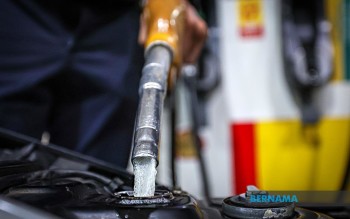
The Malaysian government has projected substantial monthly expenditure on fuel subsidies should global crude oil prices stabilise around the US$90-per-barrel mark, with Deputy Finance Minister Liew Chin Tong outlining the fiscal implications during parliamentary questioning in the Dewan Negara. The cost breakdown reveals that RON95 petrol subsidies alone would consume roughly RM2 billion monthly under such conditions, while diesel subsidies would account for an additional RM1.5 billion, creating a combined monthly burden of RM3.5 billion on the federal budget.
These projections arrive at a critical juncture for Malaysia's economic management, as fuel subsidies remain one of the most contentious budget items for policymakers navigating the balance between affordability for consumers and fiscal sustainability. The scale of potential expenditure underscores the vulnerability of Malaysia's budget to commodity price volatility—a longstanding structural challenge for an economy historically dependent on petroleum revenues. Understanding these figures becomes essential context for Malaysian taxpayers and businesses assessing the government's fiscal trajectory and the likely policy adjustments that may emerge in coming months.
Despite acknowledging the upward pressure on subsidies from elevated oil prices, Liew maintained that Malaysia's overall fiscal position remains robust and that current deficit projections have not been revised. This assertion reflects confidence in the government's ability to absorb the subsidy costs without fundamentally destabilising public finances. The confidence partly rests on an often-overlooked dimension of petroleum economics: when global crude prices rise, oil-exporting nations like Malaysia benefit from increased government revenue streams derived from petroleum operations and export proceeds. According to Liew's statement, every US$1 increase in crude prices generates approximately RM300 million in additional government income, providing a partial offset to escalating subsidy commitments.
This revenue-offset mechanism, however, provides only incomplete protection against budget strain. The relationship between rising oil prices and subsidy costs is not perfectly symmetrical—subsidy burdens typically grow faster than corresponding petroleum revenues rise, creating a net squeeze on fiscal flexibility. Moreover, the timing mismatches between revenue collection and subsidy disbursement can create cash flow challenges. The government's reliance on this revenue mechanism highlights both the opportunities and the inherent risks embedded in Malaysia's petroleum-dependent economic structure, a vulnerability that economic diversification efforts aim to address over the medium to longer term.
Looking ahead to the formal budget cycle, Liew signalled that fiscal projections will receive comprehensive review when Prime Minister Datuk Seri Anwar Ibrahim tables the 2027 Budget in October. This timing allows the government to incorporate more recent economic data and refined commodity price forecasts into its planning assumptions. The October budget presentation will likely reveal whether the government intends to adjust fuel pricing mechanisms, modify subsidy eligibility criteria, or implement other policy instruments to manage the fiscal consequences of sustained higher oil prices. For Malaysian consumers and businesses, this budget will be the definitive statement on the government's strategy for navigating what increasingly appears to be a prolonged period of elevated global energy costs.
Parallel to the subsidy discussion, the question-and-answer session also touched on regional fuel allocation policies affecting Sabah and Sarawak through the BUDI Diesel programme. This scheme allows certain user categories, particularly commercial operators and agricultural enterprises, to access diesel at subsidised rates with higher volume quotas than general consumers receive. The government signalled willingness to expand beneficiary groups on a case-by-case basis, citing the recent approval of additional quota for pickup truck owners as a precedent. This flexibility suggests that the government recognises how fuel costs disproportionately affect specific constituencies and is prepared to tailor subsidy programmes to address targeted hardship.
The pickup truck quota expansion exemplifies how subsidy policy has evolved from crude across-the-board measures toward more granular, needs-based approaches. By targeting specific occupational or vehicle categories through simplified application procedures, the government aims to direct limited subsidy resources toward users for whom fuel represents a substantial portion of operational or livelihood costs. For Malaysian stakeholders in rural areas, the transport sector, and resource-based industries, understanding these eligibility pathways has become practically important for cost management.
Sabah and Sarawak hold particular significance in Malaysia's fuel subsidy calculus, given the geographic realities and economic structures of these states. Rural communities, plantation operators, and transport businesses across Borneo operate under different cost structures than their Peninsular counterparts, reflecting longer distances, fewer logistical alternatives, and deeper integration with primary industries. The government's indication that it will evaluate applications for enhanced BUDI quotas recognises these regional economic particularities, though observers note that permanent expansion of regional quotas carries its own fiscal implications that must be weighed against other budget priorities.
The deputy finance minister's responses collectively paint a picture of a government attempting to manage competing pressures: maintaining affordable fuel access, controlling fiscal deficits, managing petroleum revenue volatility, and addressing regional economic disparities. The sustainability of this balancing act depends critically on the trajectory of global crude prices over the coming months and quarters. Should prices exceed the projected US$90-per-barrel baseline, even the partially offsetting revenue gains may prove insufficient to prevent budget deterioration. Conversely, if global energy markets soften, the government's fiscal challenges would ease correspondingly, improving space for other spending priorities or deficit reduction.
For Malaysian households and businesses, the immediate practical relevance of these fiscal projections lies in anticipating policy adjustments in October's budget and beyond. Subsidy policy changes—whether through targeted price adjustments, eligibility restrictions, or quota modifications—can materialise relatively quickly once fiscal pressures mount sufficiently. The government's demonstrated willingness to consider case-by-case quota expansions suggests a pragmatic approach to hardship, but this flexibility operates within constrained fiscal space. Planning ahead for potential fuel cost increases, exploring efficiency improvements, and understanding evolving subsidy eligibility criteria have become prudent exercises for Malaysian consumers and business operators alike.
The government's fiscal situation illustrates a broader Southeast Asian challenge: how middle-income nations balance social welfare objectives with macroeconomic sustainability in environments of commodity price volatility and structural economic change. Malaysia's approach—combining targeted subsidies with revenue management and periodic policy calibration—represents one model, though its long-term success hinges on complementary efforts to reduce fuel consumption intensity, develop non-hydrocarbon revenue sources, and improve overall fiscal efficiency. The October budget will provide the clearest signal yet of how policymakers intend to navigate these interlocking challenges across the remainder of this year and into 2025.

