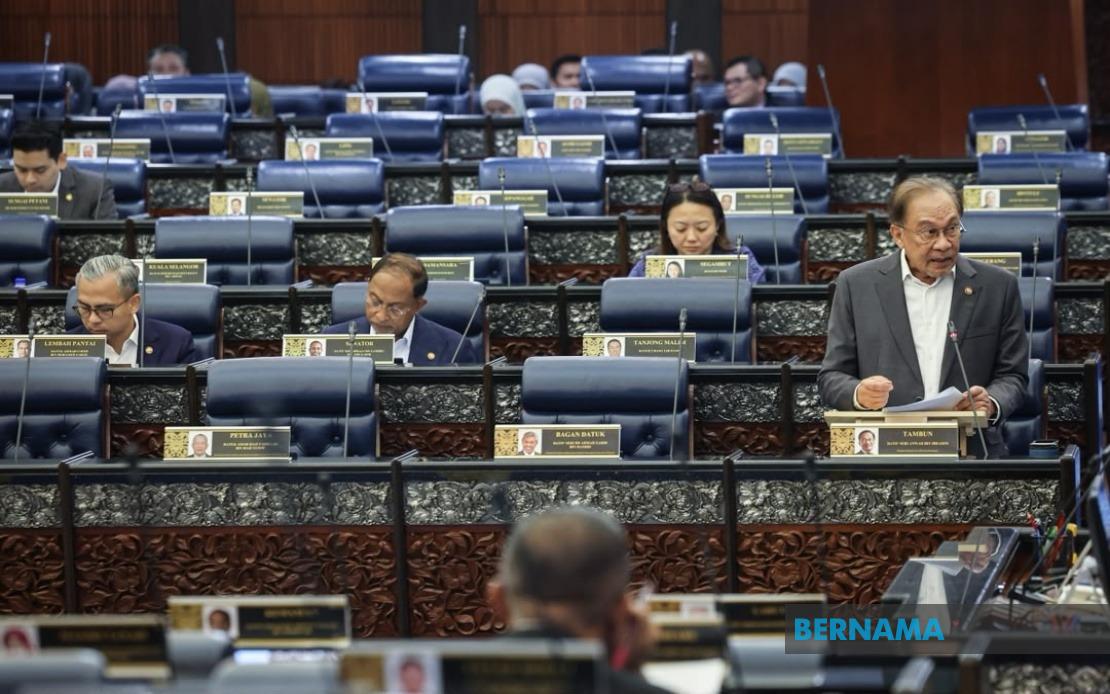
Prime Minister Datuk Seri Anwar Ibrahim has moved to counter assertions that Malaysia's petrol prices have lost their competitive edge, emphasising that domestic fuel remains significantly more affordable than in major global oil producers. Speaking in Parliament on July 14, Anwar highlighted that the subsidised RON95 petrol price under the BUDI MADANI initiative at RM1.99 per litre stands well below comparable rates across the Middle East, a comparison he suggested should dispel doubts about the government's pricing strategy.
The Prime Minister's remarks came in response to questioning from Datuk Rosol Wahid, the Hulu Terengganu Member of Parliament from Perikatan Nasional, who raised concerns about fuel price differentials during previous administrations. Rosol Wahid's inquiry directly referenced Anwar's former pledges as opposition leader to drive fuel costs down to RM1.50, creating an opportunity for the government to demonstrate how current pricing stacks up against its predecessors and international benchmarks.
Anwar's central assertion rested on a straightforward price comparison: Saudi Arabia's petrol now exceeds RM2.40 per litre, making Malaysia's RM1.99 rate nearly 20 percent cheaper. This gap takes on particular significance given Saudi Arabia's status as the world's largest crude exporter and a nation with domestic reserves that theoretically permit aggressive price controls. The Prime Minister used this contrast to underscore that Malaysia, despite facing different resource constraints and economic pressures, has managed to maintain more favourable pump prices than even the Gulf's oil giants.
The comparison extends beyond Saudi Arabia to encompass Qatar and the United Arab Emirates, both energy-wealthy nations that have similarly failed to match Malaysia's pricing discipline. Anwar noted that Qatar's fuel prices also exceed Malaysia's rates, while the UAE—despite sitting atop vast petroleum reserves—actually raised prices two months prior to his parliamentary statement. This pattern of price increases across wealthy Gulf states, according to the Prime Minister's logic, validates Malaysia's approach as fiscally prudent rather than uncompetitive.
Contextually, Anwar's defence represents a significant shift from the opposition's historical criticism of fuel subsidies and pricing mechanisms. During the Najib Razak administration, the governing coalition faced relentless pressure to lower petrol prices, with then-opposition figures—including Anwar—using fuel costs as a rallying point for public grievances. Now holding executive office, Anwar finds himself justifying subsidy levels and pricing structures that, while lower than many international comparators, have nonetheless proven politically sensitive domestically.
The BUDI MADANI programme itself represents the government's current framework for managing fuel price volatility while shielding consumers from international crude fluctuations. By maintaining RON95 at a fixed RM1.99 per litre, the initiative aims to provide predictability for motorists and reduce cost-of-living pressures—a priority in a nation where transportation expenses significantly influence household budgets and business operations. The subsidy's sustainability, however, depends on prudent fiscal management and careful calibration against global oil market movements.
Anwar's parliamentary statement also implicitly addresses a recurring Malaysian debate over whether subsidy programmes constitute sound economic policy or burdensome expenditure. By positioning Malaysia's prices as lower than those in oil-producing states with far greater reserves and fewer fiscal constraints, he suggests that the government has struck a reasonable balance between affordability and fiscal responsibility. This framing seeks to legitimise the BUDI MADANI scheme as both socially beneficial and economically defensible.
The timing of Anwar's remarks reflects ongoing international oil market dynamics. Global crude prices have remained elevated relative to pre-pandemic levels, creating genuine challenges for any government attempting to cap domestic retail prices. Saudi Arabia's RM2.40-plus rate signals the pressures even privileged producers face in maintaining affordability alongside revenue imperatives. Malaysia's position as an oil exporter but not a super-power producer requires different strategic calculations than those facing Saudi Arabia or Qatar.
For Malaysian consumers and businesses, the practical implication is that domestic fuel costs, while periodically contentious, remain within a competitive regional range. Trucking companies, ride-hailing services, and individual commuters benefit from the relative affordability compared to neighbouring economies and major oil producers. This advantage becomes particularly material for industries with high fuel intensity, where cost differences can meaningfully affect operational viability and pricing strategies.
Anwar's parliamentary intervention also signals the government's intention to defend its subsidy policy against mounting criticism from fiscal hawks and reform advocates who argue that targeted cash transfers would prove more efficient than blanket price controls. By demonstrating international competitiveness, the Prime Minister stakes a claim that the current approach serves Malaysia's interests and reflects responsible governance rather than unsustainable expenditure.
Looking ahead, the sustainability of Malaysia's pricing approach hinges on global oil market stability and the government's fiscal capacity to absorb price differentials. Should international crude spike sharply, the strain on BUDI MADANI's funding could intensify political pressures to adjust rates. Conversely, if oil prices moderate, the subsidy becomes easier to maintain and defend—a dynamic that underscores how Malaysia's fuel pricing ultimately remains tethered to forces largely beyond domestic control, regardless of comparative advantages over Saudi Arabia or Qatar.

