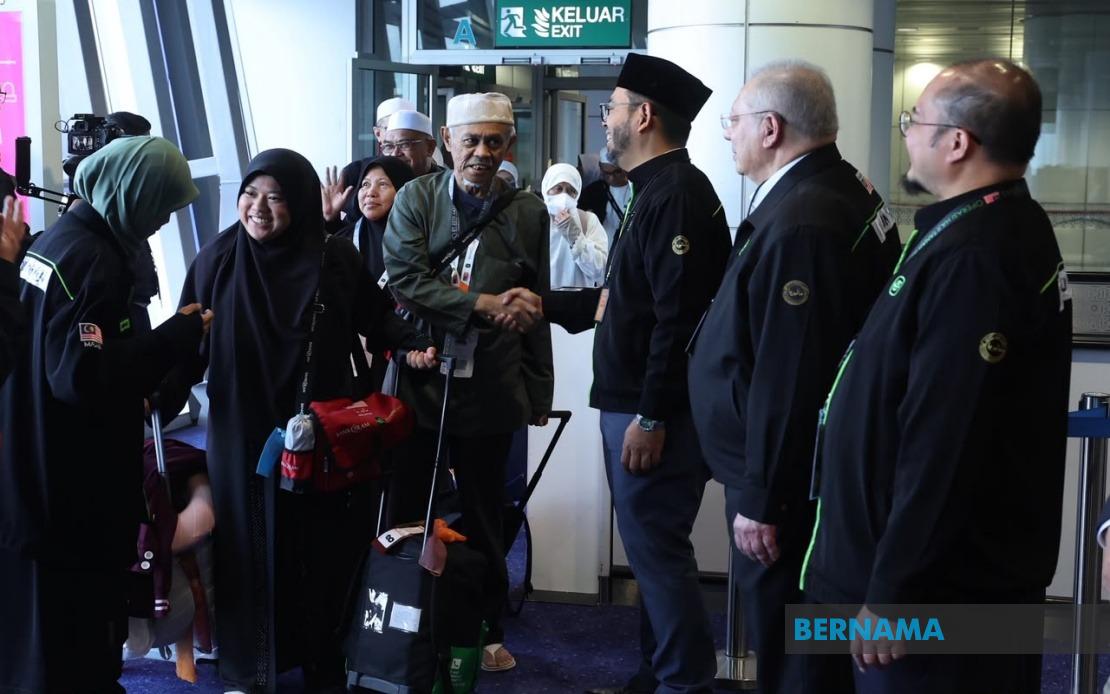
The last contingent of Malaysian haj pilgrims—258 in number—touched down at Kuala Lumpur International Airport on July 1, formally bringing to a close a season that authorities say unfolded without significant incident even as conflict roiled parts of West Asia. The group landed at 12.10 pm aboard Malaysia Airlines flight MH 8385, having departed from Madinah on the previous evening. Their homecoming represented not merely the conclusion of this year's pilgrimage operations but a moment of relief for officials who had navigated the complexities of managing Malaysia's haj contingent under circumstances that could have easily derailed logistics and security arrangements.
Dr Zulkifli Hasan, Minister in the Prime Minister's Department (Religious Affairs), stood at the airport to welcome the returning pilgrims, underscoring the government's commitment to marking the occasion formally. He described the safe departure and return of all Malaysian haj participants as a matter of profound gratitude, framing it as a collective achievement rooted in meticulous planning and coordination. His remarks acknowledged the precarious regional environment while celebrating what authorities characterised as exemplary execution across the board. The presence of Deputy Minister Marhamah Rosli and Tabung Haji chairman Tan Sri Abdul Rashid Hussain at the welcome ceremony reinforced the institutional significance attached to completing the season's operations.
One of the most significant endorsements of Malaysia's performance came from Saudi Arabia's Ministry of Haj and Umrah, which conferred upon Malaysia the Labbaikum Diamond Award—described as the world's highest recognition for haj management and services. This accolade places Malaysia among an elite cohort of nations that have achieved this distinction, reflecting not only operational competence but the quality of support extended to pilgrims throughout their sacred journey. The award carries particular resonance given the complex geopolitical backdrop and the need to maintain standards while accommodating unprecedented logistical pressures. For Malaysia, which has invested substantially in professionalising its haj administration, the recognition validates a strategic approach that prioritises pilgrim welfare and systematic management.
The success did not materialise spontaneously. Dr Zulkifli attributed it to coordinated efforts spanning multiple government departments and private entities. Tabung Haji personnel, Ministry of Health staff, Malaysia Airlines, the Immigration Department, and various logistics providers all contributed to ensuring that the machinery of pilgrimage ran without breakdown. Beyond institutional efforts, however, the minister highlighted the discipline and commitment demonstrated by Malaysian pilgrims themselves. He attributed this partly to intensive preparatory courses that Tabung Haji had conducted before departure, suggesting that investing in pre-journey education yields measurable returns in terms of compliance and conduct during the pilgrimage itself.
This year's operations incorporated several innovations intended to enhance the pilgrim experience and streamline administrative processes. The MyNIISe system was deployed to simplify visa management, reducing bureaucratic friction at multiple touchpoints. Accommodation in the Holy Land was upgraded through the provision of sofa beds and improved tent facilities, addressing comfort concerns that have occasionally surfaced in previous seasons. Ground transport was enhanced through 24-hour bus services connecting mosques to lodgings, ensuring that elderly and less mobile pilgrims had reliable access to transportation. These incremental improvements reflect a philosophy that operational excellence encompasses not just the absence of failure but the active pursuit of pilgrim satisfaction.
Yet even as this season closes, preparations for the next pilgrimage cycle are already underway. Tabung Haji has initiated post-mortem evaluations and internal reviews designed to identify areas requiring further refinement. This systematic approach to continuous improvement suggests a learning orientation that could yield even greater operational efficiency in future seasons. The decision to conduct these assessments immediately rather than deferring them acknowledges that institutional memory fades if findings are not documented and circulated while experiences remain fresh among personnel who participated in the operations.
A significant forum for deliberating improvements and unresolved challenges has been scheduled for August in the form of the National Haj Muzakarah, a high-level conference that brings together stakeholders for policy discussion. This gathering will provide an avenue for raising concerns, proposing innovations, and building consensus around adjustments to the national haj framework. The timing places these discussions well in advance of the next pilgrimage cycle, allowing adequate opportunity for decisions to be implemented and communicated to relevant agencies. For Malaysian readers and Southeast Asian observers more broadly, the existence of such institutional mechanisms signals serious governance commitment to optimising a pilgrimage system that serves a constituency of hundreds of thousands annually.
The successful completion of the 1447H season carries implications extending beyond religious observance. For Malaysia, it demonstrates administrative capacity in managing complex international operations under pressure—a capability that strengthens the nation's standing within the Organisation of Islamic Cooperation and the broader Muslim world. For Southeast Asia, Malaysia's role as a reliably organised gateway for the region's pilgrims underscores the nation's institutional sophistication. The Labbaikum Diamond Award represents not personal achievement but collective institutional capacity built over years of iterative improvement and professional development within Tabung Haji and its partner agencies.
Regionally, Malaysia's performance during a geopolitically unsettled period—when the West Asia conflict could conceivably have disrupted transport corridors or created security complications—deserves acknowledgment. The ability to maintain regular flight schedules, protect pilgrims from regional instability, and ensure their successful transit reflects security planning and diplomatic coordination that rarely receives public attention but underpins operational success. This background competence, often invisible to casual observers, represents the infrastructure of reliable governance that distinguishes well-managed nations from those struggling with comparable responsibilities.
Looking ahead, the lessons embedded in this season's experience will likely shape improvements that Malaysian pilgrims encounter in subsequent years. Whether through further refinements to the MyNIISe system, expanded accommodation enhancements, or restructured pre-departure training protocols, the commitment to incremental improvement signals that Malaysian authorities view haj administration as an evolving challenge rather than a settled problem. For approximately 200,000 Malaysian Muslims who undertake the pilgrimage over coming years, this institutional orientation holds tangible meaning—it translates into better logistical support, more reliable services, and a journey undertaken with confidence in the competence of national institutions shepherding one of life's most spiritually significant journeys.

