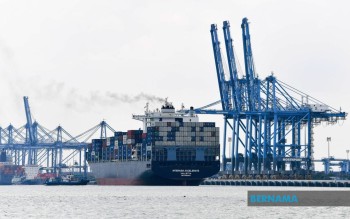
Malaysia's economic outlook for 2026 has brightened considerably, with leading investment banks substantially raising their export growth forecasts following exceptional trade performance in the first half of the year. RHB Investment Bank Bhd has lifted its projection for Malaysia's export expansion to 21.7 per cent, a marked improvement from its earlier estimate of 15.3 per cent, reflecting the nation's stronger-than-anticipated trade trajectory.
The upward revision rests on solid ground. Year-to-date export figures through the second quarter have surged by 27.5 per cent, demonstrating sustained momentum across Malaysia's key trading sectors. This outperformance validates the optimism among analysts and suggests that structural supports for trade growth remain firmly in place heading into the latter half of 2026.
The electrical and electronics sector emerges as the principal engine driving this expansion. Underpinned by an ongoing technology upcycle and investment flows directed toward artificial intelligence infrastructure, the E&E industry continues to capture outsized demand globally. Malaysia's deep entanglement within semiconductor supply chains positions it to harvest significant benefits from rising demand for computing power, data centre capacity, and AI-enabled technologies. This sector's resilience and growth trajectory provide substantial ballast for the overall export picture.
The trade surplus trajectory reinforces this positive assessment. The second quarter recorded a surplus of RM83.9 billion, towering above the RM15.3 billion registered in the corresponding period of 2025. This dramatic improvement not only demonstrates the nation's competitive strength in export markets but will also provide meaningful support to gross domestic product calculations for the quarter, enhancing overall economic growth figures.
MBSB Investment Bank Bhd corroborates this rosier outlook, though with a somewhat more moderate projection. The bank anticipates export growth of 18.9 per cent for 2026, compared with 6.6 per cent in 2025. While lower than RHB IB's forecast, this estimate still signals a substantial acceleration. MBSB attributes this growth to twin currents: accelerating demand for technology products and commodity-related goods including petroleum products and liquefied natural gas. This dual-driver outlook suggests that Malaysia's export gains will not hinge entirely on semiconductors and electronics, but rather benefit from broader-based recovery in global trade activity.
Import growth will also accelerate, according to MBSB's analysis. The bank projects imports will expand by 13 per cent in 2026, up from 6.0 per cent in 2025, reflecting sustained domestic economic vitality. This rising import trajectory signals growing confidence among businesses and households, with increased purchasing of capital equipment, intermediate goods, and consumer products indicating that the economy's domestic engines are firing.
June's trade statistics underscore the momentum characterizing Malaysia's external sector. Monthly trade volume climbed 44.7 per cent to RM340.9 billion compared with the prior year, driven by concurrent strength in both export and import flows. Exports advanced 45.4 per cent to RM177.9 billion whilst imports rose 43.9 per cent to RM163.0 billion. The trade surplus reached RM14.9 billion, an increase of 64.9 per cent year-on-year, painting a picture of a nation successfully capturing external demand whilst managing domestic growth.
Yet forecasters acknowledge that this sunny outlook contains storm clouds. Geopolitical tensions pose a material risk to the global trading environment. Should tensions persist or intensify, elevated oil prices could follow, burdening production and transportation costs across Malaysia's export industries. These cost pressures could suppress demand for Malaysian goods, particularly among manufacturers deeply integrated into global value chains who face margin compression if prices rise faster than they can pass costs forward to customers.
Trade policy uncertainty adds another dimension to the risk calculus. The prospect of tighter trade rules from the United States—Malaysia's second-largest trading partner—looms as a potential constraint. Should protectionist measures proliferate or existing trade agreements face revision, Malaysian exporters could encounter headwinds that undermine the optimistic projections now circulating among analysts.
Supply chain vulnerabilities remain a persistent concern. Disruptions to production or transportation networks, whether from natural disasters, geopolitical flashpoints, or pandemic-related shocks, could interrupt the smooth flow of Malaysian exports. Coupled with already-elevated operational costs, such disruptions could meaningfully dampen the export growth trajectory that both RHB IB and MBSB currently anticipate.
Despite these caveats, Malaysia's structural advantages provide grounds for sustained optimism. The nation's diversified economic base, stretching across manufacturing, services, agriculture, and commodities, shields it from overdependence on any single sector or destination market. This diversification, combined with Malaysia's established position within regional and global supply chains, positions the country to weather external volatility more effectively than many peers. Ongoing efforts to expand export markets and develop new product offerings further bolster the nation's resilience and growth prospects for the coming year.

