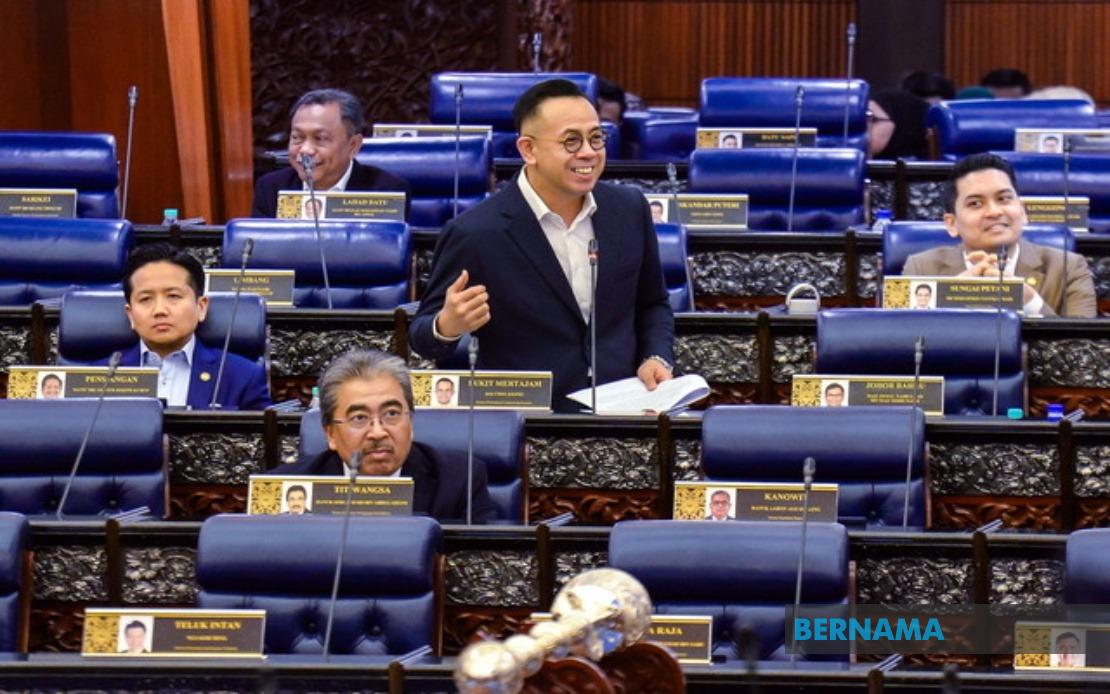
The Ministry of Entrepreneur and Cooperative Development (KUSKOP) has deployed nearly RM3 billion across various initiatives designed to strengthen Bumiputera entrepreneurship between 2023 and 2025, according to Minister Steven Sim Chee Keong. The substantial allocation reflects the government's commitment to developing indigenous business capacity within Malaysia's economy, signalling a long-term strategy to ensure Bumiputera participation in increasingly competitive markets.
Minister Sim outlined the government's approach to assessing the effectiveness of these investments, emphasizing that success is measured not merely by funding disbursed but by tangible outcomes achieved within participating communities. The ministry tracks concrete indicators including a minimum 20 percent increase in sales among programme participants and the expansion of approximately 150 companies into larger operational scales. This metrics-driven approach suggests a deliberate shift toward accountability and results-based management within Malaysia's entrepreneurial support infrastructure, moving beyond traditional input-focused assessments.
During parliamentary proceedings, the minister addressed broader questions about return on investment and employment generation stemming from KUSKOP's programmes. The emphasis on measurable programme outcomes reflects growing scrutiny of how government funds are deployed in business development initiatives, particularly given the substantial sums involved. This accountability framework provides Malaysian taxpayers with clearer visibility into how public resources translate into private sector growth and economic participation, addressing historical concerns about the efficacy of similar schemes.
For the year-to-date period through May, KUSKOP approved financing amounting to RM5 billion that has supported approximately 180,000 entrepreneurs representing diverse racial backgrounds and business sectors across Malaysia. This broader support base indicates that while Bumiputera empowerment remains a priority, the ministry's mandate extends to fostering entrepreneurship more comprehensively, suggesting integration of indigenous business development within a wider economic inclusion strategy rather than isolated targeted assistance.
A specialized component dedicated specifically to Bumiputera entrepreneurs achieved separate approval of RM1.407 billion for the period extending from 2025 through May 2026, benefiting more than 53,000 Bumiputera business owners. Within this cohort, over 11,469 Bumiputera youth entrepreneurs received support totalling approximately RM251 million, indicating deliberate intergenerational investment to develop the next generation of indigenous business leaders. This youth-focused allocation recognizes demographic realities and seeks to build sustainable entrepreneurial capacity among younger populations who will shape Malaysia's economic landscape for decades.
The ministry has integrated halal industry development into its broader entrepreneurial support ecosystem, recognizing the strategic importance of this sector for both domestic growth and regional export competitiveness. By facilitating halal certification pathways and supporting entrepreneurs navigating increasingly complex certification requirements, KUSKOP positions Malaysian Bumiputera businesses to access expanding halal markets across Southeast Asia and beyond, particularly in Muslim-majority nations where certification carries commercial significance. This approach demonstrates sophisticated understanding that entrepreneurial support must address market access barriers, not merely capital availability.
Parliamentary members raised proposals for establishing coordinated support mechanisms, with suggestions for a centralized national database system or "single window" portal to streamline assistance accessibility for micro, small, and medium enterprises. Minister Sim confirmed that KUSKOP designated SME Corp Malaysia as the coordinating agency tasked with consolidating various financing, grants, and funding streams available through government channels. By appointing a single entity responsible for coordination, the ministry aims to reduce fragmentation that typically complicates entrepreneurs' navigation of available support programmes.
SME Corp Malaysia now functions as a comprehensive service hub responsible for information dissemination, applicant channeling, and connection of entrepreneurs with appropriate government agencies offering specialized assistance. This intermediary role addresses a persistent challenge within Malaysia's entrepreneurial support landscape: the proliferation of assistance programmes across numerous agencies that creates confusion and barriers for potential beneficiaries. By consolidating information access and application pathways through a single organization, the government seeks to reduce transaction costs and improve programme uptake among target populations.
Additionally, KUSKOP has developed an integrated online portal functioning as a unified access point where entrepreneurs can discover and evaluate support offerings from more than 60 government agencies. This digital infrastructure initiative represents modernization of Malaysia's business development support systems, moving beyond traditional office-based enquiry processes toward technology-enabled accessibility. The portal concept acknowledges that contemporary entrepreneurs increasingly expect digital convenience and information transparency when seeking government assistance, aligning public sector service delivery with private sector expectations and practices.
The comprehensive nature of these initiatives positions Malaysia's entrepreneurial support framework as increasingly sophisticated and integrated. Rather than operating in isolation, various ministries and agencies now coordinate through designated hubs and digital platforms, theoretically enabling entrepreneurs to access an expanding ecosystem of resources. For Bumiputera business owners specifically, this coordinated approach combines targeted financial support with systematic market access assistance, certification facilitation, and connection to broader entrepreneurial networks, creating conditions for sustained business development beyond initial capital provision.
These developments carry implications for Malaysia's broader economic trajectory and regional competitiveness. By strengthening indigenous entrepreneurship and facilitating business expansion, Malaysia aims to cultivate a more diverse and resilient private sector. Within the Southeast Asian context, robust Bumiputera participation in growing industries positions Malaysia competitively against neighbouring nations and supports the country's aspirations for higher-value economic participation. The emphasis on measurable outcomes and coordinated support mechanisms suggests recognition that previous entrepreneurial support efforts, while well-intentioned, sometimes fell short of generating sustainable business growth or lasting economic transformation.
Moving forward, the success of these RM3 billion investments will depend substantially on implementation quality and the extent to which entrepreneurs effectively utilize available support mechanisms. The ministry's establishment of clear outcome indicators provides a foundation for evaluating programme effectiveness and justifying continued resource allocation. As Malaysia navigates economic challenges and seeks to broaden wealth creation beyond traditional sectors, the strength of indigenous entrepreneurship will increasingly determine the country's economic resilience and inclusive growth potential.

