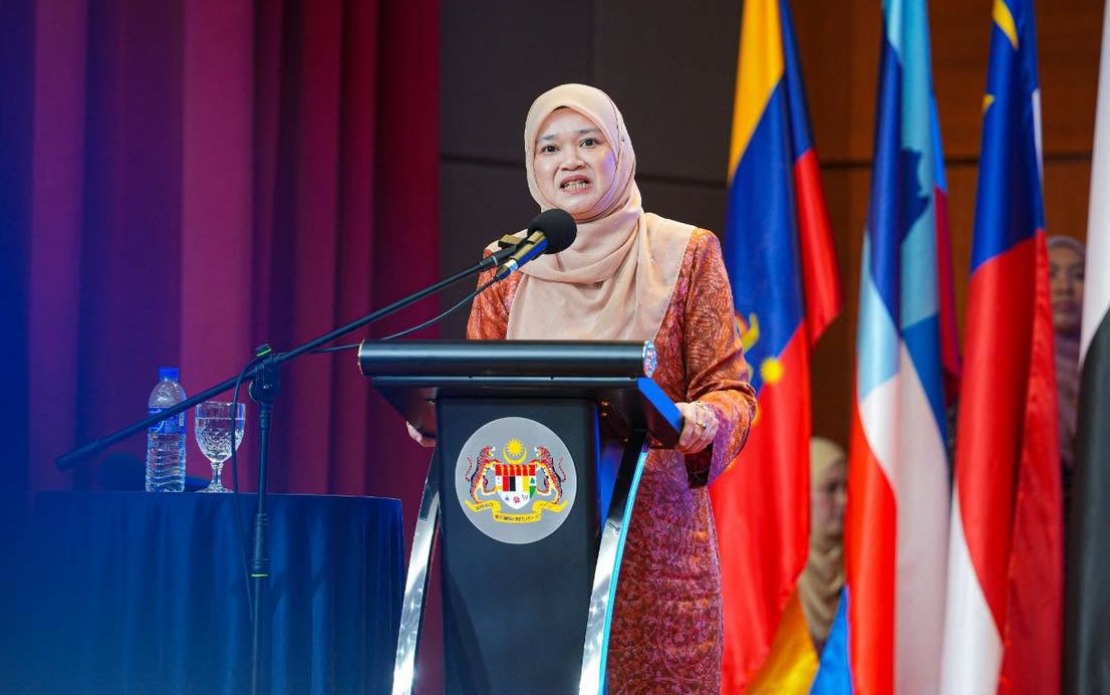
The Education Ministry is moving to formally recognise the contributions that incarcerated students make through participation in sports and co-curricular activities, a development that could significantly reshape pathways to university admission for this vulnerable population. Education Minister Fadhlina Sidek announced the initiative while closing the 17th Hijrah Kasih Programme, a collaborative effort between the ministry and the Malaysian Prison Department, signalling renewed governmental commitment to ensuring that incarceration does not permanently close educational doors for young Malaysians.
The proposal addresses a critical gap in the current education system. Students completing their Sijil Pelajaran Malaysia (SPM) qualification while serving time in prison institutions have historically lacked formal recognition of achievements beyond academic examinations. By acknowledging their engagement in structured co-curricular pursuits, the ministry seeks to create a more holistic assessment framework that reflects their overall development and commitment to personal improvement during periods of incarceration. This recognition would translate directly into consideration for university admission, providing tangible incentives for participation in rehabilitation-focused activities.
A parallel initiative focuses on vocational pathways. The ministry is engaging with the Technical and Vocational Education and Training (TVET) division to explore awarding formal skills certificates to students who complete training programmes while incarcerated. These certificates would document competencies in practical areas such as sewing and food preparation—skills that carry genuine market value and employment potential once individuals return to civilian life. The approach transforms prison education from purely academic remediation into comprehensive preparation for economic self-sufficiency.
Statistical evidence demonstrates the effectiveness of existing prison education programmes. Students in prison schools have achieved a 100 per cent pass rate in the SPM for two consecutive years, defying stereotypes about incarcerated youth and their educational potential. This remarkable achievement illustrates that location and circumstances need not determine educational outcomes; rather, individual determination and institutional support prove decisive. Minister Sidek emphasised this point, framing educational success not as dependent upon facilities or institutional prestige but upon student commitment and resilience.
Implementation of the merit recognition system faces a concrete timeline. The ministry aims to secure official recognition of Physical, Sports and Co-curricular Assessment (PAJSK) scores this year, enabling SPM candidates from 2027 onwards to receive 10 per cent merit weighting when submitting university applications. This specific percentage, while modest, represents meaningful acknowledgement and could prove decisive for borderline applicants. The timeframe provides clarity for current prison institution students who can now anticipate concrete benefits from their co-curricular engagement.
Digital integration represents another dimension of educational modernisation within prison settings. The ministry is investigating ways to provide teachers at integrity schools and Henry Gurney schools nationwide with access to the DELIMa (Digital Educational Learning Initiative Malaysia) platform. This technology infrastructure would enable prison school educators to deliver lessons consistent with curricula and pedagogical approaches used in mainstream institutions, reducing the educational distance between incarcerated and non-incarcerated students. For Malaysia, where digital learning integration accelerated substantially in recent years, extending these platforms to prison institutions ensures no cohort falls behind technological development.
Controlled student access to DELIMa presents both opportunity and security challenges. The ministry is studying measures that would permit incarcerated students to engage with online learning materials and participate in digital education while maintaining institutional safety protocols. This approach recognises that restricting technological access inevitably creates educational disadvantage; simultaneously, unrestricted access poses legitimate custodial concerns. Finding this balance reflects broader tensions between rehabilitation goals and security imperatives that Malaysian correctional administrators continuously navigate.
Equitable access to learning facilities underpins these initiatives. The ministry explicitly commits to ensuring that prison school students enjoy access to educational infrastructure comparable to their counterparts in conventional schools. This principle challenges ingrained assumptions that incarceration automatically entails material deprivation of educational resources. Upgraded facilities within prison institutions signal that the state views education as rehabilitative necessity rather than discretionary privilege, fundamentally reframing the purpose of incarceration within Malaysia's criminal justice philosophy.
Familial support emerges as crucial but often overlooked. Minister Sidek highlighted the importance of parental engagement, particularly during incarceration when young people face their most challenging circumstances. Sustained family connection—including visits, communication, and emotional encouragement—directly correlates with educational engagement and post-release outcomes. The ministry's acknowledgement of this factor suggests recognition that education cannot succeed in social isolation; prison reform necessarily extends beyond institutional boundaries into family dynamics and community relationships.
The broader significance of these initiatives lies in how they reconceptualise incarcerated youth within Malaysian society. Rather than viewing imprisoned students purely as security subjects, these policies position them as educational subjects deserving investment and opportunity. This reorientation aligns with contemporary criminological understanding that rehabilitation dramatically reduces recidivism compared to purely punitive approaches. For Malaysia, where prison populations have grown substantially, policies investing in education within correctional facilities represent preventive approaches to long-term criminal involvement.
Implementation will require coordination across multiple government agencies beyond the Education Ministry. Prison administration, university admission authorities, technical education bodies, and TVET providers must align procedures and recognition standards. This inter-agency complexity explains why such initiatives, though relatively straightforward conceptually, require extended planning and study periods. The Education Ministry's detailed timeline suggests serious commitment, though successful execution will demand sustained political attention beyond initial announcement phases.
For incarcerated students themselves, these policy developments represent tangible hope. Educational achievement becomes not merely personal accomplishment but pathway to institutional recognition, university access, and employment opportunity. This framing encourages engagement in structured programmes and provides forward-looking orientation essential for psychological wellbeing during incarceration. As Malaysia continues developing rehabilitation-focused correctional practices, education policy choices become increasingly central to success.

