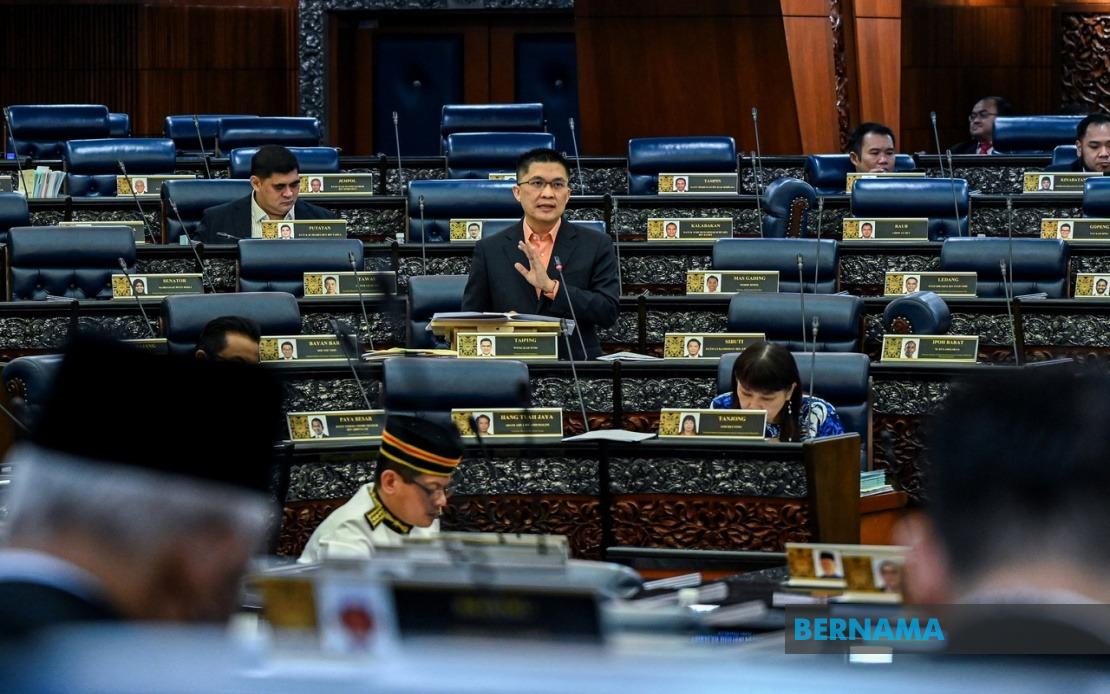
The Ministry of Education has pledged to systematically eliminate technological disparities plaguing Malaysia's schools as part of its long-term strategic roadmap through 2035. Deputy Education Minister Wong Kah Woh outlined the commitment during parliamentary proceedings, emphasising that connectivity and digital resource distribution will form cornerstones of the Malaysia Education Blueprint (RPM) 2026-2035, with particular attention to communities historically underserved by educational infrastructure.
The initiative represents an escalation of efforts begun under the previous Malaysian Education Development Plan (PPPM) 2013-2025, which achieved measurable reductions in achievement gaps between student populations. During that period, the disparity in average grades between urban and rural students taking the 2024 Sijil Pelajaran Malaysia examination narrowed by 26.23 per cent—a significant stride that the ministry now seeks to build upon through targeted technological intervention.
Wong stressed that all schools, whether situated in cities or countryside regions, will receive high-speed internet connectivity tailored to local conditions and technological viability. This blanket coverage represents a departure from piecemeal approaches, signalling governmental determination to treat digital access as a fundamental entitlement rather than a privilege concentrated in developed areas. The strategy acknowledges that rural students cannot compete academically without equivalent technological foundations to their urban counterparts.
Central to the rollout is the Digital Educational Learning Initiative Malaysia, commonly known as DELIMa, an established platform housing curated digital instructional materials for both educators and learners. The ministry has ensured comprehensive uploading of pedagogical resources to this repository, transforming it into a centralised hub for online instruction. The platform's effectiveness depends entirely on reliable internet infrastructure, making simultaneous investment in connectivity essential to realising the platform's potential.
The ministry's approach incorporates a Digital Competency Score—a measurable benchmark ensuring students achieve at least intermediate-level proficiency with digital tools and online environments. This metric-driven methodology prevents the scenario where devices and connections exist without corresponding skills development, a pitfall that has undermined technology rollouts in educational systems globally. By establishing clear competency thresholds, the ministry creates accountability mechanisms for schools and teachers.
Equitable distribution of digital devices and learning materials across institutions remains a cornerstone objective. Wong indicated that the ministry has deliberately structured procurement and allocation processes to prevent resource concentration in wealthier urban districts, a pattern that historically exacerbated educational inequality. Fair distribution protocols aim to narrow the access chasm separating advantaged from disadvantaged communities.
Previous achievements offer encouraging benchmarks. Beyond the 26.23 per cent reduction in urban-rural grade disparities, the ministry reported that gender gaps in SPM certification eligibility shrank by 52.78 per cent, while socioeconomic status-based achievement gaps contracted by 57.75 per cent under the 2013-2025 plan. These statistics suggest that targeted policy interventions can meaningfully reshape educational outcomes across demographic groups, validating the government's confidence in comprehensive digital inclusion as a lever for further progress.
The Digital Education Policy framework provides strategic direction for implementation, ensuring that technological deployment aligns with broader pedagogical objectives rather than pursuing technology for its own sake. This policy foundation distinguishes Malaysia's approach from initiatives that introduce devices without thoughtful curricular integration, a distinction particularly relevant for Southeast Asian education systems grappling with digital transformation.
Wong underscored that teacher well-being and workload reduction complement infrastructure investment, with seven measures introduced since 2023 continuing to evolve. Streamlining administrative record-keeping and eliminating duplicative documentation processes acknowledges that technological empowerment requires human-centred support. Educators overwhelmed by bureaucratic demands cannot effectively leverage digital platforms, rendering infrastructure investments partially ineffective without corresponding relief from administrative burden.
The timeline extending to 2035 demonstrates governmental commitment to sustained, long-term change rather than short-term announcements. Education infrastructure develops gradually, particularly in geographically dispersed rural regions where deployment complexity and maintenance challenges require patient, consistent investment. A two-decade horizon acknowledges these realities while maintaining momentum toward comprehensive coverage.
For Malaysian students, particularly those in remote localities and economically disadvantaged areas, these commitments represent tangible pathways toward educational opportunity previously constrained by geography and socioeconomic circumstance. The emphasis on universal intermediate digital competency ensures that technological access translates into practical capability rather than mere device possession.
Regionally, Malaysia's initiative addresses challenges shared across Southeast Asia, where digital divides persist despite broader economic development. The blueprint offers a model for neighbouring nations confronting similar disparities, demonstrating that systematic infrastructure investment combined with platform deployment and competency frameworks can meaningfully close educational gaps rooted in geography and class.

