Malaysia is positioning itself as a regional thought leader in digital governance as the International Regulatory Conference 2026 commences in Kuala Lumpur, bringing together regulators, policymakers, and technology experts to grapple with the complexities of an increasingly connected digital economy. The biennial gathering, organised by the Malaysian Communications and Multimedia Commission (MCMC), arrives at a critical juncture when Southeast Asia faces mounting pressures to balance technological innovation with consumer protection and national sovereignty.
Communications Minister Datuk Seri Fahmi Fadzil will formally open the conference, which carries the overarching theme 'Shaping the Next Digital Era: Regulation, Resilience and Trust.' This framing reflects Malaysia's strategic pivot towards establishing homegrown regulatory frameworks rather than simply adopting international standards wholesale. The conference represents the third iteration since its establishment in 2024, signalling the government's commitment to creating a regular dialogue on digital governance issues that evolve rapidly and demand constant reassessment.
The opening session addresses one of the most pressing concerns facing digital regulators globally: the vulnerability of children and marginalised users to online harms. Convened under the banner 'Online Safety by Design: Platform Accountability and Child Protection in an Age of User Vulnerability,' this dialogue will examine how technology platforms can embed protective mechanisms from inception rather than retrofitting safety measures. The session brings together the Human Rights Commission of Malaysia (SUHAKAM), represented by children's commissioner Dr Farah Nini Dusuki, alongside international voices including UNICEF Malaysia's chief of child protection Saskia Blume and Australian High Commissioner Danielle Heinecke. This multijurisdictional approach recognises that online safety challenges transcend borders and demands coordinated responses across nations.
The conference gains particular relevance following Malaysia's implementation of the Online Safety Act 2025 (ONSA) on January 1 of this year. This legislation represents the government's most comprehensive attempt to establish domestic guardrails for the digital ecosystem, moving beyond sectoral regulations to create an integrated framework encompassing content moderation, platform accountability, and user protection. The IRC 2026 platform provides an opportunity to assess how ONSA is operating in practice and to learn from peer regulators managing similar legislative frameworks across the region and beyond.
Data sovereignty emerges as a second critical theme, with dedicated sessions examining how Malaysia can protect citizen information while advancing its digital economy ambitions. As Southeast Asian nations compete to attract regional tech investment and data centre operations, the tension between openness and control has intensified. The 'Sovereign Data, Empowered Citizens' session will explore pathways for Malaysia to maintain greater autonomy over digital infrastructure and personal data flows, particularly as artificial intelligence systems increasingly depend on large datasets for training and operation. This consideration carries special weight given that Malaysia, like other developing economies, often finds its data harvested and processed by foreign technology corporations without proportionate benefit flowing back to the nation.
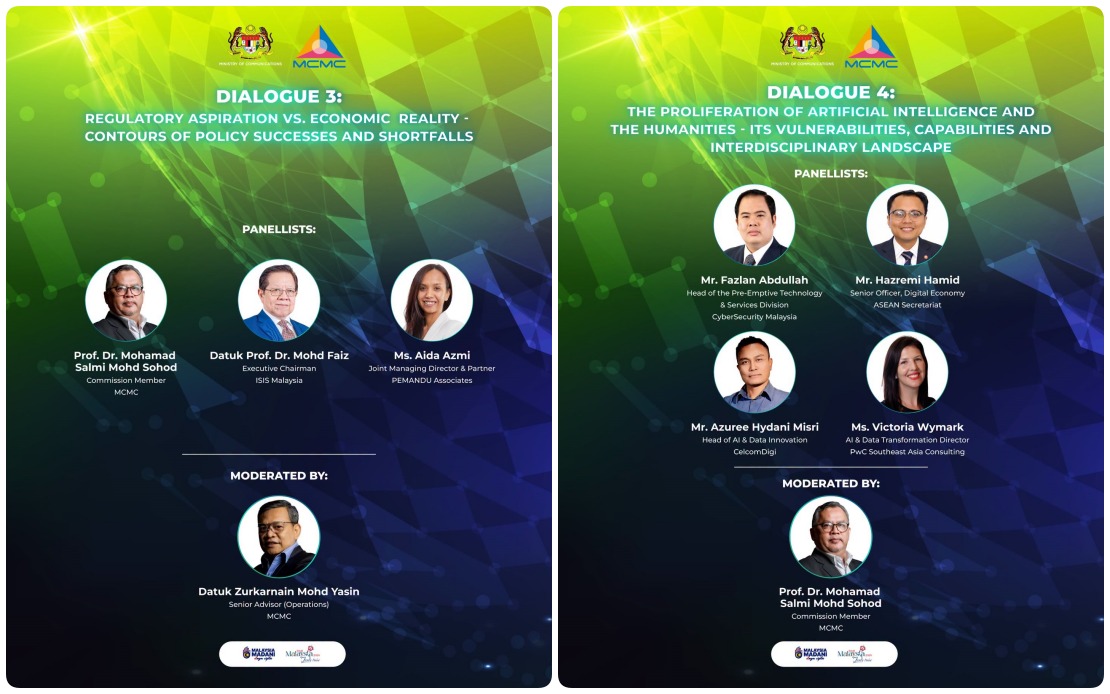
Artificial intelligence itself becomes a focal point through multiple conference sessions examining both its transformative potential and attendant risks. A dedicated discussion on 'AI and the Humanities' situates technological development within broader social and ethical contexts, bringing together technical experts from PwC Southeast Asia Consulting and CyberSecurity Malaysia alongside academic researchers from Universiti Kebangsaan Malaysia, Universiti Malaya, and CelcomDigi. This interdisciplinary framing suggests Malaysia's regulators recognise that pure technical solutions prove insufficient when deployed without consideration of social impact, equity implications, and cultural context.
The conference's second day pivots toward frontier technologies and emerging regulatory challenges that existing frameworks have yet to adequately address. Quantum computing represents a particularly significant frontier, with sessions examining how this transformative technology will reshape communications architecture and cybersecurity assumptions. The involvement of IBM Quantum experts alongside Malaysian university researchers indicates the country's determination to develop indigenous technical capacity and regulatory understanding rather than remaining perpetually dependent on foreign technical expertise.
Robotics and autonomous systems constitute another area demanding immediate regulatory attention as manufacturing and service sectors begin deploying these technologies at scale. The 'Robotics Revolution' session acknowledges that cross-sector coordination will prove essential, as robotic systems cut across industry boundaries and affect labour markets, safety standards, and economic policy simultaneously. Malaysian regulators appear conscious that siloed regulatory approaches will prove inadequate for technologies that inherently operate across traditional jurisdictional divides.
The conference also addresses what might be termed the psychological and social dimensions of digital saturation through a session titled 'Digital Dependency and Human Autonomy.' As Malaysian society becomes increasingly reliant on digital platforms for employment, education, financial services, and social connection, questions about mental wellbeing, information integrity, and the capacity for genuine human autonomy take on heightened significance. This thematic thread suggests Malaysian policymakers appreciate that effective regulation must consider not merely technical safety but also social and psychological sustainability.
The calibre of participation underscores Malaysia's growing authority within regional digital governance conversations. The conference has attracted participants from over seven countries, including established regulators with years of experience managing digital markets. This international dimension serves multiple purposes: it allows Malaysian regulators to benchmark their approaches against global best practices, it positions Malaysia as a destination for regulatory dialogue and expertise, and it creates opportunities for informal coordination on issues that demand transnational responses.
Deputy Communications Minister Teo Nie Ching will formally close the conference, providing the government's official response to emerging themes and likely signalling policy direction on matters identified during discussions. The IRC 2026 format thus functions not merely as a discussion forum but as an integral component of Malaysia's policymaking apparatus, converting expert deliberation into concrete regulatory direction.
Looking forward, Malaysia's approach to digital governance evident at IRC 2026 reflects a broader regional trend toward regulatory assertiveness and domestic framework development. Rather than accepting governance models designed by technology incumbents and international standard-setting bodies, Southeast Asian nations increasingly demand input into the rules governing their digital ecosystems. Malaysia's biennial conference represents one manifestation of this shift, establishing the country as an active participant in shaping global digital governance norms rather than a passive recipient of externally-determined regulations.

