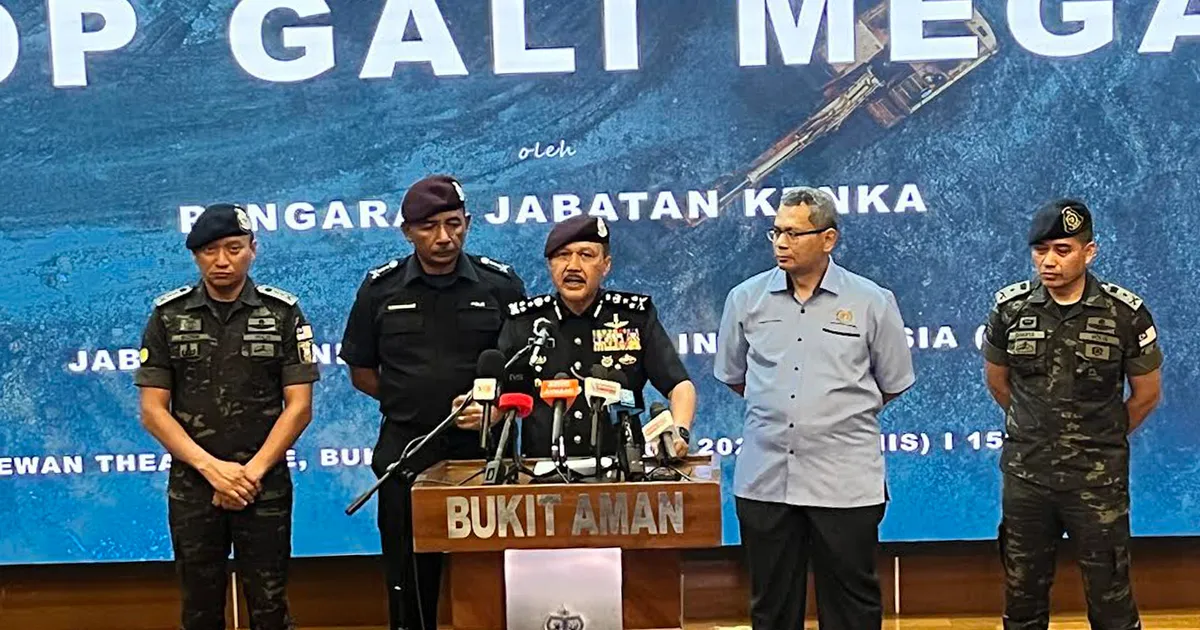
Malaysia's law enforcement agencies have stepped up their battle against illegal mining operations, culminating in the arrest of 99 individuals and the seizure of RM119 million worth of assets during an intensive five-day crackdown conducted between August 19 and 23. The coordinated operation represents one of the most significant enforcement drives against the unlicensed extraction of natural resources in recent memory, highlighting growing government determination to combat what has become a persistent problem across multiple states.
The scale of materials recovered during the campaign underscores the industrial nature of illegal mining activities in the country. Enforcement teams confiscated approximately 33,000 tonnes of illegally extracted natural resources, encompassing coal, quarry stone, earth and sand with a combined estimated value of RM21 million. This substantial haul suggests that criminal networks operating in the mining sector have developed sophisticated extraction and distribution networks, capable of processing tens of thousands of tonnes of material before detection.
Illegal mining has emerged as a multifaceted challenge for Malaysian authorities, operating at the intersection of environmental degradation, revenue loss, and organised crime. The sector attracts criminal networks precisely because it requires relatively modest initial capital investment compared to the potential returns, while simultaneously offering multiple layers of plausible deniability. Operators can claim materials are sourced from legitimate operations, sold by middlemen, or extracted from unregulated sites in remote areas where monitoring proves difficult. This structural vulnerability has allowed the problem to flourish despite periodic enforcement actions.
The environmental consequences of uncontrolled mining extend beyond immediate site damage. Illegal extraction destabilises riverbanks and slopes, increasing flooding and landslide risks during monsoon seasons—a particular concern in Malaysian states prone to heavy rainfall. Unregulated mining also contaminates water sources, affecting both agricultural productivity and public health in surrounding communities. Agricultural states such as Kedah, Perlis, and Terengganu have reported significant problems with illegal sand extraction from riverbeds, threatening water availability during dry seasons and compromising irrigation infrastructure.
From a revenue perspective, illegal mining represents a substantial loss to state governments and the federal treasury. Natural resource extraction rights typically generate licensing fees, royalties, and taxes that fund public services and infrastructure development. When operations proceed without authorisation, these resources are effectively stolen from the public domain. The RM119 million figure seized in this operation reflects not just the value of extracted materials, but also the financial infrastructure supporting these illicit networks—including vehicles, machinery, and banking arrangements used to launder proceeds.
The timing and scope of this enforcement operation suggest coordinated action across multiple states and enforcement agencies. Successful campaigns against illegal mining typically require cooperation between the Royal Malaysia Police, Environmental Department, Department of Mineral and Geoscience, and state land offices, each bringing distinct jurisdictional and investigative capabilities. The five-day concentrated operation model allows authorities to deploy resources strategically, maximising disruption to criminal networks while minimising the opportunity for advance warning or dispersal of operations.
For Malaysian readers and businesses, the implications are significant. Legal mining operators face competitive disadvantages when illegal competitors undercut prices by avoiding regulatory compliance costs, safety standards, and environmental remediation expenses. Communities near mining sites experience degraded living conditions, compromised water quality, and increased natural hazard risks. Regional environmental stability affects Malaysia's agricultural sector and tourism industry, while the proceeds from illegal mining fuel broader criminal enterprises including human trafficking and drug manufacturing.
The arrest of 99 individuals raises questions about prosecution capacity and sentencing frameworks. Malaysia's mineral extraction laws carry penalties for unauthorised mining, but enforcement is frequently hampered by inadequate investigating officer training, slow judicial processes, and sometimes lenient sentencing that fails to deter repeat offences. For this crackdown to achieve lasting impact beyond the immediate seizures, the criminal justice system must process cases efficiently and apply penalties sufficient to outweigh potential profits.
Looking forward, sustainable solutions require moving beyond reactive enforcement to address root causes. Poverty and limited legitimate employment opportunities in rural areas drive participation in illegal mining. Stronger regulation of equipment sales, stricter financial monitoring for cash-intensive transactions, and improved intelligence-sharing between agencies and neighbouring states can reduce operational viability. International cooperation proves essential given cross-border aspects of some mining networks, particularly in regions adjacent to Thailand and Indonesia.
This enforcement action demonstrates the government's capacity to mobilise resources when political will exists. Whether the momentum will sustain depends on continued budgetary commitment, training investment, and prosecutorial follow-through. The RM119 million seized represents tangible progress, yet represents merely a snapshot of ongoing illegal activities across the nation. Without structural reforms addressing both supply and demand sides of the illegal mining economy, criminal networks will likely reconstitute themselves, requiring the cycle of raids and seizures to continue indefinitely.

