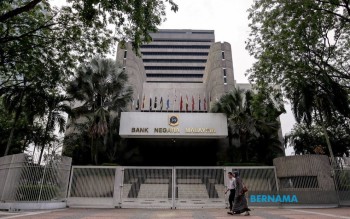
Consensus among Malaysia's major research houses has solidified around an expectation that Bank Negara Malaysia will hold its overnight policy rate at 2.75 per cent through the remainder of 2026, with economists citing an increasingly constructive view of the country's economic trajectory and well-anchored price pressures as the foundation for monetary policy stability.
The latest assessment from the central bank's Monetary Policy Committee appears to have shifted towards greater optimism about Malaysia's near-term economic resilience. Research analysts point to the committee's more upbeat stance compared with its May assessment, reflecting tangible improvements across multiple economic indicators rather than merely shifting sentiment. The strengthening outlook encompasses both external and domestic drivers, suggesting the Malaysian economy possesses sufficient momentum to sustain healthy expansion without requiring policy stimulus or restraint.
Electronics and electrical goods demand has emerged as a particularly bright spot in Malaysia's export landscape. CGS International highlights that stronger-than-anticipated shipments in this vital sector, historically one of Malaysia's economic pillars, have contributed significantly to the improved growth narrative. The company notes that recovering global supply chain conditions are providing additional tailwinds, allowing manufacturers to fulfill orders more efficiently and positioning the sector for sustained performance through the remainder of 2026.
Beyond headline exports, the composition of economic growth appears increasingly balanced. Domestic demand continues to benefit from a resilient labour market characterised by steady wage expansion and improving employment conditions. These fundamentals support household consumption, the bedrock of Malaysia's domestic-led growth engine. Simultaneously, government spending continues to provide additional support through ongoing policy initiatives, creating a scenario where growth prospects remain robust even if external conditions were to soften unexpectedly.
Second-quarter economic performance reinforced analysts' confidence in the durability of Malaysia's growth momentum. The results demonstrated that domestic demand remained sturdy despite global uncertainties, while export performance surpassed initial expectations. This combination produced genuinely resilient quarterly growth, validating Bank Negara's official forecast range of four to five per cent for full-year 2026. Public Investment Bank emphasises that this performance has provided the central bank with tangible confidence that Malaysia's economic fundamentals remain solid.
Non-electronics exports are anticipated to provide incremental support as the year progresses. Petrochemical producers and oil and gas facilities currently undergoing maintenance will return to full production, adding to export volumes. Tourism arrivals continue their recovery trajectory, with visitor spending bolstering service sector revenues. These diverse sources of growth insulate Malaysia from over-reliance on any single sector, reducing vulnerability to sector-specific shocks.
The inflation landscape presents an equally benign picture from a monetary policy perspective. While Bank Negara acknowledges that elevated global costs have created some initial pass-through to domestic prices, the central bank assesses that both headline and core inflation will remain within acceptable parameters. This measured inflation backdrop removes pressure for rate increases, supporting the case for policy continuity. Apex Securities notes that the inflation impulse remains primarily external and cost-driven rather than demand-generated, suggesting that domestic economic slack still exists and demand-side pressures are not building dangerously.
Analysts have identified specific conditions that could alter this baseline scenario. A sustained broadening of cost pressures into core inflation, persistent and pervasive inflation momentum, or evidence that monetary accommodation is generating financial imbalances would collectively constitute a case for tightening. Public Investment Bank quantifies the risk of a rate hike in the fourth quarter as a "conditional tail risk," acknowledging the possibility while suggesting such an outcome would require a meaningful deterioration from current conditions rather than representing the most likely scenario.
The central bank's neutral policy stance reflects comfort with the current calibration of monetary conditions. Current rates support economic expansion without being so loose as to generate inflation or asset price distortions. This positioning allows the economy to expand within its potential without policy becoming a source of instability. Bank Negara's messaging suggests satisfaction with the existing level of accommodation, and the committee appears disposed to monitor rather than adjust unless economic data departs materially from current expectations.
For Malaysian businesses and investors, rate stability through 2026 carries significant implications. Corporations can engage in longer-term investment planning without concern over imminent borrowing cost adjustments. Exporters benefit from currency stability and predictable financing conditions. The financial sector can operate with greater certainty regarding net interest margins. This predictability, in itself, supports economic decision-making across the private sector.
Regionally, Malaysia's monetary policy stance reflects broader Southeast Asian trends toward gradualism and data-dependency. The central bank's willingness to maintain accommodation while growth remains healthy positions Malaysia competitively versus peers. The Malaysian ringgit may benefit from policy clarity even if rates remain unchanged, as investors appreciate the forward visibility that consensus forecasts provide.
Looking ahead, the key variables that could disrupt this consensus involve global supply chain disruptions returning, energy price shocks affecting domestic cost structures materially, or unexpected domestic demand weakness undermining the growth outlook. Absent such developments, analysts' consensus around rate stability appears well-founded. The convergence of views among CGS International, Public Investment Bank, and Apex Securities suggests that major research institutions see limited near-term variability in monetary policy, barring a significant shock to the economic environment.

