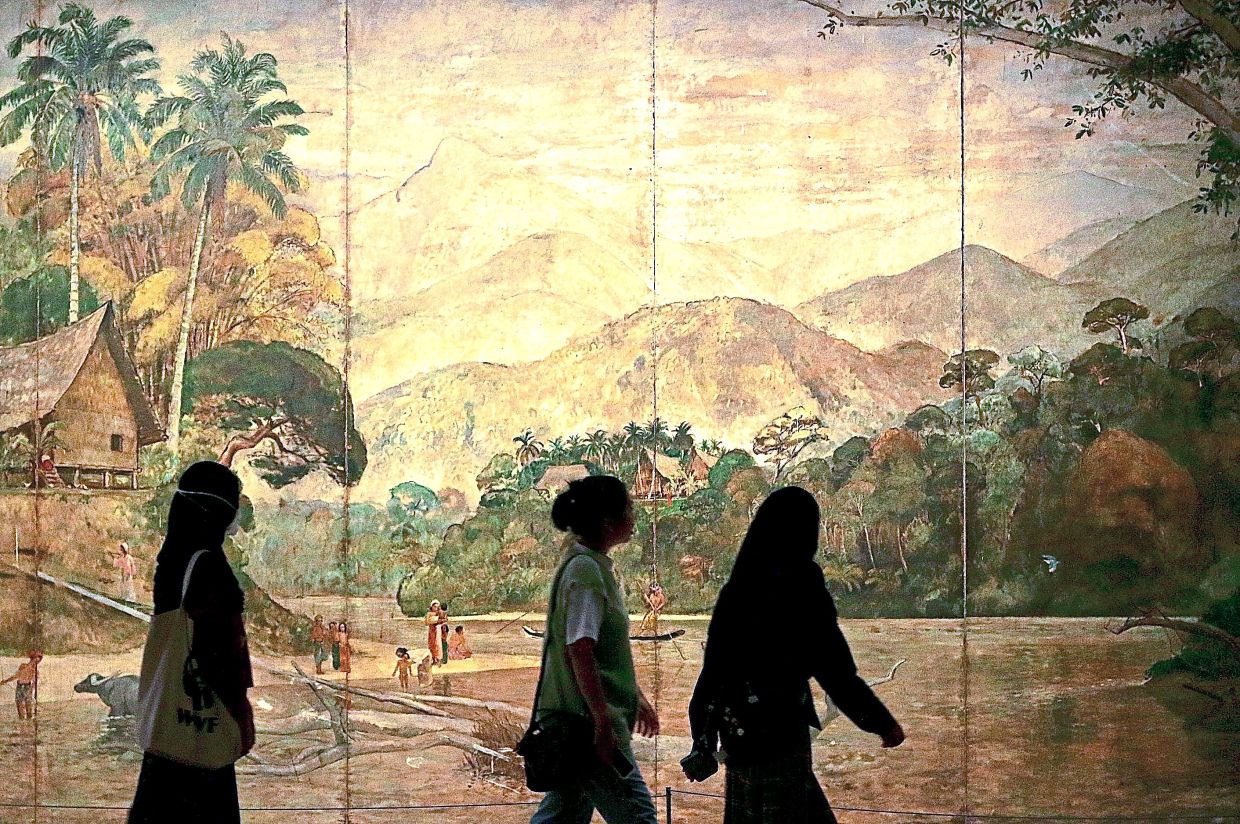
The National Art Gallery's senior chief curator Tan Hui Koon has highlighted how Malaysia's humid tropical environment and intense sunlight create an invisible threat to the nation's artistic heritage, demanding specialised conservation approaches tailored to local conditions rather than blanket adoption of Western methodologies. The gallery will host the seventh Asia-Pacific Tropical Climate Conservation Art Research Network conference from December 7-9, bringing together regional experts to tackle environmental preservation challenges specific to Southeast Asia's climate zones.
The fundamental problem facing Malaysian institutions stems from the country's inherent atmospheric conditions. Organic materials commonly found in artworks—textiles, canvas, wood and paint layers—absorb moisture readily in Malaysia's consistently high humidity. This moisture absorption triggers repeated cycles of material expansion and contraction, a process that gradually undermines structural integrity and degrades irreplaceable artistic elements. Tan emphasised that these degradation processes operate silently, often unnoticed until significant damage has already occurred, making prevention exponentially more valuable than restoration efforts after the fact.
Protecting valuable artworks requires an approach analogous to human skin care. Tan explained that museum-standard conservation relies on specialised tinted glass and UV-reflective barriers to shield artworks from the intense light exposure characteristic of Malaysia's equatorial position. Without such protective measures, pigments fade, materials become brittle, and the cumulative effect on centuries-old pieces proves irreversible. The challenge intensifies for institutions managing collections of Western paintings, which were typically created in temperate climates and may respond unpredictably to tropical humidity and heat variations.
The distinction between restoration and prevention forms the philosophical core of modern conservation practice. While restoration attempts to repair damage after it occurs, Tan stressed that the most effective approach combines environmental control, appropriate handling techniques, and strategic storage protocols designed to prevent damage from materialising in the first place. Once material loss occurs—whether through paint flaking, fabric deterioration, or wood warping—no restoration technique can fully return an artwork to its original state. Conservators can manage structural integrity and allow continued display, but the artwork's authenticity remains permanently diminished.
The upcoming conference represents a significant institutional commitment to developing conservation solutions rooted in Malaysian and Southeast Asian expertise rather than importing wholesale European and North American methodologies. Participants from Malaysia, Thailand, Singapore, Australia and the Philippines will examine how diverse art materials respond specifically to tropical climates, pooling knowledge accumulated across different geographical and cultural contexts. This regional collaboration addresses a critical gap: conservation science developed in temperate zones may not adequately account for the accelerated degradation processes occurring under tropical conditions.
Beyond academic discussion, the conference incorporates practical site visits to heritage locations in Lenggong, undertaken in partnership with the Islamic Arts Museum Malaysia, the Department of National Heritage and People of Remarkable Talents. These field excursions ground theoretical discussions in Malaysia's actual conservation landscape, allowing experts to examine real-world applications and exchange hands-on experience. Such immersive elements facilitate the intergenerational knowledge transfer that Tan identified as essential for developing a sustainable conservation workforce.
Tan stressed that this year's conference deliberately emphasises local knowledge systems alongside contemporary technological approaches. Rather than assuming that disaster response and conservation methodology from Western institutions automatically suit Malaysian contexts, the gathering explores how individual nations can adapt techniques to their geographical realities. This localisation principle extends to materials research, artificial intelligence applications in conservation monitoring, and ethics frameworks that acknowledge cultural differences in how societies value and preserve artistic heritage.
The conference agenda encompasses climate change impacts on artwork longevity—a particularly urgent concern given Malaysia's position in a region vulnerable to extreme weather events and shifting precipitation patterns. Disaster management strategies receive dedicated attention, recognising that institutions must prepare for potential damage from flooding, humidity spikes, or other environmental crises. Resource-sharing initiatives among participating institutions aim to distribute conservation expertise and equipment more equitably across the region, reducing duplicative investment and strengthening collective capacity.
Tan characterised the conference as a milestone opportunity to assess Malaysia's conservation development trajectory since the network's establishment in 2008. Over fifteen years, the field has evolved considerably, incorporating digital technologies, advanced materials science, and more sophisticated environmental monitoring systems. Yet the core challenge—protecting irreplaceable cultural objects in a climate fundamentally different from where conservation science originated—remains central to institutional missions throughout Southeast Asia.
The gathering holds implications extending beyond academic advancement. By elevating Malaysian expertise and demonstrating sophisticated conservation capacity at an international forum, the conference positions the country's artistic heritage and institutional knowledge on the global stage. This visibility can attract international research partnerships, funding opportunities, and scholarly recognition that strengthens Malaysia's cultural institutions and establishes the nation as a regional conservation leader. For Southeast Asian countries managing similar tropical climate challenges, Malaysia's conservation models and research findings offer practical, climate-appropriate alternatives to predominantly Western approaches.

