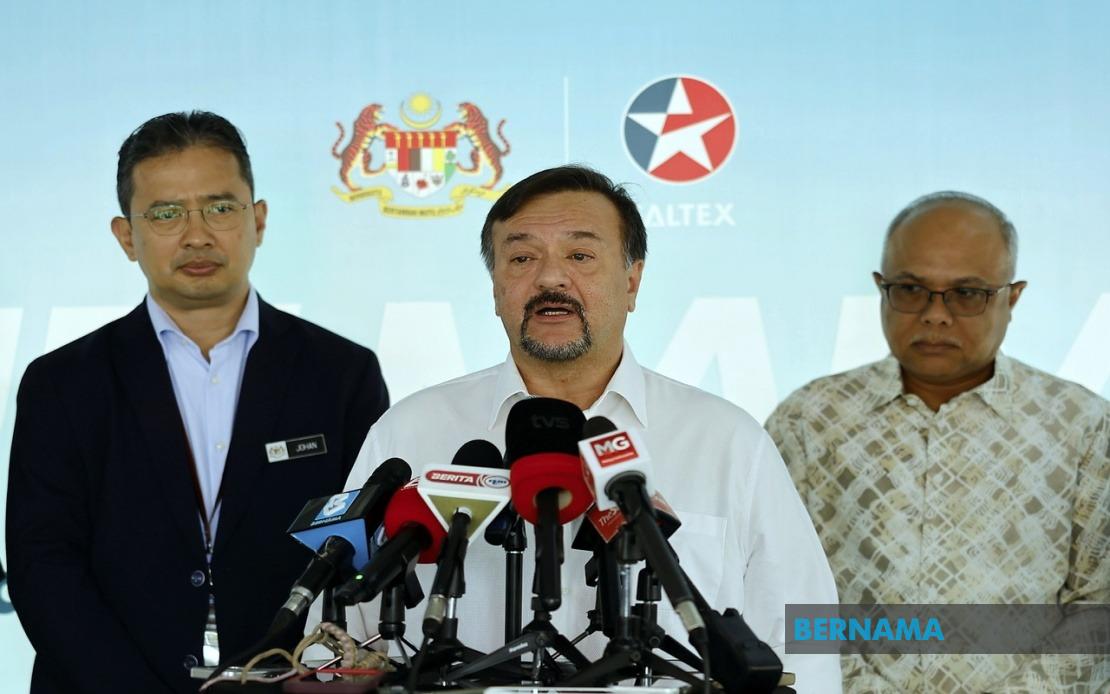
The Malaysian government has formally commenced consultation sessions nationwide to gather inputs for the 2027 Budget, according to Finance Minister II Datuk Seri Amir Hamzah Azizan. These engagement activities, which bring together the Ministry of Finance and various other government departments, aim to incorporate diverse perspectives and expertise into the budget-making process ahead of its planned parliamentary presentation this October.
The consultation approach reflects the government's commitment to inclusive policy formulation. By engaging stakeholders across multiple ministries and geographical regions, the Finance Ministry seeks to ensure that the budget reflects both national priorities and ground-level realities from different sectors and communities. This systematic gathering of perspectives signals the administration's intention to construct a comprehensive fiscal framework rather than imposing budgetary decisions from above.
According to Amir Hamzah, the overarching policy philosophy continues to centre on the MADANI Economy framework, an approach that attempts to balance growth and inclusion simultaneously. Rather than pursuing conventional top-down economic expansion, the framework emphasises expanding both the "ceiling" and "floor" of Malaysia's economy—strengthening competitive advantage for high-performing sectors while simultaneously broadening opportunity and safety nets for lower-income segments of society. This dual-track strategy represents a deliberate shift toward more equitable growth dynamics.
The 2027 Budget will not exist in isolation but rather forms part of an interconnected ecosystem of major policy initiatives recently unveiled by the government. The 13th Malaysia Plan provides the medium-term development blueprint, while the National Semiconductor Strategy positions Malaysia within global semiconductor value chains during a period of geopolitical competition for technological dominance. Simultaneously, the National Energy Transition Roadmap guides Malaysia's pathway toward decarbonisation and energy security, reflecting international climate commitments and the imperative to transition away from carbon-intensive energy sources.
These layered strategic frameworks reveal the complexity of modern budget-making in Malaysia. Rather than simply allocating funds across departments, the 2027 Budget must carefully coordinate resources to advance semiconductors, renewable energy infrastructure, human capital development, and social welfare simultaneously—all while managing fiscal constraints and maintaining macroeconomic stability. The engagement sessions serve as the mechanism through which these various policy threads are woven together into a coherent whole.
The government has consistently articulated an ambitious timeline: achieving developed-nation status by 2030. This implies that the 2027 Budget operates within a compressed timeframe where every allocation carries significance for that objective. Budgets in 2027 and 2028 become the final major fiscal instruments available before the target year arrives. This adds urgency to the planning process and explains why the Finance Ministry is conducting extensive consultations rather than proceeding with routine annual adjustments.
To contextualise the scale of fiscal operations, Budget 2026 totalled RM419.2 billion, distributed across RM338.2 billion in operating expenditure for day-to-day government functions and RM81 billion in development expenditure for capital projects and infrastructure. Beyond this direct government spending, the ministry also coordinated RM50.8 billion in investments flowing through government-linked investment companies, Federal statutory bodies, and public-private partnership arrangements. This broader investment ecosystem demonstrates that official budget figures capture only a portion of the state's economic influence; considerable resources flow through institutional vehicles that operate with relative autonomy.
The involvement of government-linked companies and public-private partnerships in budget strategy reflects Malaysia's hybrid development model. Rather than relying exclusively on direct government spending, the administration leverages state-owned enterprises and private sector partnerships to implement policy objectives. This approach can enhance efficiency and mobilise private capital, but also raises questions about transparency, accountability, and whether outcomes align with broader social objectives versus shareholder returns.
Minister Amir Hamzah's careful language regarding the budget—specifically his statement that he does not wish to "pre-empt" the budget presentation—indicates that major policy directions and spending priorities remain under discussion. This suggests that while the MADANI Economy framework provides philosophical direction, specific departmental allocations and new initiatives have not yet been finalised. The engagement sessions serve as the crucible where competing priorities are debated and prioritised.
For Malaysian businesses and investors, the ongoing consultation process carries implications. Companies positioning themselves within semiconductor manufacturing, renewable energy, or digital infrastructure may find the 2027 Budget particularly significant for signalling government commitment through budget allocations. Similarly, civil society organisations focusing on social welfare, education, or healthcare will be monitoring whether the "floor-raising" component of MADANI economics translates into meaningful resource increases.
The timeline for these consultations—launching in early July for an October parliamentary presentation—provides approximately three months for the Finance Ministry to synthesise feedback, reconcile competing demands, and finalise allocations. This compressed schedule places premium value on the engagement sessions themselves, as inputs gathered now will directly shape the final budget structure. For stakeholders seeking to influence budget priorities, the current consultation window represents a critical opportunity.

