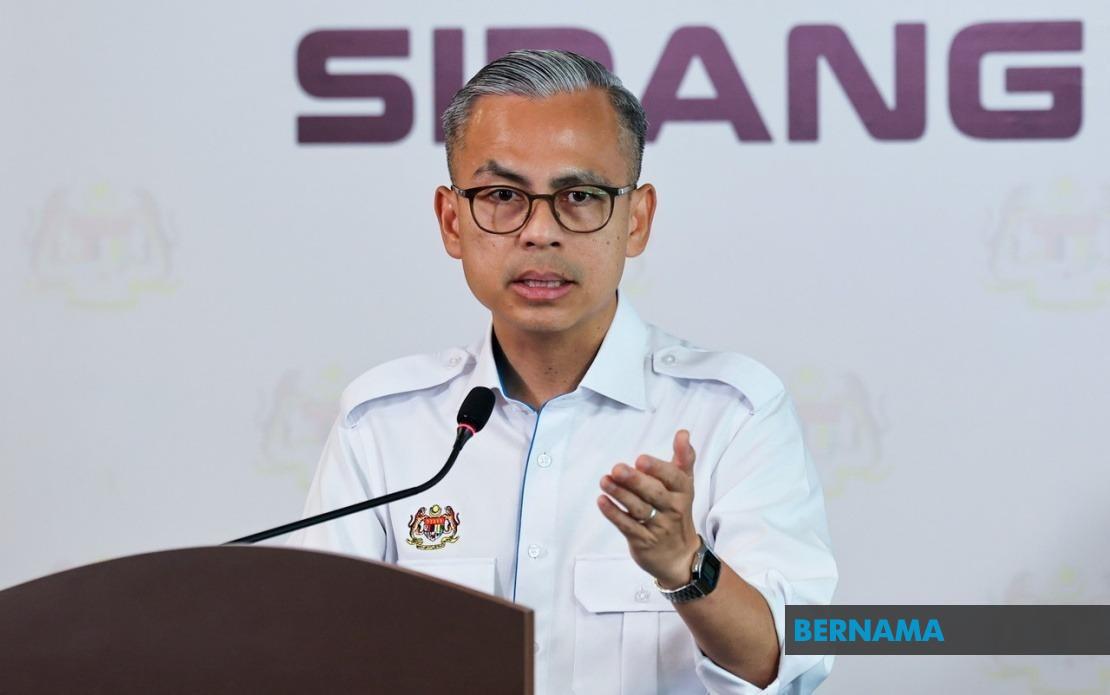
Organisers of Malaysia's 2026 National Day parade are on track to complete nearly all preparations by tomorrow's comprehensive dress rehearsal, according to Communications Minister Datuk Seri Fahmi Fadzil, who chairs the 2026 National Day and Malaysia Day Main Committee. Following an inspection of today's rehearsal at Dataran Putrajaya, Fahmi indicated that only fine-tuning of minor technical aspects remains before the nation's patriotic showcase reaches full operational readiness.
The refinements expected to be addressed during tomorrow's full rehearsal centre on spacing and coordination between contingent movements along the parade route. Fahmi explained that several marching groups are maintaining distances from their preceding units that are larger than ideal, requiring tightening to achieve the streamlined, orderly appearance envisioned by organisers. These adjustments are relatively straightforward and should be resolved without significant complications during the scheduled full rehearsal session.
Favorable weather conditions during today's practice run contributed meaningfully to its smooth execution, allowing planners to assess crowd management, logistics, and participant coordination under realistic field conditions. The positive atmosphere demonstrated by all participants—from security personnel to school students representing three states in the human graphics performance—reflected strong enthusiasm for the milestone celebration. This high morale across diverse groups involved in the production suggests underlying confidence in the event's eventual success despite the complexities of orchestrating such a large-scale public spectacle.
Several distinctive elements will distinguish the 2026 celebrations from previous years' observances. The Johor Military Force will make its inaugural National Day parade appearance, representing a significant gesture of inclusion and coordination between federal and state military structures. Equally notable is the participation of the Ibrahim-class maritime vessel, a naval asset designed by His Majesty Sultan Ibrahim, King of Malaysia, which will serve as a distinctive symbol of the nation's maritime heritage and technological capabilities during the waterborne segments of the celebration.
The human graphics performance component, featuring 1,500 student participants arranged on a multi-level structure, represents an ambitious visual element. Fahmi provided reassurance regarding the structure's safety after Putrajaya Corporation (PPj) conducted thorough technical assessments. The slight movement observable in the framework during participant movements operates within permissible tolerance levels and is structurally necessary to accommodate the rhythmic choreography without compromising integrity. This represents the third deployment of this particular structure, with no safety incidents reported in prior uses, establishing an operational track record supporting organiser confidence.
Questions surrounding the structure's apparent asymmetrical positioning reflect legitimate public scrutiny of large public works. Fahmi attributed the positioning to the geometric relationship between the established parade route and the location of the PPj administrative building, which do not align on a single axis. Additionally, reducing participant numbers from the originally planned 2,000 to 1,500 required corresponding adjustments to structural placement. Rather than dismissing concerns, Fahmi committed to reviewing technical positioning protocols for future iterations, demonstrating responsiveness to public perception even when structural decisions are technically sound.
The 2026 National Day commemoration carries particular significance as Malaysia marks 69 years since independence, a milestone approached during evolving national circumstances. The elaborate preparations underscore government commitment to maintaining these annual celebrations as unifying national events, particularly through their scale and inclusion of diverse participant groups. For Malaysian audiences, these celebrations function as periodic national affirmations of collective identity and shared institutional frameworks.
From a Southeast Asian perspective, Malaysia's continued investment in elaborate state ceremonies reflects broader regional patterns whereby established democracies reinforce institutional legitimacy through periodic civic spectacles. The inclusion of new military and maritime elements signals subtle shifts in how Malaysia's defence capabilities and maritime identity are projected to both domestic and international audiences. The prominence of student participation across multiple states demonstrates how these celebrations function as pedagogical instruments, transmitting patriotic narratives to younger generations while building their investment in national observances.
The coordination required to successfully execute such complex events—involving security agencies, military units, educational institutions, municipal authorities, and thousands of civilian participants—represents a significant logistical undertaking often underestimated by observers. Weather variables, crowd management, traffic control, and medical contingencies all require meticulous planning across multiple agencies. Fahmi's involvement as both ministerial lead and committee chairman reflects the political capital invested in ensuring seamless execution, with any significant complications carrying potential reputational consequences for the Communications Ministry and broader government credibility.
The upcoming dress rehearsal will provide the definitive test of coordination before the actual celebration, allowing organisers to identify and rectify remaining inconsistencies under conditions approximating the final event's scale and complexity. Success during this rehearsal would validate the months of planning and inter-agency coordination, while any significant complications would necessitate emergency adjustments during the final preparation window. For Malaysian audiences following these developments, the rehearsal outcome will likely indicate whether 2026's celebrations can deliver the polished, nationally-coordinated spectacle that organisers are publicly committing to achieve.

