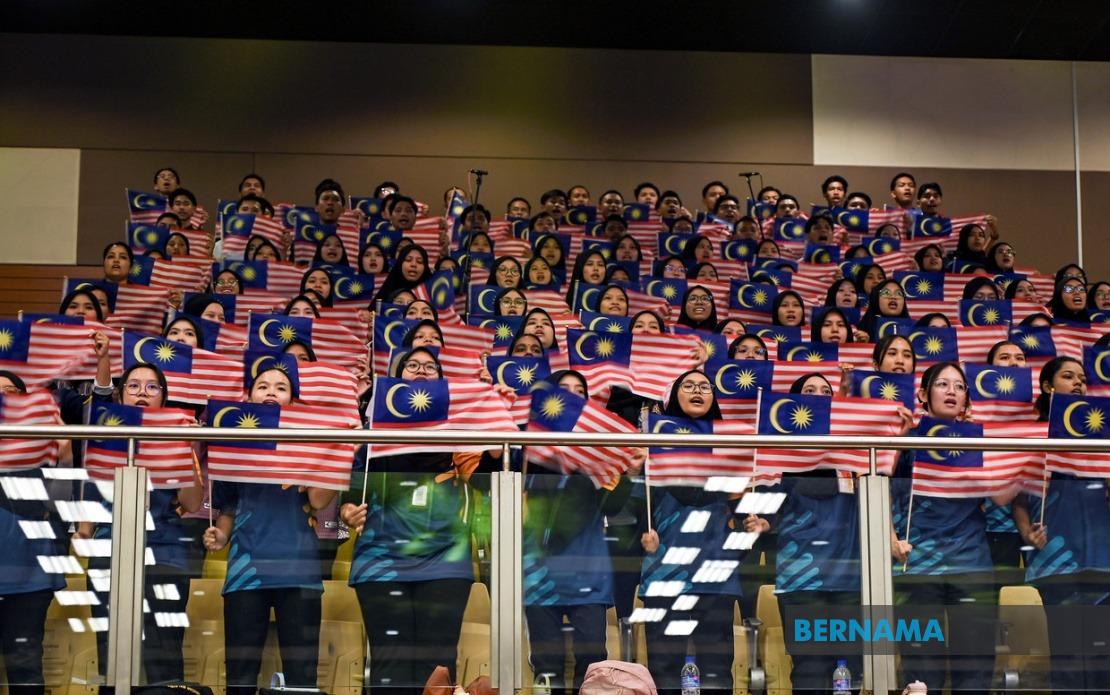
Malaysia's elaborate setup for the 2026 National Month and Kibar Jalur Gemilang launch ceremony in Ipoh has reached an advanced stage of readiness, with organisers reporting 80 per cent completion of all logistical and ceremonial arrangements just days before the flagship Sunday event. The ceremony will take place at Dewan Sri Perdana within the Sultan Azlan Shah Health Ministry Training Institute (ILKKM SAS), marking a significant milestone in the country's journey towards celebrating its national identity across two momentous occasions—National Day and Malaysia Day.
Faizal Adanan, the deputy director of the Information Department's Communication Services and Community Development Division, emphasised that despite the scaled-down nature of the gathering compared to massive outdoor celebrations of previous years, the planners have maintained unwavering focus on preserving the patriotic spirit that defines these commemorations. The decision to hold the ceremony indoors within a 3,000-capacity hall does not reflect any diminishment of national pride, he stressed, but rather a pragmatic approach that concentrates on meaningful participation rather than sheer scale. This philosophy aligns with contemporary trends across Southeast Asia, where several nations have recalibrated their national celebrations to emphasise quality of engagement over mere spectacle.
The meticulous groundwork leading to Sunday's launch includes comprehensive final rehearsals scheduled for Saturday, ensuring that every segment of the programme flows seamlessly and delivers maximum emotional impact to viewers across the nation. Organisers have choreographed every element, from the opening moments to the concluding performances, with military precision that reflects both the formality of a state occasion and the warmth expected of a unifying national event. The attention to detail extends beyond the ceremony itself, encompassing security arrangements, technical broadcast infrastructure, and contingency planning that government agencies have refined through previous such gatherings.
Prime Minister Datuk Seri Anwar Ibrahim will shoulder the primary ceremonial responsibility by officially launching the 2026 celebrations, positioning the event as one of national significance rather than merely a departmental exercise. His presence underscores the government's commitment to national unity during these two calendar peaks when Malaysians of all backgrounds are encouraged to reflect collectively on their shared identity and common aspirations. The involvement of high-ranking officials, including Communications Ministry secretary-general Datuk Abdul Halim Hamzah, who will flag off the Merdeka Patriotic Run, signals comprehensive government mobilisation around the celebration framework.
The Merdeka Patriotic Run itself represents one of the ceremony's most visible components, with organisers anticipating approximately 2,000 participants who will register their commitment to national values through active participation rather than passive observation. This running event, scheduled as the programme's physical centrepiece, translates abstract notions of patriotism into concrete personal action, allowing citizens to literally embody their connection to the nation. The choice to incorporate such participatory elements reflects global shifts in how modern democracies engage their populations in civic rituals, moving away from hierarchical broadcast models toward experiences that require individual contribution.
A particularly distinctive feature of Sunday's launch involves a patriotic choir performance by ILKKM SAS trainees, whose previous viral moment on social media demonstrates how contemporary national celebrations increasingly leverage digital platforms to amplify reach and emotional resonance. This performance carries additional weight given the trainees' proven ability to generate spontaneous enthusiasm across online networks, suggesting that Sunday's rendition may similarly extend its influence far beyond those physically present in the hall. The intersection of traditional ceremonial formats with modern social media dynamics represents an emerging characteristic of Southeast Asian national celebrations, where digital virality has become a legitimate metric of success.
Another ceremonial highlight involves the formal flag-raising ceremony by security forces, returning after a two-year absence from the celebration calendar. This resumption signals continuity and renewal, demonstrating that despite pandemic-induced interruptions and shifting priorities, the fundamental symbols and rituals anchoring national identity remain central to government planning. The presence of uniformed personnel in these symbolic roles reinforces the connection between civilian patriotism and the institutional frameworks that undergird national sovereignty, a particularly resonant message in the contemporary Southeast Asian context where security concerns frequently intersect with questions of national unity.
The launch of the HKHM2026 theme song by a local artist provides another avenue through which the celebration engages emotional and cultural registers beyond formal speeches and bureaucratic announcements. Music serves as a universally accessible medium through which national narratives can permeate diverse communities, transcending language barriers and educational divides that might otherwise limit the penetration of political messaging. By commissioning a locally produced song rather than importing external artistic talent, organisers emphasise the authenticity and cultural grounding of the celebration within Malaysian creative traditions.
Exhibitions by participating government agencies will populate the venue, offering citizens and media representatives tangible representations of how various state institutions contribute to national development and citizen welfare. These displays transform an essentially ceremonial occasion into an educational platform where Malaysians can encounter direct evidence of their government's functional capacity and programmatic focus. Such exhibitions also provide a counterpoint to purely symbolic elements, grounding national celebrations in material reality and demonstrating governance beyond rhetorical nationalism.
Recognising the logistical constraint imposed by the closed-access venue, organisers have prioritised comprehensive digital broadcasting across multiple platforms to ensure that Malaysians nationwide can participate vicariously in the ceremony. The decision to simultaneously broadcast through Radio Televisyen Malaysia (RTM), Bernama, the Communications Ministry, and the Information Department, supplemented by live feeds through Merdeka360 and various social media channels, represents a multi-platform strategy designed to maximise reach across different demographic cohorts. This distribution approach acknowledges that Malaysian audiences inhabit diverse media ecosystems, with younger citizens likely concentrated on social platforms while traditional broadcast audiences retain significant viewership among older demographics.
The broader framework of 2026 celebrations extends beyond Sunday's Ipoh ceremony, with Communications Minister Datuk Seri Fahmi Fadzil previously confirming that the full National Day celebration will occur at Dataran Putrajaya on August 31, maintaining the same philosophical approach of modest yet lively execution. This bifurcated structure, separating the formal launch from the main commemorative gathering, allows the government to generate sustained media attention and public engagement across several weeks rather than concentrating everything into a single event. For Malaysian stakeholders and Southeast Asian observers, this extended celebration calendar provides extended opportunity to assess how the Anwar Ibrahim administration articulates national identity and mobilises patriotic sentiment during a politically consequential period in Malaysian governance.
The 80 per cent completion status reflects not merely construction or logistical metrics but the comprehensive readiness of institutional coordination required when multiple government departments synchronise their efforts toward unified ceremonial objectives. Government agencies across defence, communications, health, and protocol divisions have aligned their respective responsibilities within an overarching framework that prioritises seamless execution. This interagency coordination itself constitutes an implicit statement about national cohesion and institutional functionality—the ability of a diverse bureaucracy to function harmoniously toward shared national purpose resonates with significant audiences beyond those who will witness Sunday's ceremony directly.

